Blog

Myanmar: The road (or cycle path) to Mandalay

Although Mandalay sounds traditional and iconic (at least to me!), my research informed me it is a busy city that does not have as many obvious attractions as our other destinations in Myanmar. It is mainly a hub to see various sights surrounding the city and I would say it is missable if time is limited. However, we had an enjoyable two days as we took two half day cycling tours with an Asian company called Grasshopper.

On our first afternoon, we visited Amarapura which was the royal capital for less than 70 years from 1783 and Inwa (often called Ava) which has taken four turns as royal capital since 1364. In Inwa, we saw a 90 foot leaning tower that remains from the old palace complex and some beautiful temples surrounded by rice fields. We were the only two people on this particular cycling tour and our guide (who looked like a tiny rockstar with long hair) took us to the quieter temples… we climbed up to the terrace of one where the only other people there were a couple trying to have a romantic moment!

We also got a sense of village life and saw small industries at work… without a single person trying to sell us anything. My favourite part was watching silk material being weaved. We first saw a traditional workshop with non-motorised machines that women pedalled to operate. There was a flipper (like in a pinball machine) that pushes the real of thread from one side to the other. It was hypnotic to watch!

We then saw the factory version with hundreds of reels of silk thread being spun and dyed. There were rows upon rows of motorised weaving machines that do the job much faster. There was no sense of health and safety, with little kids playing in between the gaps of the heavy machinery.

For the most part, people seemed happy and well cared for despite Myanmar being a poor country. However, there was one village that we visited in Amarapura that made me feel sad as it was covered in plastic litter to such an extent the ground could not be seen. It was situated close to the lake that recedes and leaves behind a sandbank of rubbish. That said, the locals were having fun playing volleyball and football on the litter expanse and the kids were very sweet and asking for high fives (not money!) as we passed on our bikes.

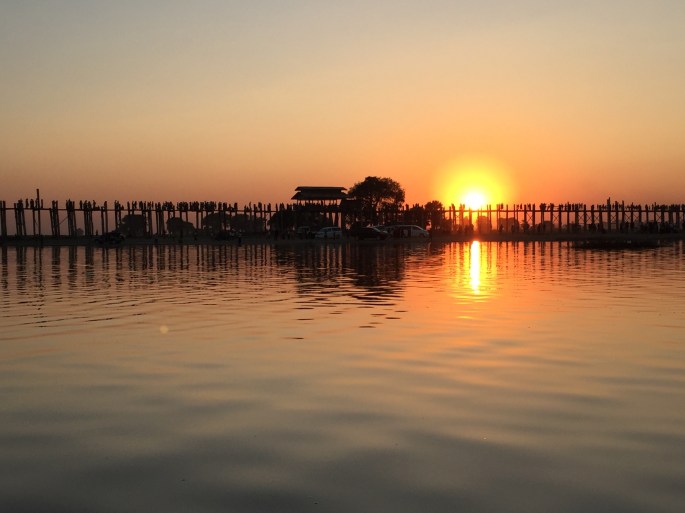
We then arrived at a crowded spot to leave our bikes and watch sunset over the U-Bein bridge, a 1300 yard footbridge made of teak. We took a small rowing boat on the shallow Taungthaman lake with beers. As it was the dry season, the bridge Was elevated on stilts which made it more striking in my opinion. In the rainy season, the water level reaches the floor planks.
img_0790

Our next morning’s cycling trip took us along another rural route. We had longer stints of uninterrupted cycling which was fun. We stopped at a local market where we saw a lady seeking thanaka. This is a yellow paste made by grinding a special wood bark with water that women and children wear on their faces as sun protection and decoration. I found it striking that in Myanmar local fashion remains intact and has not Westernised like in most other countries. Most women and children that we saw had circles of thanaka on their cheeks and a lot of the men wear traditional lungi (like a sarong.) We also saw the meat and fish section… this scene along with seeing live chickens being transported by motorbike hanging upside down, made me avoid meat in Myanmar.

We also saw more of village life. There was an incredibly fast woman making fans out of bamboo. It was brilliant to watch as she made them in less than 20 seconds and you could not see her hands as they moved so quickly.

The biggest highlight of all was the food. This was our full-on introduction to authentic Burmese flavours. We stopped at two local tea shops. For a late breakfast we had green tea and plates of light naan bread with a yellow bean and fried onion curry. It was so delicious that our side of the table with a friendly lady from Germany and man from the Philippines ended up with a very tall tower of empty plates. For lunch we had tea leaf salad (the one with fried peanuts and spices!), shan soup noodles (Shan is a region of Myanmar), fried banana pancakes and fresh fruit juice. It was delicious!

img_7869

We did spend one afternoon looking around Mandalay itself. It was fun to walk up Mandalay hill for sunset views across the flat surroundings. We walked up the South covered stairway barefoot. It was 1729 steps according to our guidebook but Hiten decided to make time go more slowly by counting and we concluded it is closer to 900. We were braced for much more when we realised we had reached the tiled expanse and glittery archways of the top!

The 230ft-wide moat and high walls forming a huge square around the royal palace are also worth seeing. The palace itself was surprisingly high security and missable in my opinion. We had a great spicy meal at Green Elephant which does a Myanmar take on Thai food – the red curry was more like a Jafrezi but everything was tasty and served in a huge outdoor area. Delicious but can’t beat the food at the small local tea shops with plastic chairs!

Myanmar: Ballooning over Bagan

The temple studded plains of Bagan are a magical sight. Scattered across green fields there are thousands of temples, some of which originate from the 11th century. However, in this earthquake prone region, many of the temples have been restored and rebuilt from rubble over the years. It is a working religious site rather than a historically intact set of ruins. Due to this, Bagan is not a Unesco world heritage sight.

Ground level 

We explored many of the temples with a taxi in three hours. I particularly loved the old brickwork against the greenery, the aerial views from Shwesandaw Paya after climbing lots of outdoor stairs and the trees outside some of the temples with traditional handmade puppets hanging from them. I would be inclined to do a half day of temple viewing at a time, as at some point despite the variety, one temple starts to look like the next! 

On our first afternoon, we also took a half day cycling tour with an Asian company called Grasshopper (in fact, over the course of our 9 days in Myanmar we took four tours from this company.) As well as seeing a couple of temples and monasteries, we saw local homes made of woven bamboo, farm workers drying peanuts and separating sesame seeds from the husk and a lacquerware maker. We watched a woman cut thin strips of bamboo and coil them into a bowl shape. The structure needs to be covered with clay and peanut ash followed by eight layers of lacquer sap (which oozes out of a lacquer tree in a similar way to the rubber tree.) The detailed decoration is then etched on the surface before applying colour paint to fill the ridges. The final piece is strong and resistant to heat.

The cycling in this region was tough at times for me as there were several paths of deep sand – the picture below was the main road which was the relaxing part! The trick is to have a low gear and keep pedalling even if y0u feel that you are going to fall…

img_0545

The tour ended with a sunset cruise on the Ayeyarwaddy river, just 5 people to a boat with a good supply of cold Myanmar beer, vegetable tempura and tea leaf salad. This is a “salad” made of used tea leaves and lots of delicious fried peanuts with chilli and garlic. If all salads were this delicious (and unhealthy!) I could survive on salad for a week!

Generally, in Myanmar we were not often hassled by hawkers. This was a contrast from being chased by hoards of beggars and hawkers when I visited Angkor Wat in Cambodia 9 years ago. By the river in Bagan, however, there were some young children trying to sell their little simple drawings or one smart boy asking for certain currencies to complete his FX collection. Funny that he had Peruvian sole, Japanese Yen and Bolivianos but was just missing pounds and dollars! They were sweet and seemed to be more interested in practising their English than persisting with a hard sell.

From the sky

Viewing Bagan from a hot air balloon was expensive but was our most incredible experience in Myanmar. I had never been in a hot air balloon before, so part of the charm was seeing how it functions. If you want to do it in the peak season, it is best to book in advance… there were a lot of disappointed tourists trying to book when we were there. Spaces are limited with 21 balloons (run by 3 different companies) allowed to operate in the area each morning, weather permitting. I also would highly recommend ‘Balloons over Bagan’ as the company really looked after us throughout.

It started with a 5.10am hotel pickup in a restored WW2 Chevrolet bus partly made of teak wood. We then had tea and biscuits by the side of the airfield. The two pilots (Belgian and English) for the balloons on our side of the field told us who would be in which balloon. From our safety briefing, I learned that there is a landing position that passengers need to take because landings are bumpy! It was exciting to see the huge balloons be inflated, first with a regular fan then the gas fire to move it upright. During this process, the balloon was tethered to the bus for stability.

We got in, four people in each quandrant (twelve people in total per balloon) wearing our free baseball caps. Lift off was smooth and within a minute we had beautiful views of the mesmerising landscape below and the sunrise on the horizon. It felt like we were floating. I would put the wow factor up there with going on safari a couple of years back or going to Disneyland when I was a kid. I had the same ‘wow, I can’t believe I am here’ feeling.

The windspeed was extremely high and after about 45 minutes of ballooning, our first attempt at landing did involve a knock against some palm trees which was a shock (extremely rare situation and the balloons on Bagan have excellent safety record!) There was some swearing in several different languages on collision as we got a jolt and palm leaves poked over the top of the basket. After taking landing positions rapidly for that, we were prepared for the bumps of the real landing on the river sandbank 5 minutes later! It felt like we were washed up on a deserted island with just a fisherman shack in sight.

In terms of logistics, we waited in the basket whilst our Belgian pilot Christophe (who was a bit shaken a few minutes ago) radioed the team our location. A team of about 8 people came to dismantle the balloon and help us out of the basket. Before boarding the bus to go back, we had croissants, fruit and champagne which had been set up for us in a nearby clearing! 

Accommodation

We stayed at Bagan Lodge which is a boutique hotel with a beautiful open lobby, two swimming pools set in courtyards, an ornate jacuzzi and big safari-lodge style huts. It was a beautiful place to relax in the sunshine after sightseeing excursions and enjoy beers for less than £2 during happy hour. The buffet breakfast was also very good… as well as the usual fare, I found myself enjoying veg chilli and garlic noodles each morning!

All in all, our two days in Bagan delivered beyond my expectations and I am happy we opted for an unforgettable balloon ride.


Myanmar: Arriving in Yangon with monks who take selfies

After a fabulous five days over Christmas in Singapore with my in-laws including lots of swimming and tandoori turkey stuffed with biryani (delicious!) on Boxing day, Hiten and I flew to Myanmar (Burma.) Singapore Changi has to be my favourite airport. I highly rate the shops, staff and restaurants. We ate a speedy South Indian dosa at the food court before getting on our Silk Air 2.5 hour flight to Yangon.

Yangon is no longer the official capital as in 2005 the goverment announced a new capital city in central Myanmar called Nay Pyi Taw. Yet it is the largest and commercially most important city in Myanmar. Yangon means ‘the end of strife’ and the name originates from the 18th century. In colonial times, the British called it Rangoon but it was renamed as Yangon in 1989. The city looked more developed infrastructure-wise than I had expected. The painted street kerbs and food stalls with plastic chairs could be a scene in India, However, it was cleaner, had more discipline on the roads and less car horn honking than most major cities in India! December is the winter season but it was still over 30 degrees celsius with high humidity… it gets to above 40 degrees in the summer.

After checking in to our hotel, we had time to visit a couple of sights. First of all, we walked to Shwedagon Paya, the golden temple that is the city’s top attraction. We walked up the steps of the Southern covered arcade after removing our shoes in keeping with Buddhist customs.

The main sight was stunning with the central golden stupa towering 325 feet above and surrounded by smaller stupas. Locals were praying next to the worship areas that represent the day of the week that they were born and  volunteers were sweeping the floor. Despite plenty of tourists around (December is peak season after all) the temple complex felt calm. The late afternoon light hit the golden structures beautifully. In a small museum area, we saw close-up photos of the ornate main stupa, decorated with 27 metric tonnes of gold leaf and thousands of diamonds and gems.

As well as local monks, there were quite a few tourist monks. I love the fact that monks take selfies too!

img_7549As the sun was setting, we walked along the Kandawgyi Lake. It is a artificial lake built by the British and is now covered in parts with lily pads (pretty) and some litter (less pretty.) Locals were enjoying their evening stroll across the uneven wooden boardwalk and we saw a sweet old couple doing their stretches.

For dinner, we were lucky enough to meet up with a Vietnamese friend from university who happens to live in booming Yangon. She took us out to a local Shan restaurant that was very busy. The tasty flavours were a bit like northern Thai perhaps with some Vietnamese and Chinese thrown in. Dishes included garlic chicken (with  lots of whole roasted garlic cloves), spicy beans, roasted whole fish, mashed up spicy aubergine and fresh greens like pak choi. Myanmar shares borders with five countries: Bangladesh, India, China, Laos and Thailand. In our first day, I could already see a blend of influences in the food, the architecture and the people… an exciting country to explore over nine days!


Uruguay: Living the high life in Montevideo and Jose Ignacio

The final leg of my South American adventure was five days in Uruguay. We certainly lived the high life along with some of Buenos Aires’ high society who head to the Uruguayan coast for the summer. Uruguay has a population of 3.3 million, much smaller than its neighbouring countries. Of the 3.3 million, 1.3 live in the capital city of Montevideo.

Montevideo

Our first impressions were excellent from the modern and well designed airport (and I am sad to say that Hiten was happy to see a McDonalds too… yes we ate there on our departure) to our historic hotel in the suburb of Carrasco.

We ate very well during our stay. Garcia steakhouse close to our hotel in Carrasco did fabulous lamb chops with chimichurri sauce and sides of blue cheese baked potato. In Ciudad Vieja (the old town, about a 25 minute drive along the coast from Carrasco), we ate at Mercado del Puerto, an old port market building now packed full of parilla (grill) restaurants. We chose a busy one with an outdoor area called El Palenque and had delicious black hake that tasted a bit like Japanese black cod and melted in the mouth,  stir fry veg, potatoes and white wine, followed by ice cream from the market!

On our second night, we had dinner at FOC in the neighbourhood of Punta Carreras, where we were confined to a set menu as Christmas party season had begun and the restaurant was full of big groups. We sat at the bar and had excellent cocktails and G+Ts, all the better because we saw how much care the barman took over making them. Courses included smoked pepper, tomato and lagostine chilled soup, baked  white fish with cauliflower purée, rack of lamb with a beetroot glaze and mash, lemon mousse with crumble and orange ice-cream, strawberries with creme brûlée.. yum!

Aside from eating, we did spend a little time seeing the sights on our full day in Montevideo. The major highlight for me was Museo de los Andes, a small museum that opened in 2013 and documents the 1972 Andean plane crash that cost 29 Uruguayans their lives. Using photos, objects and testimonies, it tells the story of the 16 survivors who battled through harrowing conditions (4000 metres above sea level, -30C temperatures) for 72 days. Most of the people aboard the flight were a rugby team and their friends and family flying from Montevideo to Santiago for a friendly match. The 1993 movie “Alive!” starring Ethan Hawke which I have not seen yet is loosely based on this story but edits some of the key elements.

The last words of the video we saw in the museum were “never give up” and what amazed me most was how the survivors managed to keep up some semblance of morale. One of the survivors talked about learning the lesson that things can always get worse as the group experienced one tragedy after another. For them the first “tragedy” was that the flight had to detour to Mendoza for 24 hours due to bad weather so they would be late to their destination. Then next was the plane crash in the mountains, where some of the passengers died on impact – these were the friends and family of the survivors. A few days in, the group learned via radio that the search party for them had given up, a shattering blow. On night 16, an avalanche trapped them whilst they were sleeping in the remains of the aeroplane fuselage and killed 8 of the group. One of the survivors talked about burying his dead mother and sister in the snow, but trying to maintain the will to survive.

The group called themselves ‘the society of the snow’ (they did not know where they were but all they could see was snow) and resolved that they wanted to live. They set goals when group members went on expeditions to survey the area and attempt to find help. The explorers would take one of a pair of a child’s red shoes that they found in some luggage with the aim of reuniting it to the other shoe tied to the aeroplane fuselage. The group prayed each night together and celebrated birthdays with a cake shaped pile of snow with a cigarette for a candle.

The things the group did to survive were fascinating. They had to hug and punch each other during the nights to keep their bodies warm and their circulation going. They made a bin-like structure to melt the snow to drink, basic sunglasses and a blanket out of a piece of plane insulation. Many of the group being amateur rugby players probably helped as they were young and strong, had some sense of being a team, and were comfortable with the physical hugging and hitting. They lost a lot of weight with one of the survivors just 38kg when rescued. There was also a medical student and engineering student amongst them that probably helped in some of the survival techniques.

Eventually the group voted (although not unanimously) for eating the frozen remains of the dead passengers. It was a matter of life and death and something that a father of one of the dead boys commented on in a press conference. He was happy to learn there were survivors even though his son was not amongst them as they gave him a sense of closure about how his son died and enabled some families to have their sons back. He commended the survivors for their bravery rather than judging them for eating their dead teammates.

One of the many expeditions the group made involved two of the young men walking for ten days and spotting a cattle rover where the snow landscape finally ended – they threw him a message explaining their situation and how weak they were. The cattle rover was a real hero as he spent many hours travelling to alert the police and prompted the search… apparently this part never made it to the movie.

Other than spending a couple of hours in this mind-blowing museum and exploring Mercado del Puerto at lunchtime, we walked around Plaza Independencia area and smaller plazas in the old town, strolled along the industrial post area with plenty of cranes and containers and on our final morning went running along the coast in Carracsco.


Jose Ignacio

We drove about 2 hours from Montevideo to the coastal town of Jose Ignacio after learning that transfers are extremely expensive compared to renting a car In Uruguay! We stayed about 15 minutes away from the beach at Estancia Vik, a boutique ranch hotel with horseriding, cycling and kayaking and watching polo matches within the grounds all included! The rolling countryside scenery was beautiful as was the property itself.

The manager of the hotel who took us out for the first morning’s ride told us which horses various celebs rode when they stayed including Katy Perry… I did not get her horse though! Hiten’s male horse Pilsen enjoyed nuzzling and biting the backsides of the female horses of the group causing them to jump (this is scary for the beginner rider!) In the fields, the horses had there own gangs just like a school playground, with the polo ponies hanging out in their own crew with coats on!

The estancia was also the perfect place to enjoy a bottle of Vik wine as the sun went down or play a competitive game of pool surrounded by art and massive gemstone formations that the hotel owner collects.

The half Norwegian, half Uruguay businessman Alex Vik has three hotels (Estancia Vik, Playa Vik and Bahia Vik) in Jose Ignacio all with a small number of rooms and filled with local pieces of art. As a guest at one of the Vik properties, you get to use the other ones whenever you like (they give you a pretty illustrated map with highlights of the area marked out) so we spent a bit of time by the slick beachfront pools at the other properties… although I did prefer the more homely and less modern Estancia look, those beach views were stunning.

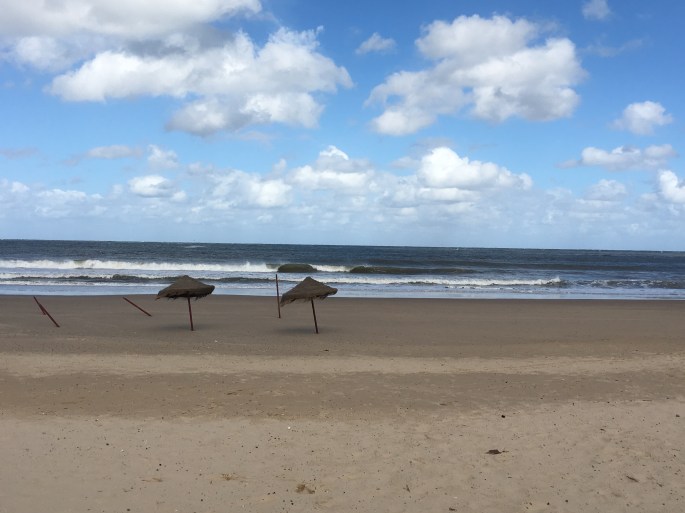
Despite a lot of the Buenos Aires glitterati visiting this beach town, the place maintains a low key surf town feel that just happens to have high end places to stay and eat. Even the common signposts to various shops and restaurants were cute! Nearby Punta del Este is the more famous beach resort with bigger high rise hotels.

img_2359

We had a couple of meals at a beachside wooden restaurant called la Huella, which seemed to be THE place to be, with a crowd of beautiful and wealthy-looking tanned  folk milling around and waiting to be seated. Excellent sushi including white fish and mango, tiraditos, goats cheese salad, Chinese-style crab rice and deep fried calamari with a dusting of sand on top when there was a powerful sea breeze! La Susanna was another beachside restaurant with gorgeous views and tasty seafood.

All in all, Jose Ignacio was not a cultural hotspot but an extremely relaxing and luxurious end to an immense and varied trip through Colombia, Chile, Peru, Bolivia, Argentina and Uruguay.

img_7280


Argentina: Biking in Bariloche and road tripping in the lake district

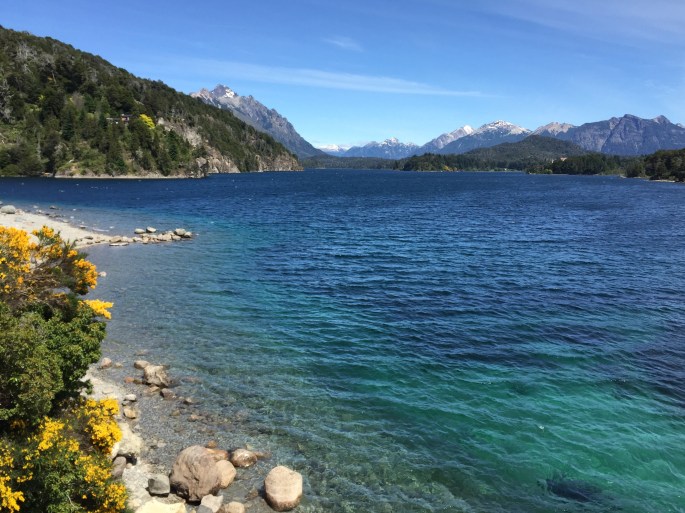
The lake district around Bariloche is less dramatic than the glacial terrain of southern Patagonia but nonetheless scenic with bright blue lakes and lush forests. A lot of people say the landscape is like the Alps and I found there was quite a European alpine resort feel.

img_0446

We rented a car for four days so did not spend much time in the towns. In fact we stayed at random ‘deal’ hotels, such as the spacious Design Suites just outside Bariloche (popular with Argentinian families, a bit like centreparcs but without as many facilities) and a quiet hotel in a golf resort twenty minutes outside San Martin de los Andes.

From the outskirts of Bariloche, we cycled the Circuito Chico from kilometre 18. This was a reasonably short route (about 25km) through the lake district with plenty of long hill climbs. We had lunch at Punto Panoramico along the way (obviously with panoramic views!) and stopped at plenty of miradors (lookouts.)

Driving in this region was fun… or so I hear as a full-time passenger/DJ on this occasion. There were clearly marked lookouts on ‘la ruta de los siege lagos’ (seven lakes route), a 110km drive mostly along the winding ruta 40 between San Martin de los Andes and Villa la Angostura with a detour to Villa Traful. On the road, I particularly loved the abundance of bright wild flowers, seeing cows drink from the lake (we ran when they started running towards us on the beach!), small waterfalls and sheep crossing the road.

On our way back to Bariloche we chose a different route (mainly via Ruta 63 and 237) that is was more rugged and arguably just as beautiful as the more famous seven lakes side.

Villa Traful is a small village with a population less than 400 on the southern banks of Lago Traful. It is a slightly bumpy 27km drive along the ruta 65 that is mostly a good dirt track! Waking along the lake there was one of our best experiences in the lake district. I also loved the smell of the wild flowers.

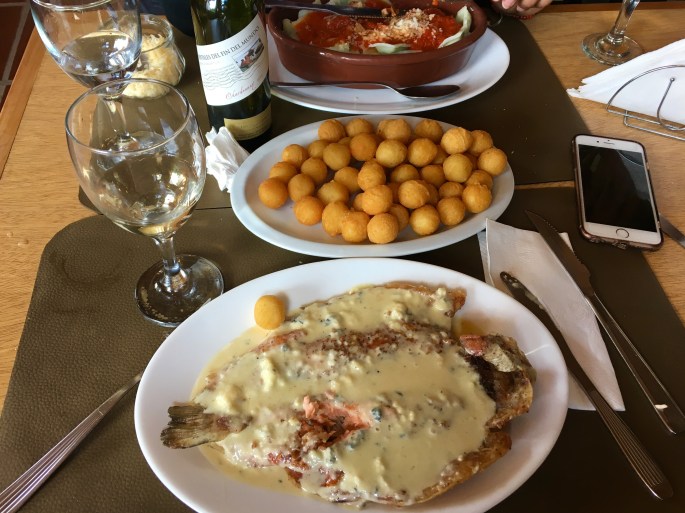
In terms of food and drinks (my number one focus when travelling if you had not guessed) a few special mentions. Trout is a local speciality and we had great trout at Nancu Lahuen which was a surprising busy lunch spot in the otherwise quiet Villa Traful. It was a log cabin style restaurant where we also enjoyed the pasta, potatoes that were basically American taco tots and white wine.

img_2207

El Mexicana restaurant (used to be called Dias de Zapata a while back so we struggled to find it initially) in Bariloche did great quesadillas and cocktails in a buzzing atmosphere. Families were still queuing to get in for Friday night dinner at 11pm when we were leaving! The mariachi band were superb – I have a great video that I can’t upload here 🙂 !

La Trattoria de la Famiglia Bianchi for great simple Italian – very busy and very good value, especially for the wine!


Excellent hot chocolates in San Martin de los Andes. We happened to be in this town of 28,000 (Bariloche is bigger with a population of about 110,000) when the football team Boca Juniors beat their arch rivals River Plate in a last minute goal. The streets of the small town centre were wild with a parade of cars driving through the few main streets on loop, honking, revving, waving flags, letting kids hang out of the windows, throwing firecrackers and streamers! People were jumping and chanting in the streets… all for a regular win, not a cup final! Boca Juniors are a Buenos Aires team that are traditionally a working man’s club whereas River Plate are seen as more posh. Clearly in San Martin de los Andes everyone out on the streets was supporting Boca although the guy who served us at the petrol station quietly said he supported the other team when Hiten was chatting to him about it! Better to keep quiet if you are a River Plate fan I think.

Argentina: Trekking Tan and Hiking Hits take on Patagonia

I was back in Patagonia, but this time the Argentinian side. In early November, I was in Chilean Patagonia (Punta Arenas and Torres del Paine) and in December, I was across the border in El Calafate and El Chalten. This time round there was less snow but more glacial ice!

img_7040
Blue skies and blue lakes at El Calafate airport…

We flew into El Calafate, the gateway to the Perito Moreno glacier, and spent two nights there. We then spent three nights in El Chalten, a two and a half hour minibus drive away and a trekking mecca. I was expecting the glacier to be the highlight of the region and whilst it was spectacular, El Chalten, a tiny village with excellent walking trails into the Fitz Roy mountain range, was the star of our Argentinan adventure.

Cash Is King

More than any other part of South America I have visited, cash was king in Argentinian Patagonia. Some of the smaller hotels, group tours and many restaurants were cash only and in El Calafate, there was no cash left in any of the machines because it was Sunday. Our hotel owner Mariano had to drive us to a relatively new cash machine far away from the main road. He also gave us many examples of locals’ distrust of banks which is understandable given that the Argentinian financial crisis and devaluation of 2001 still lives strong in the national memory. On payday, locals tend to draw as much cash out as they can and often invest in tangible goods such as second hand cars, or in Mariano’s neighbour’s case, a big pile of bricks in his back yard!

One other thing to note is that Patagonia is expensive and prices rise quickly. The general inflation rate in Argentina is estimated to be about 40% over 2016… Patagonian tour prices have often gone up by more than this year on year.

img_6856
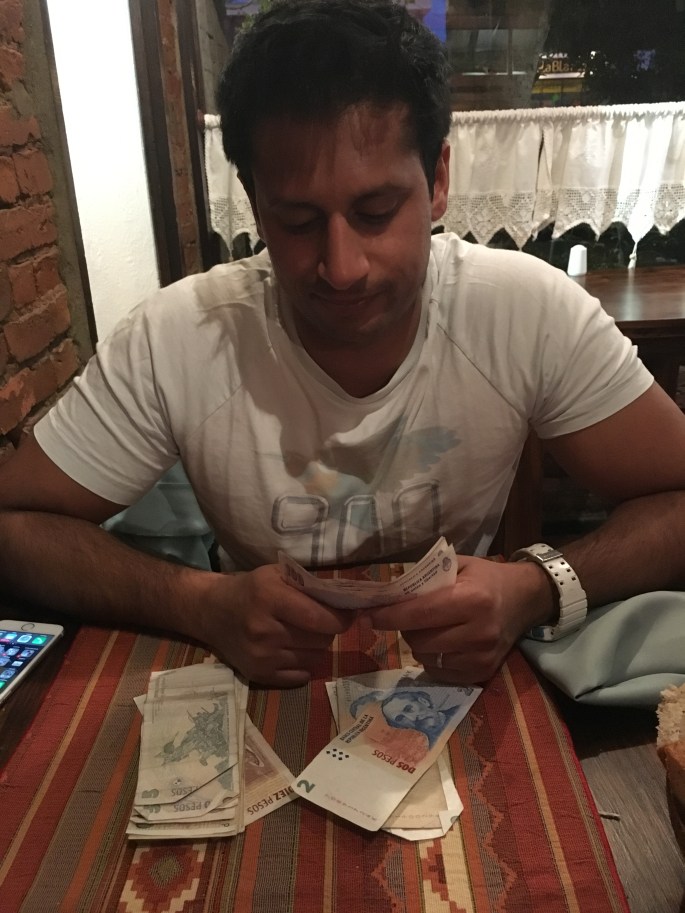
Counting out our last wedge of cash at Mi Rancho restaurant in El Calafate… a disappointed face because I ordered the extra wine which meant we had to go back to the hotel (albeit 2 mins away) to get more of our precious cash
El Calafate

This is a touristy town with a population of ~21,000 and the gateway to the Parque Nacional Los Glaciars. We stayed in a cute and cosy hotel called Madre Tierra run by Mariano – it is a lonely planet top pick and very homely with guest names on a chalkboard on each door. We also were helped by a fun travel agent called Mariano down the road. In fact, every other male we met in El Calafate was called Mariano.

On our first afternoon, we cycled around the edge of town where the only traffic was horses walking from the rugged land onto the road.

img_6706

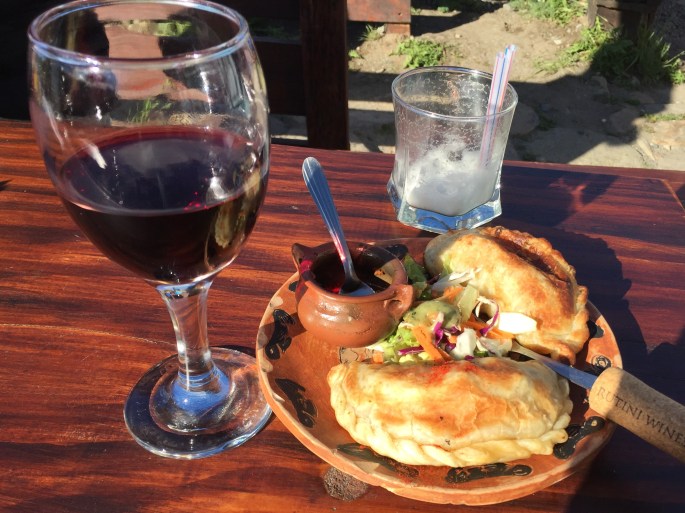
We had fantastic dinners at la Zaina with a quirky setting, tasty bruschetta, lamb ravioli and great wine selection and Mi Rancho, a cosy ski lodge style restaurant with hearty starters of butternut squash soup and spinach, garlic and cheese empanadas that won our ‘best empanada award’… high praise indeed as there were a lot of contenders. Hence we struggled to finish our equally hearty main courses.

img_6708
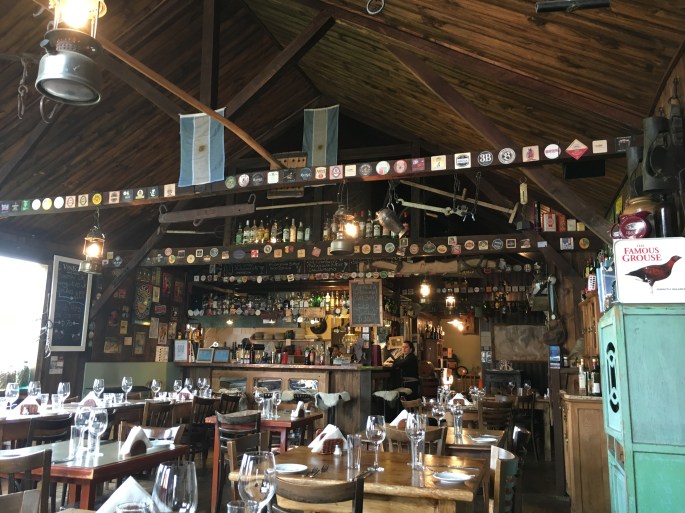
La Zaina: we were ravenous at 7pm hence the empty seats..it was packed within an hour
The Big Ice 

We took the full day glacier tour that included about 5 hours of trekking with about 10km on the glacier itself. Perito Moreno is a spectacular glacier, about 30km long, 5km wide and over 60m tall. Unusually, this glacier is in a steady state with no major change in size since 1917. Our first views from the balcony walkways were beautiful. We could see and hear some pieces of ice crash into the water below.

We then boarded a boat to make our way to the start of our trek. We had crampons fitted which we then carried en route on the gravel and moraine. Crampons are much heavier than I remember from a glacier hike I did in New Zealand 9 years ago. This time round, I had lots of gear such as comfortable hiking boots of my own, gloves and waterproof trousers. In New Zealand, I borrowed random fisherman style trousers and jacket! Another contrast is that this time round there is plenty focus on health and safety, with the crampon size checked for each of us.

The first part of the hike was a speedy uphill. We then stopped to put our crampons and safety harnesses on (in case we were to fall into a crevice, they could pull us out!). The ice trekking was really good fun but tiring towards the end as the ice formations are spiky with a steep gradient going from side to side. I find the bright blue of the compressed dense ice stunning. We stopped for our packed lunch in a scenic spot and filled up our bottles with fresh glacial water from the streams – the best water I have ever tasted!

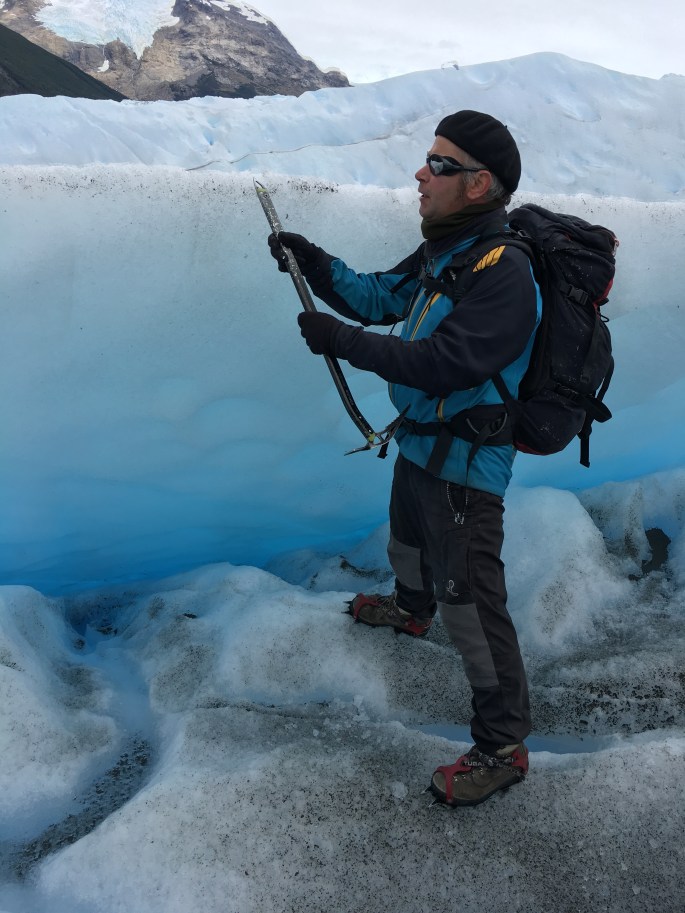
Our small group had a comedic experienced guide called Diego who wanted to take us further afield. We did not see any other groups along the way and were surrounded by the ever-changing ice terrain.

img_6784

We looked down steep crevices which made everyone ooh and ahhh – the depth does not show up in my photos. On our boat journey back, we were offered some whisky-type spirit with a big block of ice, naturally. This was the only company to do the ice trekking and overall I would say that we were very well looked after.

El Chalten

This is a small colourful village with a population of less than 2000, a few nice bars and restaurants and 360 degree views of the mountains. There are fantastic treks to do that start right at the village so once we were there there was no need for taxis, buses or transfers. In fact, our three days in El Chalten was our favourite part of our Argentina experience.

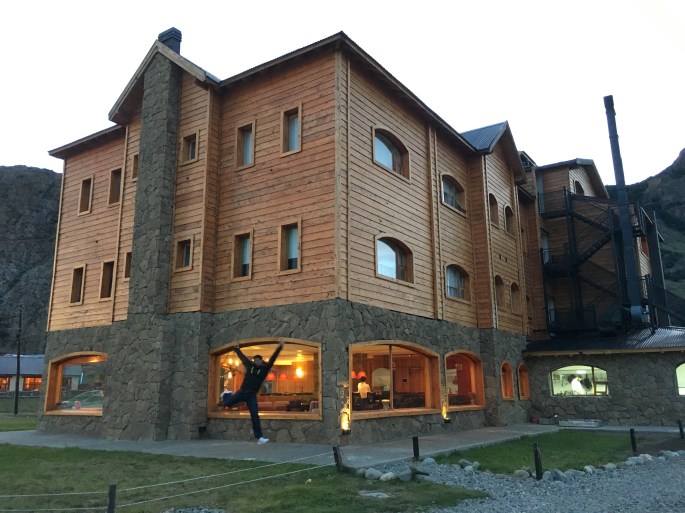
Our hotel Destino Sur had a very spacious room and a nice spa and sauna area that you can pre-book. Perfect after a hike.

img_7029

We also had plenty of brilliant food and drink in the tiny town. My favourite place was La Vineria that had excellent wine by the glass (lots of Malbec and Torrontes!) We spent one evening there sitting outside enjoying the bright evening sun (the sun set around 10pm this far south) with plenty of excellent empanadas and drinks. Other tasty options included Prana cafe (veg lasagne, caramelised onion and mushroom crepes and fresh fruit juices for when we had overdosed on heavy lamb!), La Tapera (wooden ski chalet type restaurant where we had great grilled trout and fresh pasta) and Domo Blanco (homemade ice cream and hot chocolates.)

img_0133

White Water Rafting

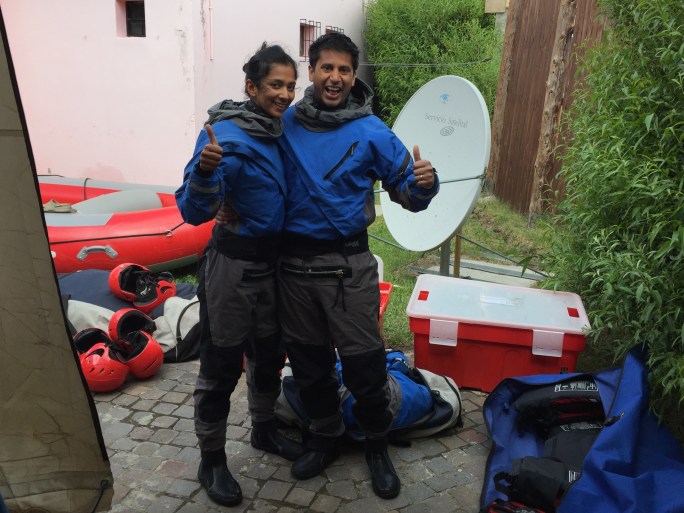
On our first afternoon in El Chalten, we went rafting down the stunning Vueltas river, through volanic rock cliffs. My sun cream must have been splashed off by the rapids as I managed to get a bit of peeling on my nose in the strong sunshine, the first time ever this has happened to my dark skin! I have no photos (our guides did instigate a photo shoot but did not end up emailing them to us as they said they would) aside from us excited about wearing dry suits for the first time. They worked a treat and enabled the white water rafting experience without the cold and wet. Lolly, the fun loving guide in our raft encouraged a celebratory high five with paddles after every intense rapid and gave us one of our holiday catchphrases “let’s rock and roll chicas!” …. our team was Hiten and four girls hence chicas.

img_0131

Hike 1: Laguna Torre

This was a lovely six hour walk including a 40 minute lunch stop at a lake where Hiten though it was a good idea to take off his boots and paddle in the icy water. It was about 20km in total and although the first couple of kilometre markers seemed to take a long time (the steep part of the hike), the middle past was flat with partials views of Cerro Torre amongst the clouds and the glacial waters of the Fitz Roy river.

Hike 2: Laguna de los Tres 

I loved the way we just walked out of our hotel onto this trail. One thing to mention is that the walking routes in this area were well marked with a post at each kilometre. There is no need to have a guide as you cannot get lost if you stick to the trail. At least one thing in Patagonia that is very cheap is the walking itself!

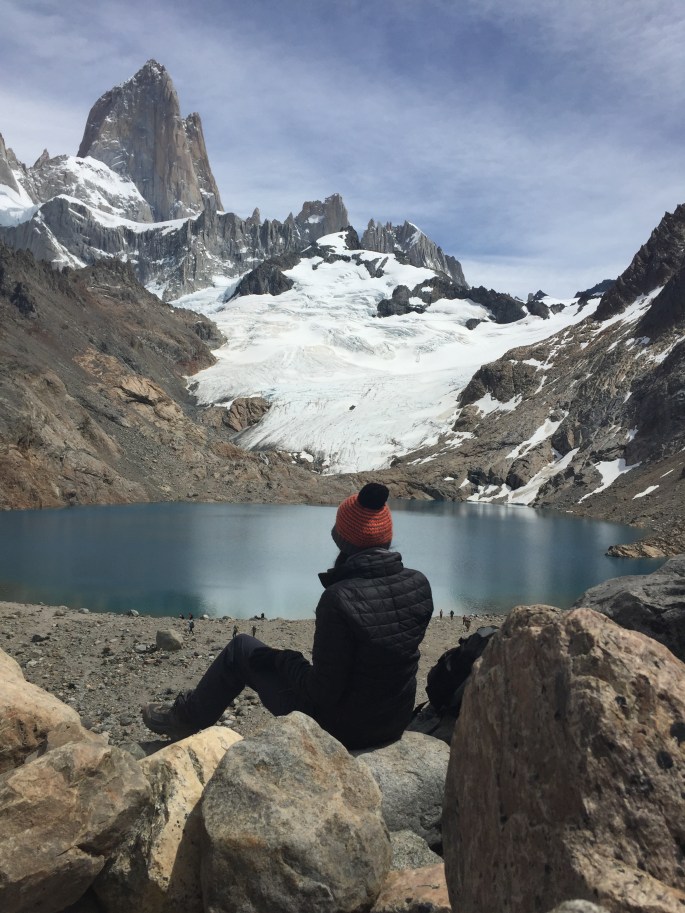
This route was 10.8km each way (21.6km overall but we added a little extra with a small detour at a little beach on the way back for a much needed sugar stop!) We had a perfectly clear day with excellent views of the Vueltas river that we had rafted on and the Fitz Roy mountain. This is known to be a tough route and despite being a similar distance to the first hike we did, it was much more challenging and took about 9 hours with a generous lunch stop. There were several kilometres of flat respite in the middle but an extremely steep hour or so at the end. I found that part challenging, especially on the way down! The final viewpoint at the top was worth it though.

One of the funny things about hiking long distances is the random stuff you end up talking about. Or in Hiten’s case a variety of stream-of-consciousness songs that I will not go into more detail about here.

We loved the remote scenes, the hiking, the empanadas. And maybe, just maybe, it was all at a bargain 40% cheaper than next year’s prices.

Argentina: Gaucho Culture

The gaucho (cowboy) is an iconic image in Argentina so of course I wanted to visit an estancia (ranch) whilst I was there. I was not sure whether to stay at one for a night or do a day trip with my mum. We opted for the latter and it was ideal for us because we got a real estancia experience in a very small group (of 3 people!) whilst enjoying an extended stay in our Buenos Aires hotel.

The trip ran from 8.30m to 6pm including the drive to and from BA of roughly 1.5 hours. On our way out of town, our guide pointed out the well-developed shanty town not far from the fancy neighbourhood of Recoleta and further out, exclusive gated communities akin to luxury resorts. As we drove through the pampas, we got a lesson about the region!

San Antonio de Areco

Our first stop was a pretty gaucho town with a population of about 20,000. The town’s aim of conserving gaucho skills, traditions and aesthetics was evident throughout:

  • traditional silversmith workshops – note that mestizo (mixed Spanish and indigenous) gauchos were seen as outcasts roaming the pampas alone but gained recognition by displaying the silver that they earned for herding cattle
  • award-winning leather goods for horses
  • old houses and cars
  • gaucho bars – one of them had with an old cash register and traditional sink
  • traditional chocolate shop
  • artistic gaucho-inspired tiles

Our guide wore gaucho shoes, which are basically “Toms” shoes without the branding – the gauchos had them first!

Estancia el Ombu

The ranch that we visited is a working estancia with about 80 horses and 300 cows. The landscape was beautiful and on arrival, we had some red wine and empanadas surrounded by many dogs. In fact, this place seemed to be dog (and h0rse) heaven given the owner is an animal lover and keeps taking in abandoned dogs.

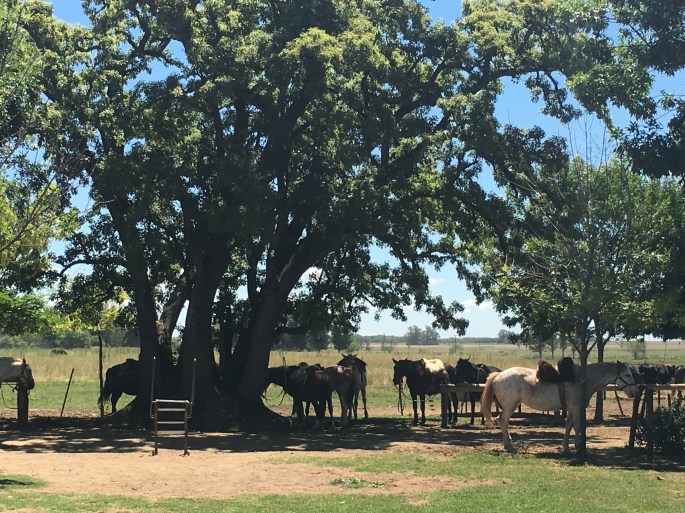
We then went for a horse ride with an award winning gaucho in his 70s who really looked the part. My horse was so attentive and listened to all my commands… or perhaps the gaucho was controlling them all from many metres away.

We had a tour of the grounds including vegable allotment, stables and main building.

The traditional asado (slow cooked barbecue) was delicious with plenty of chimichurri sauce and red wine. No wonder John Tirode of masterchef fame came to this particular estancia to learn how to make chimichurri and empanadas.

After our leisurely late lunch, we enjoyed traditional guitar music and a display of non-violent horse taming (or horse whispering!)

The term gaucho will now first invoke images of this estancia to my mind.. rather than a London restaurant chain.


Argentina: Feeling at home in Buenos Aires

Buenos Aires is the place where I fully unpacked my bag as I spent six nights there after Iguazu falls and another final night in Saturday 17th December. I write this post from Buenos Aires EZE airport… bye South America sob!

img_6409

Buenos Aires is a lively metropolis with gourmet cuisine (second only to Peruvian cuisine in S. America in my opinion!), plenty of shopping, European architecture and Spanish-style late night hours. It is normal to be at a bar or restaurant at midnight and see a toddler out more awake than you. My mum noted Argentians love to indulge their kids and don’t allow them to miss out on the fun. This is the way my parents used to do things in London where as a small child I would often hang out with the grown-ups at parties until I fell asleep in a corner.

Sightseeing

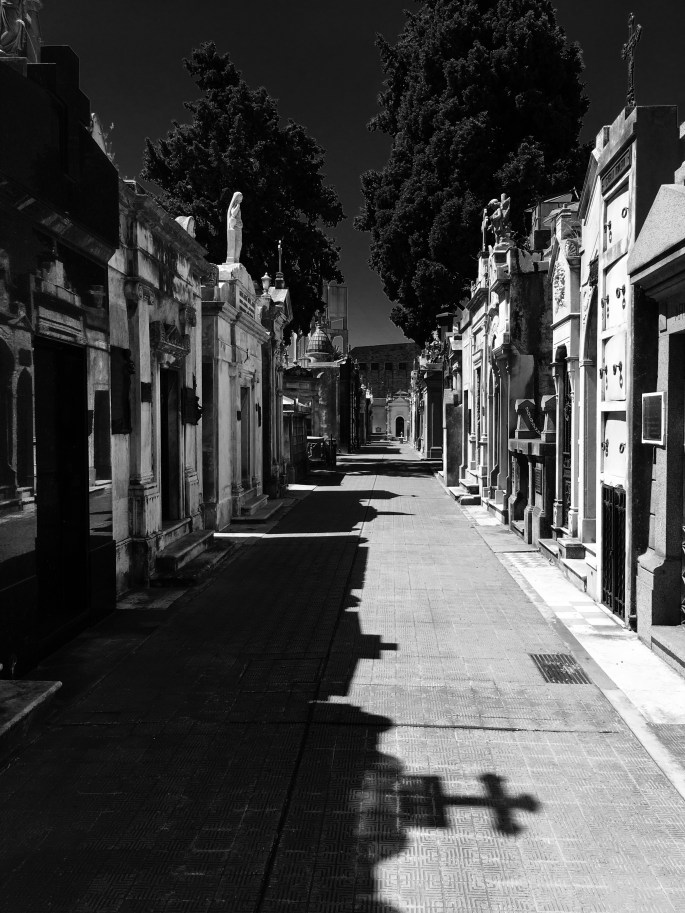
For my first longer stint in BA, we stayed in between Recoleta and Retiro which are fancy neighbourhoods – perhaps the London equivalent is St James, Chelsea or Mayfair. We were close to one of the major sights, the Recoleta cemetery with a large RIP (requiescant in peace) sign marking the entrance. This city of the dead was eerie but beautiful in the sunshine. I found the ornate shadows on the lanes particularly striking.

img_6601

We walked through lines of statues and marble mausoleums, some of which were like miniature churches. Some of the crypts had dusty coffins and broken glass inside whilst others were gleaming and well maintained.

Many of Argentina’s most rich and famous are buried in this cemetery, but Evita (Eva Peron) seemed to the the biggest star. We found her family mausoleum within the maze as a tour guide pointed it out. There was a queue of tourists in front of it and plenty of fresh flowers.

On Sunday we also visited the ‘feria’ (street market) in Plaza Intendente Alvear close to the cemetery. Lots of painting and jewellery stalls and tarot card readers.

Plaza de Mayo is main square and the site for the city’s biggest protests. On one side of it is Casa Rosada – from this balcony Evita spoke to throngs of Argentinians.

We also went into the Cabildo museum which had a pretty courtyard with the purple jacaranda flowers that can be seen all over Madrid and a good view of the square.

Puerto Madero is the newest of BA’s 48 official barrios and has a Canary Wharf like waterfront with renovated warehouses, restaurants and a modern bridge called Puente de la Mujer. The shape is meant to represent a tango dancing couple!

La Boca is a colourful area that has quite a grungy feel. El Caminito is the most famous street for tourists and there are plenty of ladies there asking us if we would like to be dressed up as tango dancers for a photo. In the 19th century, Spanish and Italian immigrants lived in this area that developed as a meat packing district – after painting shipping barges, leftover paint was used on their own metal corrugated homes… so the story goes.

The Fundacion Proa is a modern white walled art museum in Boca that is like a mini Tate modern with a great terrace cafe. Boca Juniors is the famous football team in the area which has a fierce rivalry with River Plate.

San Telmo is not far from Plaza de Mayo and has a good food market and plenty of antique shops to browse including plenty of pricier “do not touch” places.

Shopping

Palermo was the best area for browsing and seeing a mix of posh and hipster stores. I am always fascinated by how there is a similar hipster area in most cities – very short shorts, beards, classic adidas trainers, retro glassses and so on.

My mum and I went to a few other shopping areas but our favoured place to actually spend was cheap and cheerful Florida, a pedestrian street in town filled with high street shops. La Merceria and Rapsodia were two pretty shops good for jewellery and accessories.

Food and drink

Of course I ate and drank a lot in Buenos Aires. A few of the many food highlights:

Ice cream – Lucciano’s in Palermo for great ice cream, loud music, and pretty setting with indoor swings. Freddo’s ice cream chain everywhere also had excellent gelato!

img_2375

Basa Basement Bar in Retiro – My mum and I went here on a relatively quiet end-of-bank-holiday-weekend evening but could still appreciate the good pasta and tapas including chilli and coriander sweetcorn. Plus there is a beautiful colourful bar.

Gran Bar Danzon in Retiro – One of my favourite places that we went to for a welcome dinner for my husband and last night of my mum’s trip. Exposed brickwork, modern english films playing on a projector in black and white, good music, great wine by the glass selection and tasting flights! Mexican inspired sushi, risotto, prawns and chocolate fondant were all good.

Don Julio in Palermo – Buzzing atmosphere and incredibly attentive service in this traditional steakhouse which offered good fish, prawns and sides as well as just steak! Plenty of chimichurri sauce (parsley, garlic, chilli, oil, oregano and vinegar) and Malbec of course…

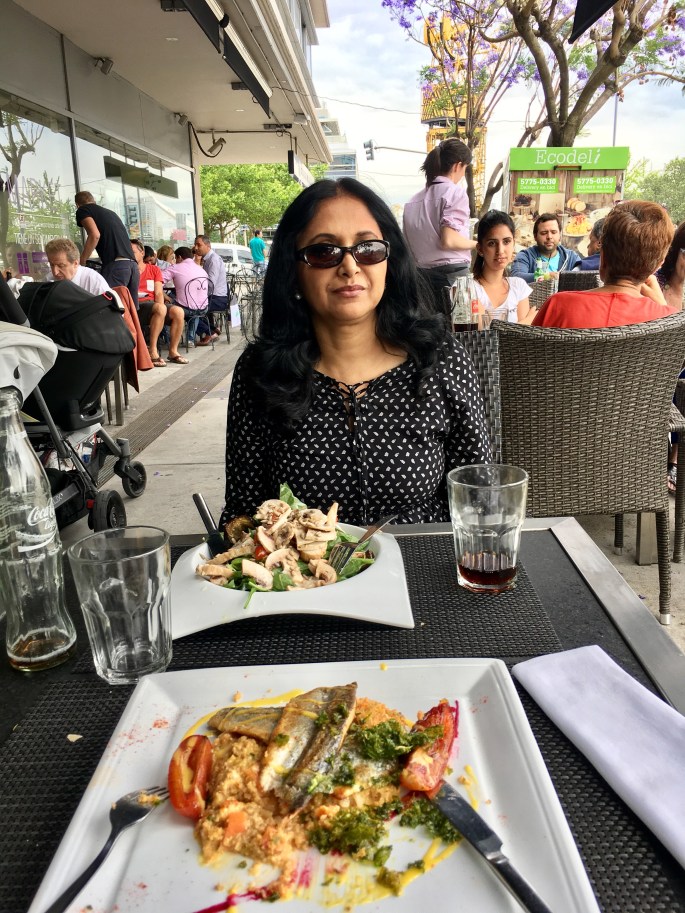
i Central Market in Puerto Madero – Fresh and light (for a change!) lunch of grilled fish with quinoa and chicken salad. However, very slow service!

img_6440

Burger Joint in Palermo – Cheap and delicious dinner…burgers with great blue cheese and mexican flavours plus good beers and red wine by the glass!

Gran Dabbang – Small tapas place that is a fusion of Indian, Thai, Middle Eastern and South American dishes with a small menu. My husband and I went on our last night in Buenos Aires and I strongly recommend this place. To explain a couple of the dishes given we ate everything on the menu: spicy sweetcorn bread with cheese, coriander and mango chutney, roasted aubergine with spices, Indian style lamb curry with rotis. Eclectic food that was brilliant with a cold bottle of Torrontes wine! We ate too fast for any pictures of the food I am afraid.

img_2373

Street art

By this point, I had seen a lot of street art in South America and had been on an excellent tour in Bogota – see my Bogota post for more on that. I wanted my husband to have some of the street art experience and his colleague had recommended graffitimundo.com to us. I love it when I learn about the social and political context whilst walking through the city and although this tour was much more expensive than the one in Colombia, it did deliver.

Notably the street art scene in BA emanated from the middle classes and has been more collaborative than territorial. When the Argentinan peso was pegged 1 for 1, the Buenos Aires middle class were able to travel abroad and see the street art in US and Europe. The scene really started in BA after the 2001 crisis when the peso revalued and Argentina defaulted on its debt. One artist called Gualicho painted fantastical graphic design characters which aimed to take people’s mind off unemployment and poverty.

Fukuro noodle bar in Palermo commissioned a street artist Malatesta to paint their facade. I really liked the pastel three layer design of block colours, geometric prints and stencils of various Asian imagery. The noodle shop became so busy that the shop across the street (picture on the right below) got their facade painted too!

Tango

We all know Tango is BIG in Buenos Aires. We went to a excellent upmarket show at Cafe de los Angelitos in a traditional ornate theatre. The dancing was incredible (makes me realise what the Strictly Come Dancing judges mean when they talk about strong Argentinian tango), the live musicians were visible throughout and the costumes were beautiful.

Iguazu Falls: In awe of Mother Nature (with my mother!)

Iguazu falls on the Argentina-Brazil border is the only place on my grand South America tour that I have visited before. What a difference eleven years can make! The first time round was in summer 2005 when I was backpacking for a month with three uni friends. We stayed in a hostel dorm on the Brazilian side. Fast forward to 2016 and the waterfalls are just as stunning as ever but this is the luxury version…

My mum and I stayed for two nights at Belmond Hotel das Cataratas which a few people had recommended to me, including a friend who spent part of her honeymoon there. The location is ridiculous, set within the Brazialian Parque Nacional do Iguacu. The most panoramic views of the falls and main walking trail are less than a minute walk away and available to hotel guests anytime. We landed at 7.15pm at the Brazilian airport and because the transfer to the hotel was under half an hour, arrived just in time for sunset! The views were magical. There were hardly any tourists because visitors have to leave the national park by 5pm.

However you spell it, Iguazu falls must be one of the natural world’s most awe inspiring sights. Viewed by day, you see the beauty of the seemingly never ending falls (often under a rainbow) and hear the sheer power of the cascades up close.

In fact, it is a chain of hundreds of distinct cascades that together form the 2.7km long cataratas (waterfalls.) Thousands of cubic metres of water plunge down as much as 80 metres.

Over the next two days, we enjoyed the main Cataratas do Iguacu 1.5km paved trail on the Brazilian side in the mornings and evenings. On our first morning, we only saw one other tourist on our way down the trail at about 8am. By the time we were walking back, more hotel guests had surfaced. There is a catwalk and platform close to Gaganta del Diablo “Devil’s Throat” which allows you to feel the full spray of the falls.

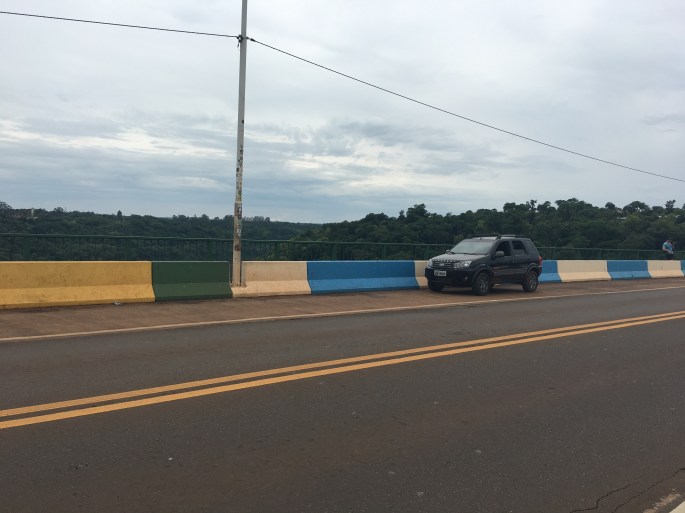
We also took a day trip to the Argentinian side of the falls in Parque Nacional Iguazu. This takes about one hour in a private transfer including the border crossing. Each time they stamp your passport and as we had to cross once more when we flew out of the Argentinian airport , I now have a full page of Brazil and Argentina stamps over two days. The bridge crossing the river marks the boundary between Brazil and Argentina and the paved is painted accordingly!

img_6388

We spent over 3 hours enjoying the Argentinian side that has more trails and more tourists. We took a train to the Devil’s Throat viewpoint from the Argentinan side and walked along a 1.1km walkway perched over the powerful torrent of water. Vapours blur the base of the falls and on this walkway you get a sense of how calm the river is before it plunges into the falls. We then walked the 1.75km Paseo Superior (upper circuit) trail that gives views over the tops of the falls. This time round, we opted not do the Paseo Inferior walk as we wanted to spend more time away from the crowds.

The walks on the Argentinian side also gave us better views of the forest up close.

In terms of wildlife, we saw plenty of butterflies, coatis (like raccoons with more pointy noises), monkeys and toucans.

Whilst we were not being wowed by the natural beauty of the waterfalls, we could relax close to them in our hotel. The decor had an understated Portuguese colonial style. Walking down the wide dark wooden corridors, you could easily be in a bygone era.

Furthermore, we could have delicious meals in this idyllic setting or spend a bit of time lounging by the pool. It did not surprise me that a quite a few families with young children were staying at this hotel… it is Mother Nature’s version of Disneyland after all.

All in all, a fabulous couple of days spent with my mum in between our two city breaks of Lima and Buenos Aires.

Peru: Foodie heaven in Lima

When speaking to friends who had been to Peru, most recommended spending more time in Cuzco and the countryside and only a briefly visiting Lima. I ended up spending four nights and it really overdelivered. The main reason is that Lima is truly a foodie heaven. I was also lucky enough to get sunshine and blue skies in this beautiful coastal city, enjoyed a cycling tour and stayed at two really good hotels.

img_5514

Logistical magic

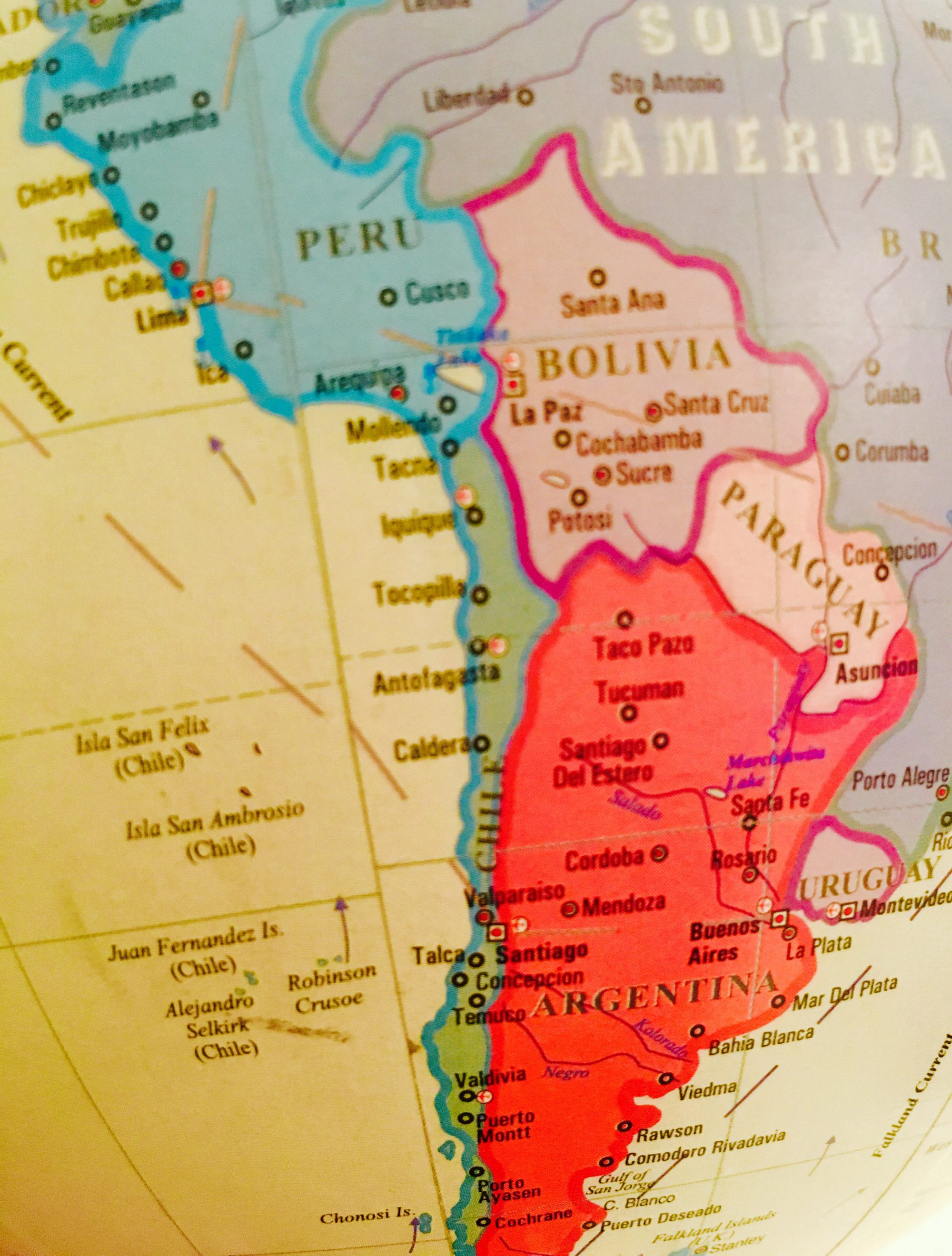
Lima marked two junctures of of my South America trip. First, on 9th November, I flew to Lima from Santiago to meet my uni friend Adam. From there we travelled around Peru and Bolivia for two weeks. Secondly, on 22nd November Adam and I flew back to Lima to spend a day and a half eating! The most organised part of my overall trip planning has to be the fact that my mum flew in on the British Airways direct flight from London to Lima on the same plane that Adam would be flying back to London on.

Barranco and Miraflores

I stayed two nights each at 3B Barranco and Casa Andina Private Collection in Miraflores. 3B’s was a cute modern hotel with bright clean rooms and a colourful communal area where an excellent made to order breakfast was served. It was located in the bohemian district of Barranco, amidst colourful relaxed streets and an excellent array of restaurants. The ladies at reception were incredibly helpful in recommending places to eat and getting our laundry done. Dedalo is a quirky upmarket handicrafts shop with a courtyard coffee shop on the leafy street Saenz Pena. It was one of the many places I had to bring my mum back to when playing tour guide. There were several hipster shops and cafes that could have been at home in Shoreditch.

Casa Andina was a much bigger traditional 5-star hotel in the more touristy and commercial Miraflores district on the coast. It had a Peruvian twist in the decor and served lots of tasty South American dishes for breakfast including fresh avocado spread and toasted Kiwacha, a supergrain more nutritious than quinoa. As well as checking out the coastal views in Miraflores, one morning my mum and I ventured to Huaca Pucllana, a site of built of adobe and clay by the Lima civilisation between 200 and 700 AD. It was great to see an ancient site set amidst a busy city, in the same way that central park in New York carves out space in a metropolis. We had a drink at a beautiful restaurant overlooking the sight. It must be stunning at night when the ruins are illuminated.

Bike Tour of Lima

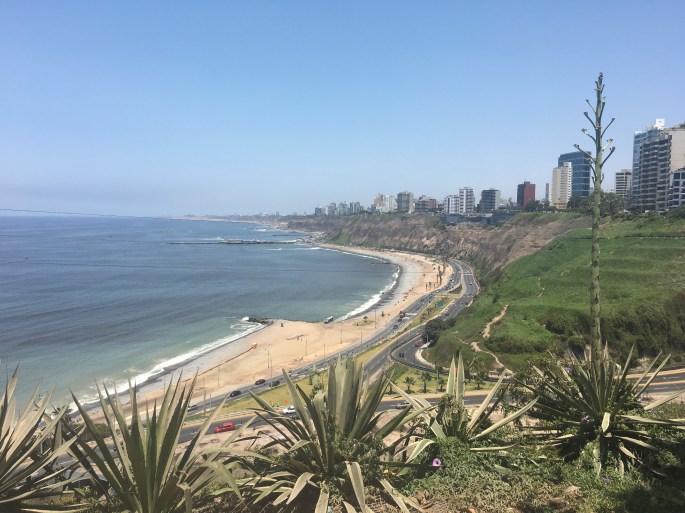
This was a relaxing way to see more of Barranco and Miraflores. The bikes were high quality and for the most part we avoided traffic on bike lanes or back roads. Our guide took our group of five from the bike shop in Miraflores to some of the local parks including Parque del Amor (love park) with coastal views and Gaudi-style architecture. The theme of romance can be seen in the statue called “El Beso” (but nicknamed Fiona and Shrek) and Peruvian poetry quotations. Much of our route was along the coastline which was ideal – sunshine with a cool breeze!

We stopped to look at the beach close to Larco Mar, a shopping centre that was built into the cliffs in to prevent obstruction of the sea view. The colourful umbrellas and pastel buildings give the coast a French Riviera feel.

img_5522

In Barranco (meaning cliff), we saw the old international houses that were unscathed in the war with Chile, perhaps in part because European settlers put up their own national flags on their homes to protect themselves. In fact, many Europeans settled in this suburb during the Juano (fertiliser) boom. Peru was the number one exporter of bird poo fertiliser. These were the days before artificial fertiliser had been invented.

We cycled to Puento de los Suspiros (bridge of sighs) where on your first sighting you can hold your breath, walk (or run) across and make a wish. Plaza de Barranco was surrounded by colourful buildings – even a Starbucks was painted a tasteful mustard colour. In this area, we also saw colourful graffiti so typical of South America in general. Again, this was somewhere I brought my mum back to visit.

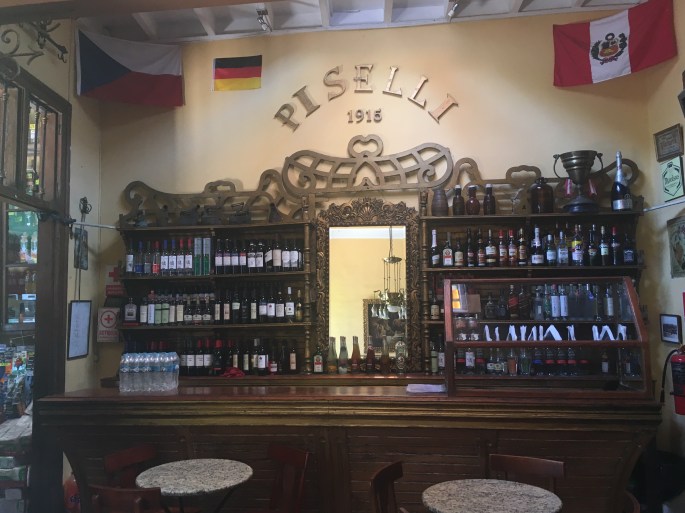
Piselli 1915 was an atmospheric pitstop for beers and sandwiches. This was a traditional Italian-style Bodega bar, an old wooden corner shop with a bar attached.

img_5523

As well as taking in the city, on the tour we learnt a bit about Lima’s history. For example, the Shining Path terrorist group and corruption led to a lot of wealthy Peruvians leaving Peru to go live abroad in the 80s and 90s. Geographically, the ocean used to be accessed by “Los Banos” bathing house but now a road has been built between the cliffs and the sea.

Food heaven

Adam and I were told you cannot eat a bad meal in Lima. We found this to be true. Peruvian food is so flavoursome and distinctive and Lima showcases the cuisine. A few highlights:

Isolina: Traditional hearty stews and meaty dishes at this small traditionally decorated restaurant in Barranco. Adam had a mammoth lomo saltado (stir fried steak, veg and chips) and I had a coriander ribs stew with rice and beans, large enough to feed a family. The red wine and spanish music were also excellent!

img_4664


Canta Rana: A seafood restaurant in Barranco that is frequented mostly by locals, whether it be business people or hipsters. The ceviche (white fish marinated in lime and chilli served with fried corn and giant peruvian corn) and tiradito (finely sliced flounder with citrus and red chilli) were outstanding. When I came back with my mum, we also tried tacu tacu which is a mix of rice and beans shaped into a block and covered with a curry – in our case, prawns in a deliciously spiced yellow pepper sauce.

Gloria’s in Miraflores: An old fashioned pink and square room with lots of paintings. We initially came in because the doorman was so helpful pointing us towards the restaurant we were actually looking for that had too long a waiting list! It was busy with a few groups clearly here for client dinners. I had one of the best seafood spaghettis I’ve ever had with fried garlic. My mum had a well spiced fish dish. Perfect churros con chocolate for an indulgent desert!

img_5534

Panchita: A large and buzzing Miraflores Peruvian restaurant that was too busy for us to get a place at the previous day. The highlight for me was the fresh springy corn bread served with soft butter and an array of Peruvian dips. We also tasted causa (a mashed potato pie filled with avocado and chicken), yellow chicken curry and crispy pork with onion, corn and potatoes. Although tasty, the portions were simply too massive to be able to enjoy fully.

Edo sushi: Incredibly fresh and creative sushi dishes. 

Nuevo Mundo: Not food, but a cool bar for craft beers on Avenue Jose Larco!

Delifrance Bakery: Lots of treats including chocolate cake!

I hope one day I can come back to Lima, if only to eat.