Chile: Surreal landscapes of Atacama

As I’m reeling from the US election outcome, let me focus on something equally surreal but far more pleasant. After visiting Santiago and Maipo valley, on 29th October our Chile Flash Pack tour flew to Calama, a mining town in the north of the country. The mountainous views from the plane and upon landing were stunning. We had landed dry desert canyon country!

img_3887

After a scenic drive, we arrived at Cumbres San Pedro de Atacama, a hotel with a beautiful boutique Safari lodge feel to it. The lobby smelt floral and our en suites had both indoor and outdoor showers! Over the next three days, we saw a variety spectacular landscapes.

img_3830

Valle de Luna (moon valley)

I am awestruck by the intensity of the desert and the lunar style rock formations. The light hits the fine sand dunes in a way that makes you want to roll down them! The colour palette is all yellows, oranges and mustards against a deep blue sky. Some of the rock formations that are meant to look like things like a T-rex, angel, pig (this one really does for me!) and a woman praying. We climb up a high ridge for a better view.

We also enjoy a “blink-and-you’ll-miss-it” cycle ride through the desert. Thankfully I did not bother bringing my padded cycling shorts… I just adjust my seat correctly by the time we need to move on to catch the sunset from an ideal vantage point! But it is worth it. We have red wine, cheese and fresh fruit as we watch the sunset turn the mountains pink and orange and the clouds blood red. The drinks are a nice touch and reminds me of the incredible safari I was lucky enough to go on 2 years ago in the Masai Mara. Thanks to the social media expert in our group, Violette, we have numerous solo and group boomerangs. If you don’t know what I’m talking about, get with the times!

Salar de Atacama (salt flats)

We visit the shallow lagoons where brine shrimp flourish. These crustaceans are shorter than 1cm and can withstand highly saline environments, hot temperatures and a low concentration of oxygen. Their eggs can remain in metabolic inactivity and stay dormant for decades in the dried up salty surface. Migratory birds like flamingos feed on the brine shrimp which contain a “beta-carotene” pigment that provides the birds with their pink colour. The lakes are blue, red and green and the flamingos are not what I expected. They are not the cartoon pink flamingos I have seen at the zoo, they do not stand with one leg up (too busy eating to get more pink?), and some of them fly above us.


Altiplanico lagoons Miscanti and Menique

On the way to these lakes, we reach a breaktaking 4,500m elevation. I feel out of breath after a brisk walk and do a test jog of about 15 metres just because I want to understand how it feels (ahead of trekking in Peru in a couple of weeks.) Needless to say, I am tired after a few seconds of jogging (OK maybe it is not THAT far off my sea level fitness level!) The lakes are a deep blue and surrounded by mustard mountains and plains of yellow shrubs.

San Pedro de Atacama

Our hotel is a short drive from this small tourist town full of cute but expensive shops (I get a much needed coin purse!) and restaurants. We dine at La Casona, which offers hearty food and free pisco sours. Apologies to our stern guide Michelangelo who warned us we should not eat heavy meals or drink much in these high altitudes!

Tatio Geysers

The geothermal fields with geysers erupting are best viewed at sunset when it is very cold…. -14C when we visited (yes minus!) and 5am departure (yes 5!) That way you can see the full force of the steam. Thankfully we decide to avoid using the hot springs… I would have had to live there rather than risk getting back out into -14C air!  We are cautious as we have to sign a waiver form promising not to touch the geysers (people have lost hands we hear!)

More scenic lakes and canyons…

Thankfully we move to warmer climates for our breakfast. Hot chocolate never tasted so good and as the sun starts to shine, I start to get the feeling back in my fingers! More stunning view, more flamingos and lots of llamas.

The pool and spa

The afternoon of our last day in Atacama is a relaxed one and what a contrast! After the 5am start to the freezing cold mountains to see geysers, we spend the afternoon lazing by the pool in the hot sun. We get virgin mojitos… so refreshing and in keeping with our guide’s no-drinking advice. All of the ladies in our group also get massages. Finally, I have a delicious and nutritious dinner of grilled salmon and mushroom quinoa… my body is calling out for something nutritious. To think we were so so cold this morning!

img_4189

Local artisans

One of our stops was in a small town where we see a small church and a “special lady” who uses a traditional loom. She has a llama and sheep in her back yard and outside we see a Flintstones style rusty car!

What an incredible 3 days. I leave feeling refreshed and happy!


Chile: wine, wine, pisco sours, more wine in Maipo Valley

The morning is a bit grey and overcast but for the Flash Pack Chile group it is wine day! We pile into a minibus for a ‘school trip’ to the wineries of Maipo Valley, about an hour’s drive from Santiago. We have 3 enjoyable stops.
1) Huelen Winery 

img_3793

This is a small family-run winery with a working farm feel to it. We meet the winery owner who has expressive eyebrows and cracks jokes constantly in Spanish which our guide Sergio partly translates but it is not always necessary given the accompanying gestures! We are followed by his excitable dog Agustina.

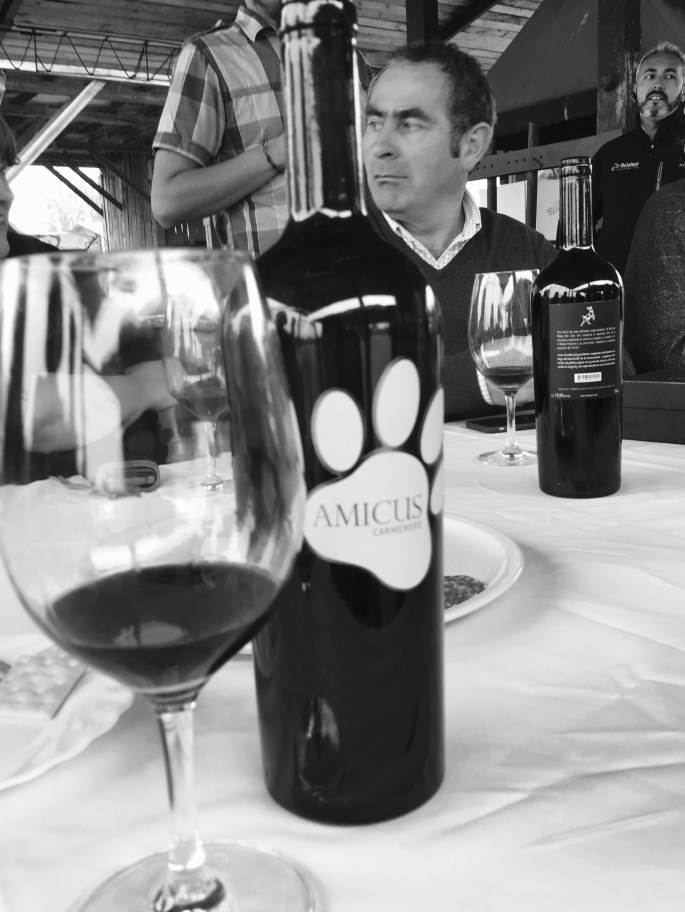
We have the opportunity to drink red wine from the big vats in the open air production zone then walk through the vineyards to a covered seating area for more wine and nibbles. Our host is very thoughtful and even provides gluten-free crackers for one member of our group. This winery’s “Amicus” wine has a paw print on the bottle. A paw print is not a symbol that says good wine to me! That said, it goes down very well (an excellent breakfast wine given it is pre 11am!) and my favourite is the Carmenere, a grape variety I have not tried (I think) in London. I have had a little read of the history of it and it seems to be a lost grape variety that Chileans initially thought was a type of Merlot (see http://winefornormalpeople.com/the-best-grape-story-of-all-time-carmenere/ for more on this.)

img_3764

2) Santa Rita Winery

This place is an extreme contrast to the previous one. It is a polished tour complete with an English speaking guide and a information video. This reminds me of the slick Moët & Chandon tour in the Champagne region I went on a couple of years back.

We have the opportunity to learn about the processes involved in wine making… fermentation, maceration, second fermentation, blending, filtering etc. Quite a lot of de ja vu given I like to go wine tasting whenever holidaying in a wine region. I did love seeing a real bottling factory!

The gardens and cellars are beautiful in this fancy winery. Two nuggets of information stand out. First, the pretty rose bushes placed at the ends of the vines are not there for decoration but to serve as a canary in a mine. It is easier to spot diseases on the roses that might attack the vines. Secondly, Santa Rita does a range of wines called “120.” According to legend, 120 patriots, exhausted after a long, hard battle during the fight for Chile’s independence, reached the land belonging to Santa Rita. In 1814, these soldiers were given food and shelter by the lady of the house (yes, a lady owned the house in that era we are told!)  I thought it is excellent marketing to make a wine a patriotic choice. However, the consensus amongst our group was that we preferred the wine at the smaller winery.

3) Lunch at Tesoro de Chile Restaurant

This a gorgeous small restaurant with a flower-filled courtyard where our group can sample small plates of classic Chilean dishes and share stories of romance (and online dating!) The food and drink highlights are plentiful:

  • Pisco sours that are very lemony
  • Sopaipillas are small fried pastries made of flour and pumpkin. In this case they are still hot and accompanied by a salsa made of tomato, chilli, onion and coriander. Divine! I could have eaten 10 but limit myself to 3.
  • Pastel de Choclo which is a corn pie. It is a bit like a shepherd’s pie with meat and onions on the bottom and a creamy top made of sweet corn. The flavour of the corn is outstanding and we get mini versions so we are not too full to continue eating!
  • Creamy fish and prawn curry with white rice.
  • Creme caramel with chocolate garnish and dulche de leche.
  • More red wine!

All in all a successful day trip from Santiago for someone like me who loves good food and red wine.


Chile: Bienvenidos a Santiago!

I love Santiago right away. The city feels a lot like Madrid to me with european-style architecture, leafy avenues and green parks. However, the trees seem to be on a gigantic tropical scale! I am staying in a pretty part of town called Bellas Artes which seems to be walking distance to everything. Altiplanico Bellas Artes Hotel is a simple and classic place to stay and is adjacent to a square filled with flowers, the Museo Bellas Artes and another Botero statue (I saw many of these chubby statues whilst in Colombia!)

The Parque Foresetal is a narrow park that runs along the river and is a scenic route to navigate different parts of town. I feel very relaxed walking around alone for many reasons.

1) With such a european vibe, I feel close to home (Brexit aside!)

2) No indigenous Zika woop woop! Chile eradicated the Aedes aegypti mosquito species in 1961 on its mainland and the World Health Organization has said it does not expect the Zika virus to spread to either continental Chile and Canada (it may well spread to the rest of the Americas.)

3) The city is more developed and feels so much safer than Bogota from where I have come. There are lots of couples hanging out in the park (er, a few need to be told to get a room!), mums pushing prams and young women walking solo.

4) The city is easy to navigate from my central location with a map from the hotel, even for a person like me who has lost all natural sense of direction since the introduction of iPhones.

5) The sun is shining and the sky is so blue!

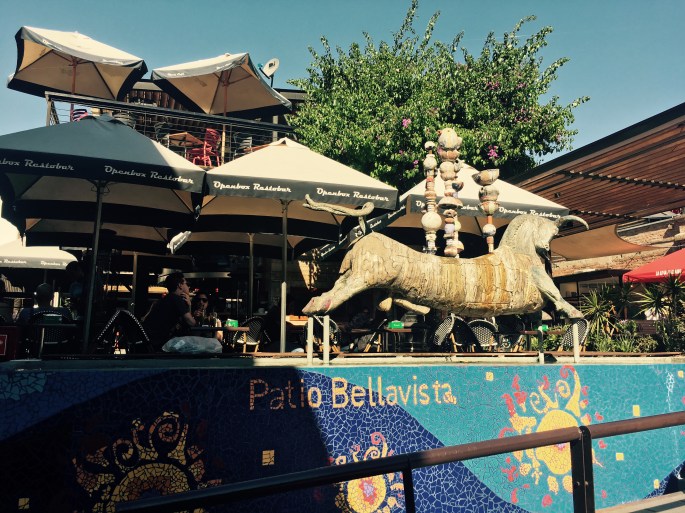
After feeling proud of myself for completing some essential admin (buying water, handing in a bag of laundry to a small laundrette nearby, having a nap having not slept on the flight) I wander to Bellavista, close to a big university and full of bars and restaurants. Although I typically do not like eating alone at restaurants, I enjoyed some sushi in Patio Bellavista… picture menus and english make ordering very easy!

img_3727

The next day, my “Flash Pack” tour begins. This is a relatively luxury tour company marketed at solo travellers in their 30s and 40s and I think I came across it whilst googling something like “group travel 30 year old not for retired people or gap year students”! I suspect I will write more about this tour group experience once I complete my 2 week tour of Chile.

I meet our group of 10 and some of us go for lunch before a 3pm walking tour with a cheeky and fun guide called Sergio (Sergio.Gestionturismo@gmail.com if you happen to be in Santiago.) My roommate is a fellow 30 year old called Elisa from New Jersey. Having been alone for the past few days, I am like an excitable puppy in the company of other people. I have so many words I want to say… my calls to family were not long enough and it didn’t feel right to start talking to myself. Our group consists of 9 girls and 1 guy. Perhaps the low point for him is when we start talking about manicures and shellac.

I am in awe of the Plaza de Armas close to our hotel. This is the main square of Santiago and it is lively with musicians and locals relaxing under the shade of GIGANTIC trees. Some of the old fashioned (somewhat basic-looking) department stores around the square actually sell great clothes. I need to buy a baseball cap for trekking but end up getting a very cute top too!

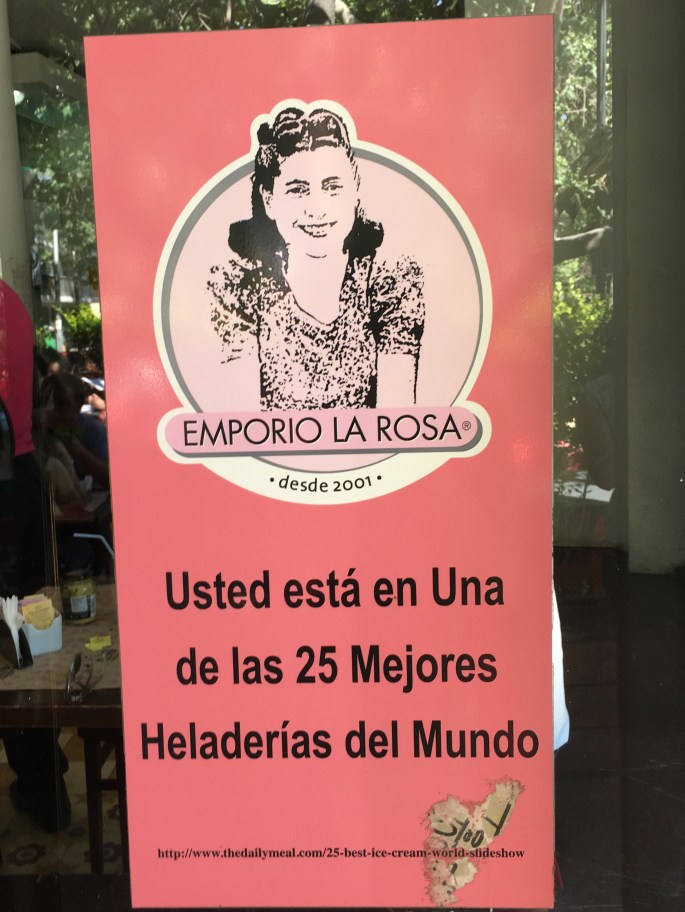
Other highlights of our walking tour are getting delicious gelato from Emporio la Rosa. Rosa looks a bit like Anne Frank but the fresh passionfruit and raspberry flavours I sampled were delicious.

img_3732

We walk up the hill to Santa Lucia which allows for views across the city including “Sanhattan” as they call the high rise area of town and Terraza Neptuno.

We also check of Palacio la Moneda (presidential palace) and some streets named London and Paris that were designed by architects that studied in those cities. We conclude our tour in a hidden bar in a courtyard with Chilean flag bunting. They love their flag here, even as much as the Americans I’d say. Pisco sours here are so good… I think they beat the expensive ones that you get in places like Coya in London (although Coya is still close to the top of the league table for ceviche in my eyes!) I will have to compare to the Peruvian version when I go to Lima.

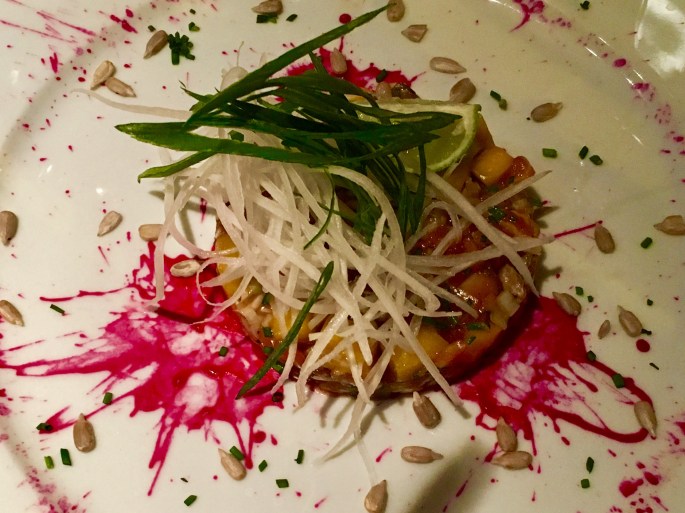
We have dinner at Mulato in Lastarria, an area with lots of boutique shops, bookshops and cafes. The food is tasty, beautifully presented and good value for money. The seafood ceviche and the salmon mango tartare stand out!

img_3747

In conclusion, My 2 days in Santiago were very relaxing. A great city to stroll around in the sunshine. Just take something warm for the cool evenings once the sun goes down… Londoners will be used to this during our summer month.


Colombia: Bogota vs Cartagena

In this battle of cities, Cartagena quickly found itself in pole position. We spent a few days strolling the narrow streets of the old city contained within some 13km of old fortifications. I can see why this is a Unesco world heritage sight. The palette of colours is tropical, from the buildings to the flowers and plants overflowing from balconies, and you are never far away from a plaza or a beautiful church. There is plenty of sunshine and humidity but walking along the coast you can enjoy a cool breeze.

We stay in a beautiful boutique hotel with just 7 rooms on Calle de Mantilla close to Santo Domingo and the cathedral. It is set around an interior courtyard and has a small scenic roof terrace. One day it rained for an hour and I enjoyed listening from the covered balcony. The downpour reminded me of being on a veranda in India. The fruits for breakfast are fantastic especially the sweet papaya.

Sightseeing in Cartagena is just strolling about as you will encounter the main places such as Plaza de Bolivar, a leafy square with palm trees in front of Palacio de la Inquisicion. One evening there was lively music and dance performances in the square.

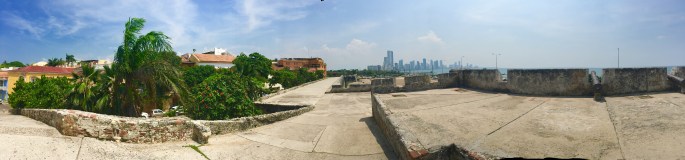
Walking along the perimeter stone walls you can see the old city within and the new tower blocks outside.

IMG_3491.JPG

There are so many bars and restaurants in the old town it is hard to pick. I particularly enjoyed seafood casserole and chicken confit at El Santisimo, just off Plaza de Santiago.

How can Bogota compete? Sightseeing here is very different in that you don’t just have one main area to wander around. Many of the upmarket hotels and restaurants are in Zona Rosa district (we stayed in this area) which is about half an hour taxi away from the la Candelaria district where most of the traditional sights are. Furthermore, the city does not feel quite so safe. We experienced a theft at Bogota airport ourselves which is very common according to the airport staff and police. Perhaps this is why so many of the locals pay for plastic wrapping and security belts for their luggage!

That said, Bogota started to grow on me. The Zona Rosa district has fabulous restaurants. Osaka for incredible sweet chilli and mustard seed ceviche and pork ramen, Central Cevicheria for fresh seafood, De Lucca for tasty Italian and great red wine by the glass just to name a few. I also liked the chain BBC (Bogota Beer Company) that can be found across the city.

There are also tasty and far cheaper places to eat in la Candelaria (La Hamburgueseria for tasty burgers and mexican although this is a a chain that be be found elsewhere, San Just for french style tapas, and a random small place we went to that has a set menu of tasty leek soup and fish or chicken for about £6)

The main sights in la Candelaria are around Plaza de Bolivar (yes, another one.) There are some protesters camping in the square albeit in an organised fashion and people selling bird seed to feed the pigeons (as in Trafalgar Square in London or Dam Square in Amersterdam.) You can see several impressive  churches and government buildings. I was surprised to see so much wealth on show through the gates of Casa de Narino, the presidential building. This did not stop me from the obligatory tourist photo outside with the guards!

img_3608

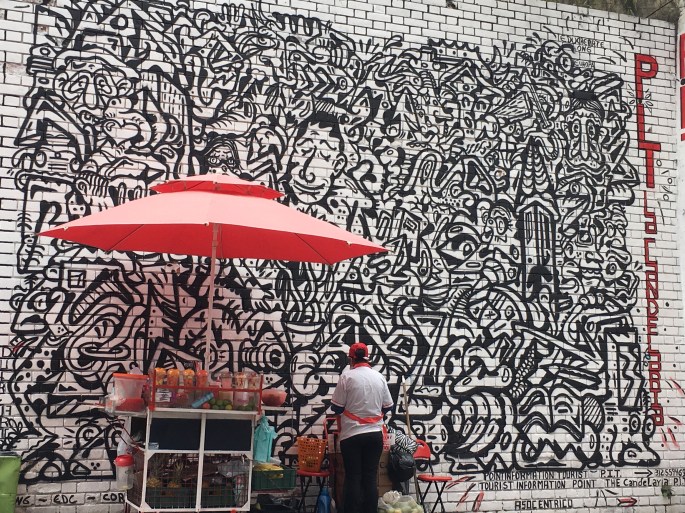
Where Bogota really shone for me was the free street art tour offered by bogotagraffiti.com that commences daily at 10am and 2pm in Parque de los Periodistas. Our guide Ray was Colombian born but grew up in the US. He is passionate about street art and is a gallery owner holding debates on urban art and intellectual property rights and provides us some insight into different street artists and broader historical context.

A collective of 4 artists painted this wall including DJ Lu who did the stencils of war bugs and pineapple grenades (word play in Spanish) “Exploitation ruins lives” is the message on another section with images of a capitalist demon in top hat, a vulture wearing a mining hard hat, and coffee bean coins.

We learn that some of the works refer to “Plan Colombia” when in 2000 the US government paid some $6billion to reduce cocaine supply. Although the money was meant to go towards both training the Colombian military and developmental projects to offer peasants alternatives to coca farming, in reality most of the money went to the military and helicopter dropping of devegatation chemicals that damage other crops and the water supply as the intended coca farm targets.

IMG_3673.JPG
Mural of the life cycle of the land – crops being sprayed with devegetation chemicals

“False positives” were casualties caught up in the body count methodology used by the military. Uneducated innocent peasants were shot by the military who claimed they were guerillas (often framed in guerilla clothes or as communists.)

The tour lasted 2 and a half hours and enabled us to walk through some of la Candelaria’s most vibrant streets which we may not have ventured to alone. Bogota no longer heavily punishes street artists and this adds another colourful side to the city. Although Cartegena was my  favourite city in Colombia, for me it was worth seeing the capital to grasp its multifaceted character.

img_3687


Colombia: Tayrona National Park 

Getting off the plane at Santa Marta airport right on the coast, I immediately felt like I was in the Caribbean. Sunshine, blue skies, over 30 degrees heat and a distinctly Carribbean vibe.

img_3420
Santa Marta Airport by the sea!

The drive from Santa Marta airport to our hotel Villa Maria Tayrona in Los Naranjos was over an hour but is just 10 minutes away from the El Zaino gate of Tayrona National Park. You seem to get more bang for your buck if you stay outside… Inside the park itself, you get beach cabins (such as Ecohabs) or campsites which are beautiful but we opted for a very comfortable duplex with strong AC and modern en suite! I’m not usually a big AC fan but was thankful as it keeps the bugs at bay.

Villa Maria Tayrona is a nice spot for lunch (the fish and produce is so fresh and we discovered their refreshing natural lemonade is just like Indian ‘nimbu pani’) and hummingbird watching (they attract them with hanging bird feeders) and an afternoon down by the beach. It was not crowded at all and there were some young boys playing football at the water’s edge. The villa’s 2 for 1 happy hour cocktails are strong!

img_3435
Beach by Villa Maria Tayrona

The next morning, it is off to Tayrona National Park. I was asking the question before my trip “Is is worth visiting for just a day or even half a day?” I did my lonely planet and online research that gave me mixed opinions. Now my own answer is yes (and even easier if you stay near the park rather than Santa Marta)!

img_3442
Start of the trail at Canaveral

The park is open from 8am to 5pm and whilst you have to watch an information video in Spanish before entering, it is then easy to grab a minibus (they go roughly every 15 minutes or until they fill up with passengers) to take you to Canaveral. This costs COP 3000 per person per journey. From Canaveral, there is ~3.2km trail to Arrecifes. I was impressed at how well marked it was with wooden pathways and stairs with handrails for the steep parts (which are numerous…some people with flip flops were struggling!)

img_3447
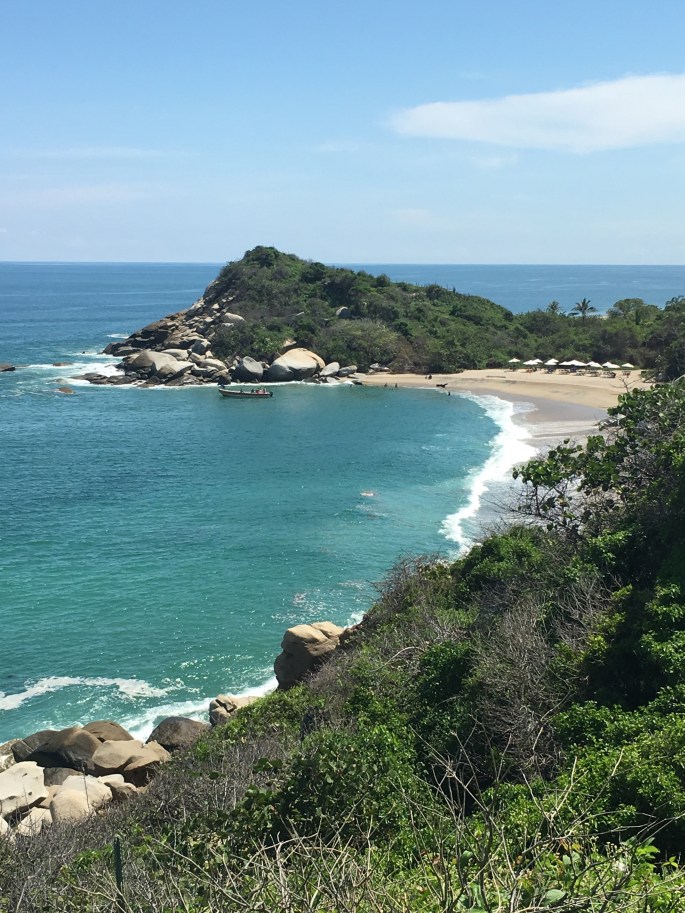
Feeling the sea breeze as the coast comes into view

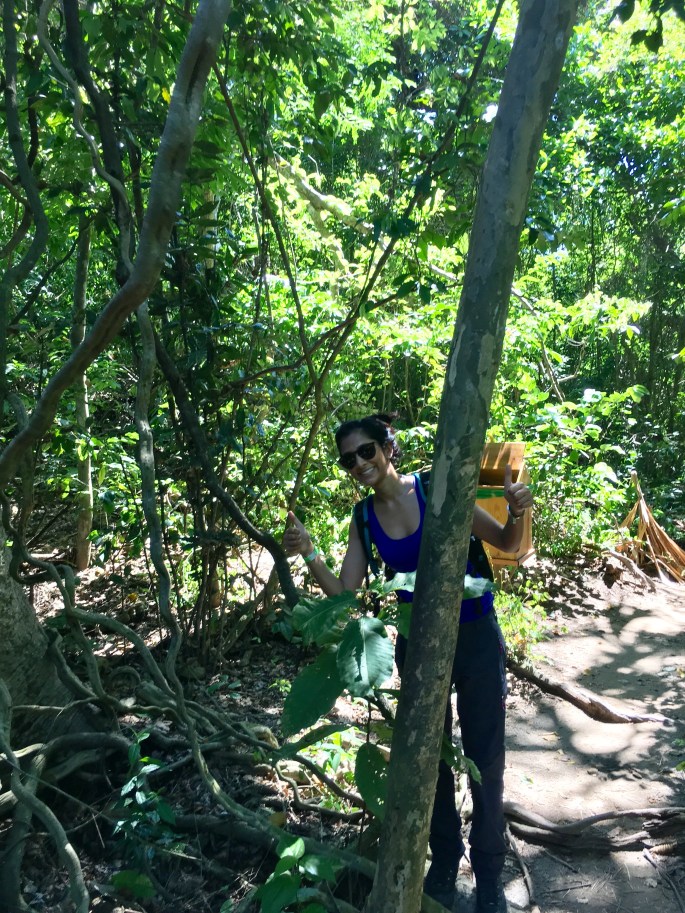
The scenic jungle trail offers views of the golden sandy beaches and boulders on the coast. We encountered plenty of tourists but the trail is by no means crowded. We turned back after a couple of hours as I’d made my dad sweat it out climbing the stairs in the heat! You could continue on from Arrecifes to La Aranilla, then La Piscina and El Cabo San Juan del Guia to make it a full day or stay the night.

img_3456
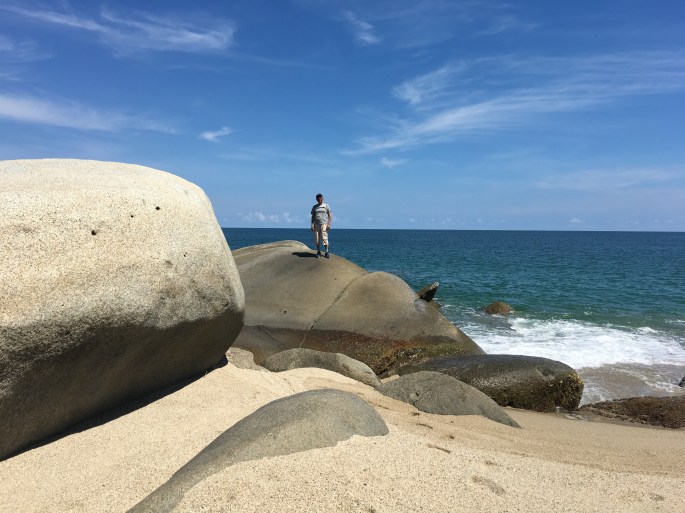
My dad taking a well deserved break from hiking

Beware that many of the beaches in the park itself are not for swimming given the strong undercurrents in coast around Arrecifes. There are some warning signs so wait for the swimmable sections… and a beware of crocodiles sign that terrified me given there were no other people around on that part of the beach.

img_3482

Colombia: A quick tour of Medellin where Pablo Escobar cemented his criminal career

“Have you watched Narcos?” This was one of the most common questions I was asked when I told friends and colleagues I was heading to Colombia. Drug cartels operating in lush green hills and of course the infamous Pablo Escobar (the drug lord who at the height of his career is said to have supplied approximately 80% of the cocaine smuggled into the USA) seem to be images associated with Colombia for many Netflix viewers. See trusty wikipedia for more on Escobar – wiki link.

img_3394
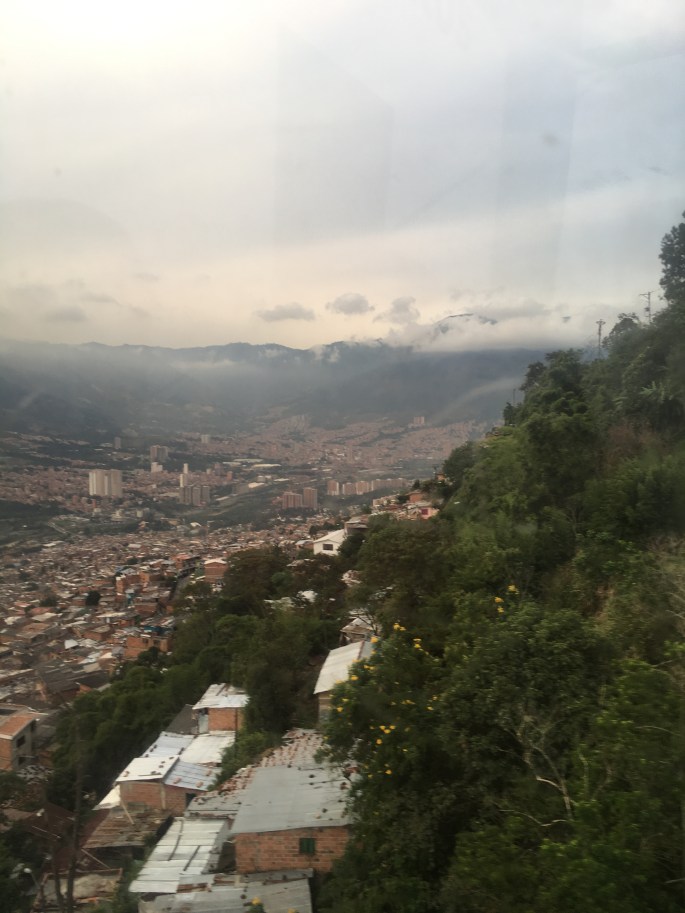
View across Medellin from the Metro cable car (pronounced Medejin)

Our tight itinerary allowed for a grand total of 22 hours total in the city… we decided to include it and I think it was worth it. The 1 hour domestic flight was easy given the small arrival airport and the taxi transfer to town was nearly an hour but a beautiful drive through mountains covered in lush greenery.

We checked into our hotel in El Poblado district (where most of the upscale hotels and restaurants are found) and had a quick lunch at a chain Crepes&Waffles (huge ham and cheese crepe and tasty spinach soup). According to the Lonely Planet aka my travel bible, this chain employs women in need.

Arranging an English speaking driver to take us to the main sights was a good call with hindsight. Medellin is not small, the main tourist spots are scattered and we wanted to fit in as much as possible in an afternoon.

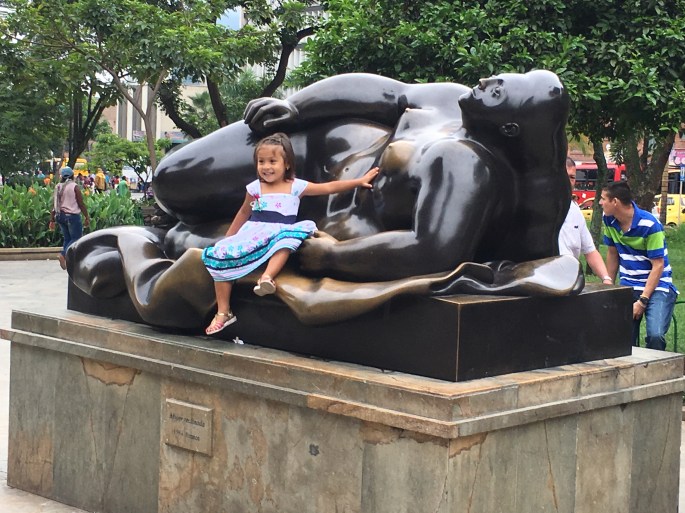
After stopping at Parque San Antonio, we headed to Plaza Botero in front of Museo de Antiquia. This main square is buzzing and lively with locals and tourists posing in front of Fernando Botero’s many chubby scupltures. Note Botero is a famous artist that comes from Medellin and his sculptures can be seen regularly across the rest of Colombia. The place felt very safe despite a few hawkers and I couldn’t help but chuckle at families and children posing in front of some of the sculptures.

img_3388
Just one example of small kids directed by their parents to climb and pose on Botero’s sculptures!

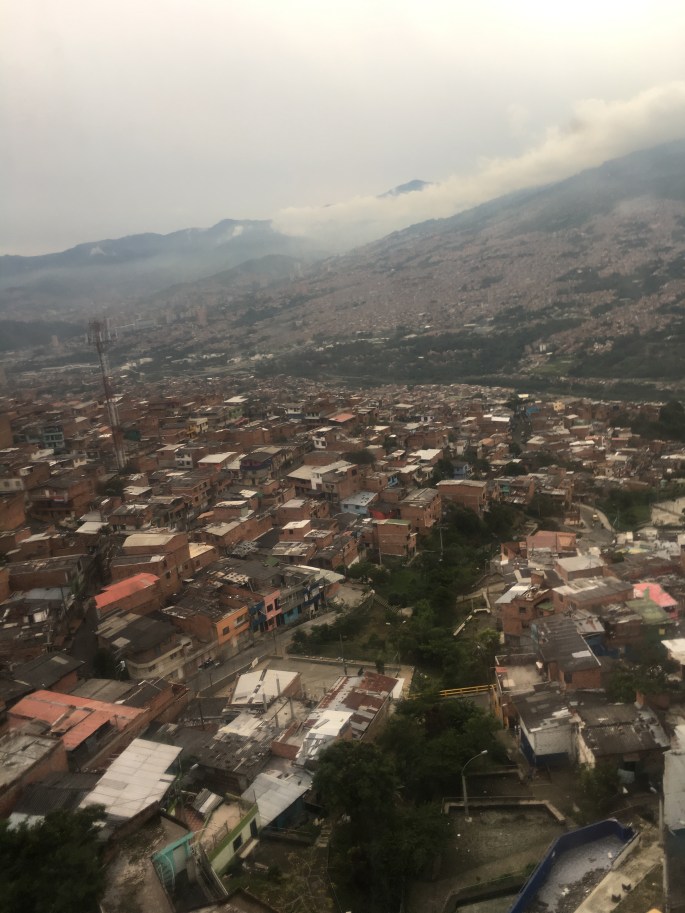
We hopped onto the Metro cable car towards the Spanish library in the hills, queuing with locals who were heading back to the poorer suburbs after a day of work. These French made ski resort-style cable cars operate as part of the public transport system. Even though you can sense these communities are not wealthy (the poorer end of the city’s residential zone categorisation according to our guide Carlos) they are generally well dressed. In particular I noticed how most of the little girls had ornate braiding or hairstyles that must have taken a lot of care.

img_3392
From the Metro cable car

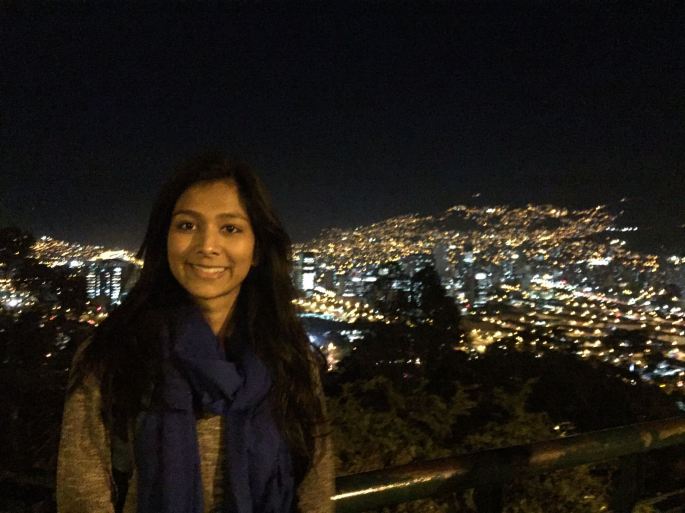
Cerro Nutibara is another viewpoint we visited after the sun had set – an 80 metre hill offering 360 degree views. The twinkling lights of the poorer sides of town up on the slopes are more beautiful by night than the metropolis where the concentration of lights are interrupted by skyscrapers. We drove up the hill but many groups of adults and teenagers were running and doing abs crunches… so not a million miles away from a summer evening in Primrose Hill!

img_3403
From the top of Cerro Nutibara

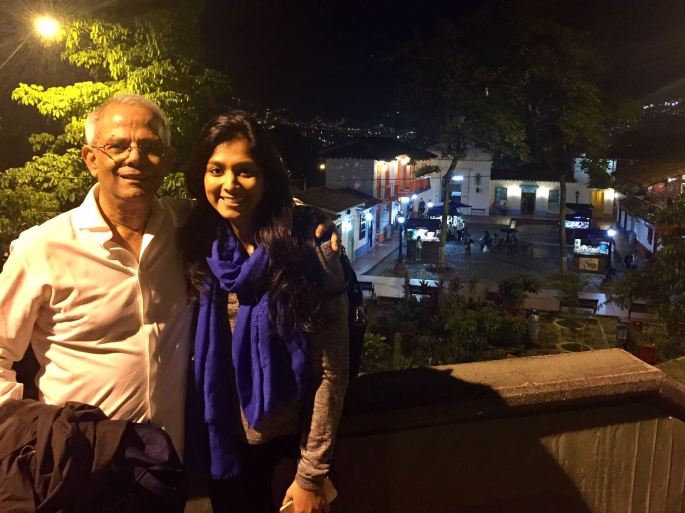
At the top there is also a model township called Pueblito Paisa (paisa are the people of this region called Antioquia) which is a bit touristic but looks pretty when lit up in the evening.

img_3405
My dad and I outside the model village

We rounded up the tour by seeing Pablo Escobar’s house (which was once the tallest building in the area before tower blocks were constructed) and Basilica de la Candelaria (a church alongside Parque Berrio which is known for a dramatic scene in Narcos I hear). We then headed back to El Poblado area for some dinner and drinks, walking through the smell of fried empanadas from street stalls but opting for a friendly Italian restaurant called Il Castillo.

I was not sure what to expect in Medellin, Colombia’s second biggest metropolis, but I found it a safe and lively city surrounded by beautiful scenery. Our guide remembered how dangerous it felt before Escobar’s death in 1993 but it is now a different place. Medellin is nicknamed the City of Eternal Spring due to the pleasant climate and it is somewhere you can get a feel for even in a brief visit… I will probably start watching Narcos now to see more!