Bolivia: Not thug life… Salt life

Another place to tick off my must-do list was the Bolivian salt flats in Uyuni. We opted to fly between La Paz and Uyuni which was only 45 minutes rather than a lengthy bus journey. I was impressed with Boliviana de Aviacion, the airline I was most dubious about when booking my trip back in London.
fullsizerender

We booked a classic 3 day and 2 night 4×4 jeep from back home via STA travel. The company we booked with, Bamba Experience, designated the tour to Red Planet. This was a slightly pricier and “less basic” tour company than some of the very cheap tours available.

Overall, it was a great experience for many reasons:

  1. The stops were well organised to showcase varied and beautiful scenery (more on that below!)
  2. We had an excellent driver who handled the 4×4 well. There have been incidents of Bolivian tour companies using really old cars and bad drivers on the non existent roads. Our patient driver had to regularly stretch out his hands on the wheel whilst driving given how bumpy the terrain was.
  3. Our guide Carlos was hilarious. A couple of his catchphrases were “Got it!” after taking each and every photo on our cameras and “Can I have a few seconds of your precious time” before attempting to explain various places to us. He also loved dancing to the music selection when our group was DJ-ing in the 4×4 and explaining to our driver what the english lyrics meant.
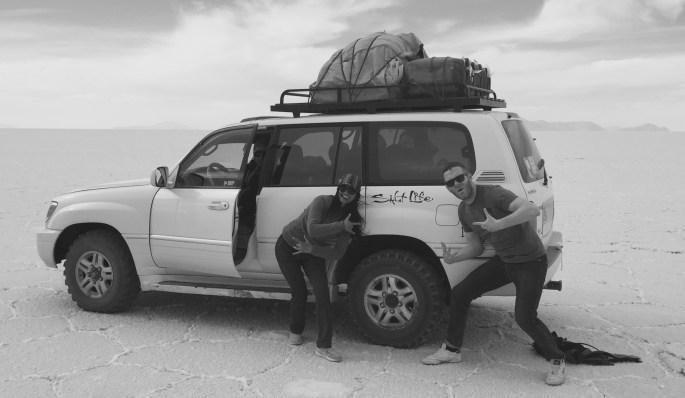
  4. We had a fun like-minded and very international group of 10. Red Planet seems to market less to 18 year old gap year kids and more to people in their later 20s and 30s. Our jeep of 5 was awesome… Carlos our guide, Adam (my uni friend, of course awesome), Meria (Finnish living in Sydney taking time out after redundancy), Olga (Russian living in London), Raine (Israeli living in London also on a career break) We had plenty of car photos that were not instigated by me… Was I finally photoed out!?

The trip was very basic in terms of infrastructure (you really need a 4×4 as there are barely any roads) and accommodation. We stopped at several toilets where we paid 2 boliviano (25p) but mostly it was behind various rock structures or bushes! We didn’t shower for three days and on the second evening had no running water but had a late night dip in a hot spring. Despite the desert scenery being very close geographically to Atacama in Chile, this was definitely the rugged off-road version vs Chile’s tarmac roads and tourist service stops!

Some of the places we saw over the next three days were out of this world…

Uyuni: The small dusty desert town from which we departed felt like being in the wild west. It had a tiny airport and when we flew out at night saw almost no light pollution (aside from runway lights)!

Train cemetery: Old rusty trains made for a nice tourist attraction under bright blue skies. Climbing aboard the trains made me feel like a kid in a playground!

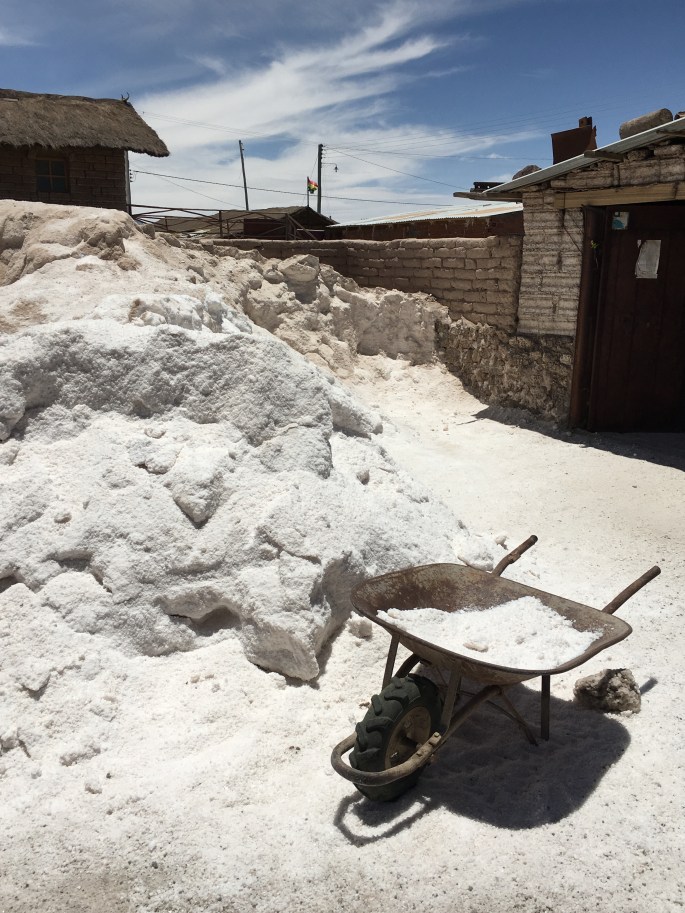
Salt processing plant: Iodine is added before the salt is fit for consumption.
img_5175

Uyuni de Salar (i.e. THE SALT FLAT that we came for!):  This is the largest salt flat in the world at 12,106 square km and has an estimated annual output of 20,000 tonnes. It is believed to have been formed 40,000 to 25,000 years ago (quite a range of possibility) when a lake evaporated and deposited minerals from the mountains.

Our first stop was near the edge of the salt flat that was about 10 metres deep. This section was touristy with quite a few jeeps around, a statue and lots of world flags… the union jack had almost disintegrated in the wind and was in shreds (brexit poster?!) We took a couple of photos around this area but knew we would be going further in. The hexagon pattern looked quite uniform over such a large flat expanse and water was seeping out of the cracks.

We then drove deeper into the white expanse that faded into the horizon in every direction. There were no roads at all so it really felt like being on safari. Mountains that looked quite close were over 100km away.

As we reached a more isolated, central and deeper part of the salt flats the real photography fun (or work) began! We had been discussing amongst our group the popular perspective play photos that we should try out. We need not have worried a jot about it. Carlos, our guide, was a comedy photo machine. We lined up the props including a plastic dinosaur (which for some reason is Bolivian salt flats tradition!) and Carlos told us we were doing 5 group photos and a video.

img_5209

He then instructed us with the precision of a film director, took about 10 iphones and cameras and kept clicking and shouting “Got it!” You have to love the efficiency. We all had a photo of ourselves stamping on the rest of the group.

img_5217

I cannot post the video here but it is a surreal one and half minutes of us all climbing out of a pringles tube, dancing, then jumping back in… obviously!

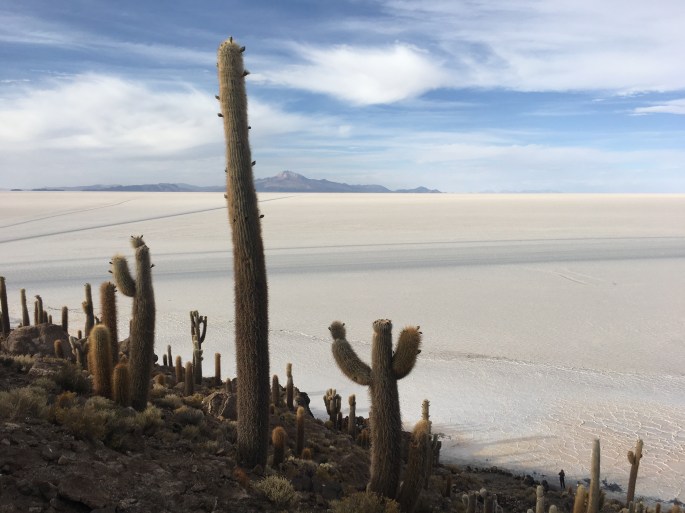
Isla Incahuasi: A hilly outpost in the midst of the white plains with plenty of big Trichocereus Cacti. We had a short hike followed by a beer.

An area with chiselled salt blocks for sunset: Luckily some people had left an “Uyuni” sign.

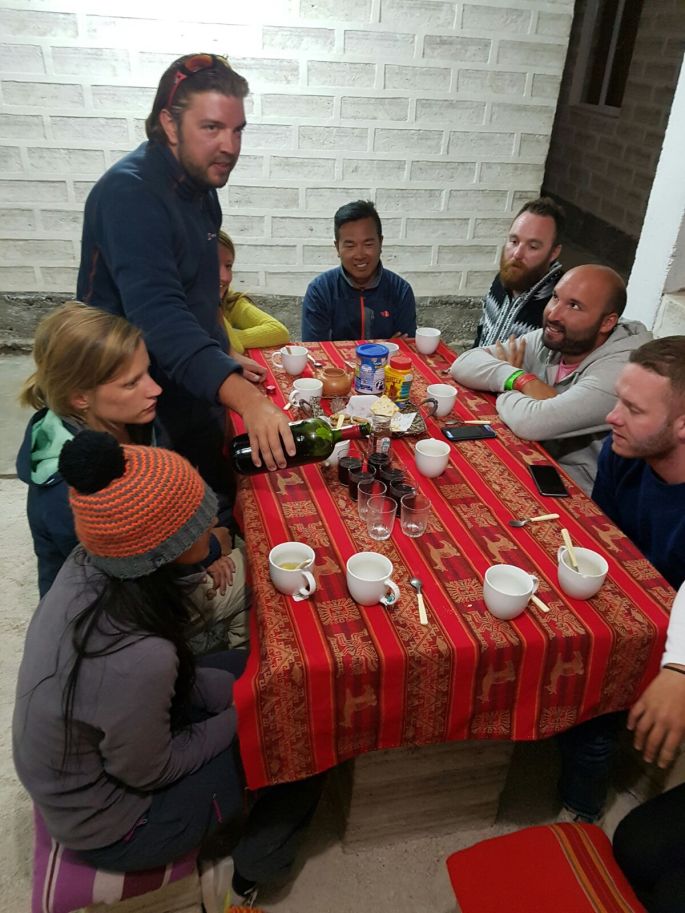
A “salt hotel”: Basic cold accommodation made of salt bricks and with a crunchy salt floor on our first night but we had at least rented warm sleeping bags. We had a fun night drinking red wine and eating a very salty but tasty veg soup! I think the cook used their frying pan and utensils made of salt.
img_5463

Small villages to pay 2 bolivianos (25p) to use toilets on our way to the desert: One had a lovely bridge and vantage point.

Llama viewing in green lush landscapes and hiking up hills: This was very similar to Chile but this time felt so much more remote (#llamaspam) On our hike, Carlos pulled out some delicious chewy sweets (better than wine gums) as a sugar hit can help with the altitude effects. I became a sugar addict. Later when he pulled out packets of skittles for us, I drank mine in two minutes.

Many lagoons and flamingos: The most impressive was the red lagoon. I had seen flamingo lakes in Chile but the lack of people and organised tourism in Bolivia made it feel very rugged. Carlos also taught us a lot about flamingos… a couple of snippets: They are monogamous and live about 12 years. The male flamingo’s mating march inspired the name Flamenco for the spanish dance. They keep one leg folded up whilst sleeping in order to stay warm and keep their blood pumping closer to their heart and change sides every 3 hours or so. They can also keep one half of their brain asleep! When taking photos, why not strike a flamingo pose?

Shooting stars: On our second night, we stayed in a very cold hostel with no running water. The advantage of being off the beaten track was that we could sit in a hot spring at night under the bright stars. We saw shooting stars, Orion’s belt, Mars and two blurs that are galaxies. However, it was a little painful to come out of the hot water into minus temperatures – I had ice in my hair!

A lot of desert including the “Salvador Dali” desert: The artist never went to Bolivia but apparently his paintings look like these stretches of desert so it makes sense marketing-wise to stick his name on it!

img_5379Many rock structures: The interesting shaped ones were fun for climbing and photos, the less interesting ones good cover for toilet stops.

Geysers: Beautiful steam and freezing cold like in Chile but in Bolivia there were no tourists or safety warnings… go as close as you like!

img_5411


Bolivia: The road to La Paz

On the 17th November, at 6.30am it was time for Adam and I to leave Puno in Peru and cross the border to La Paz in Bolivia. We were thinking about taking a tourist bus like the Inka Express that we took from Cuzco to Puno but no such thing exists. So instead we got a 40 soles (£10) Tour Peru coach and embarked upon the 9 hour journey. All things considered it was great value for money, the same price as a half an hour taxi ride in Puno!

The immigration queue to enter Bolivia was comically slow. I was surprised when we got to the front of the queue after nearly 2 hours that there was a hi-tech camera at the immigration desk.

Welcome to Bolivia!

img_5087

La Paz was reached by an extremely bumpy road. It was becoming clear that Bolivia is not quite the well-oiled tourism machine that Peru has become. The city itself was sprawling and busy, full of local people and businessmen going about their daily lives, a sight we has not really encountered the past few days in Cuzco and Machu Picchu.

We stayed at Hotel Casona close to the San Francisco church on the busy main road Santa Cruz. The traditional architecture of the hotel had been beautifully restored and although the upper floors of the hotel were a bit of a maze, it was a very comfortable place to stay.

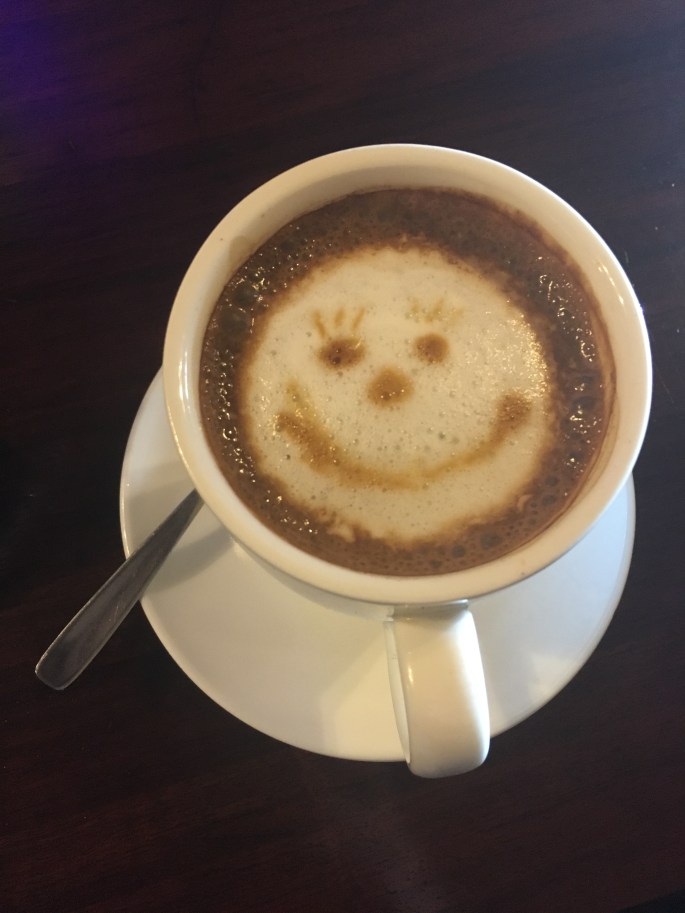
The waiter at the coffee shop of the hotel made the sweetest hot chocolates.

img_5116

On our first evening, we ventured to Sopocachi, a bohemian district away from the main tourist hub of La Paz. Walking through the streets, we could have been in a city in India or China or much of the non-West world… plenty of concrete and brightly lit small shops and street food stalls.

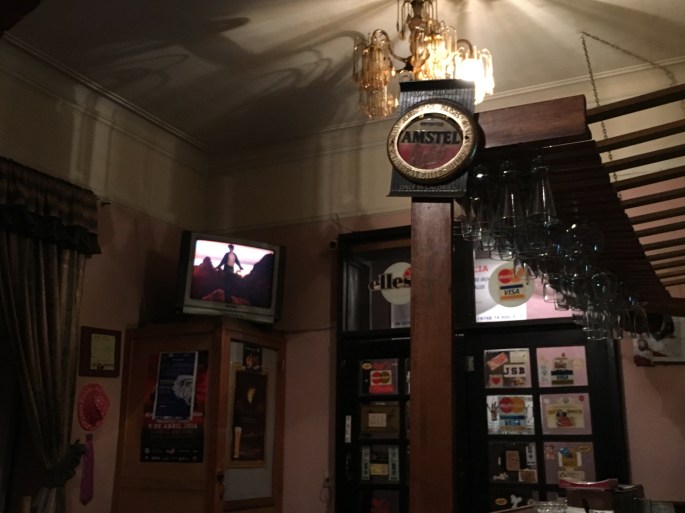
We ended up at some random bars, one of which served just one type of beer and one whisky (yet numerous adverts of other brands of alcohol and many types of glasses to serve them in!) and had an ancient TV playing 80s music videos. It was a bizarre and fun evening. Despite having a list of Lonely Planet pick restaurants in mind, we opted for an ambient restaurant that was full of locals called Ciclik. The global food theme meant that I could (for the first time in many days) feel justified in ordering some very simple food, spaghetti with fresh tomato sauce and basil. The meal and the red wine by the glass were tasty.

img_5090

The next day, I spent some time exploring the city whilst Adam took the “world’s most dangerous road” day trip. This cycling journey was something I avoided because I really do not like cycling downhill on bumpy terrain. I have always preferred the uphills or flats and would have been paying £100 for several hours of uncomfortable and scary braking! Adam confirmed it was indeed all downhill and whilst the scenery looked beautiful, knowing myself well enough, it was not something I felt too bad to miss out on.

As a side note, this attitude tells me how different I am now to when I was travelling aged 21. Whilst backpacking in New Zealand, Australia, and Asia there was not much I would not do if it was “the thing to do” in that place. Whether I would enjoy it was irrelevant! Hence bungee jumping, sky diving, Sydney harbour bridge climb, dangerous ziplining into rivers with rocks in Laos… you name it, I have the photograph!

At 11am, I went on a Red Cap walking tour. Our guide Jorge was very lively and humorous and tried to keep the large group together. As he said, you have to be careful on the streets as Bolivians see traffic lights as Christmas lights, there for decoration!

We started in Plaza San Pedro outside La Paz prison, a pink building that is a city within the city. There is a small scale drugs factory inside it, overlooked by the police. Apparently drugs are thrown outside onto the street in nappies! There used to be prison tours that tourists could go on but they have been stopped since a couple of incidents of violence against tourists.

image

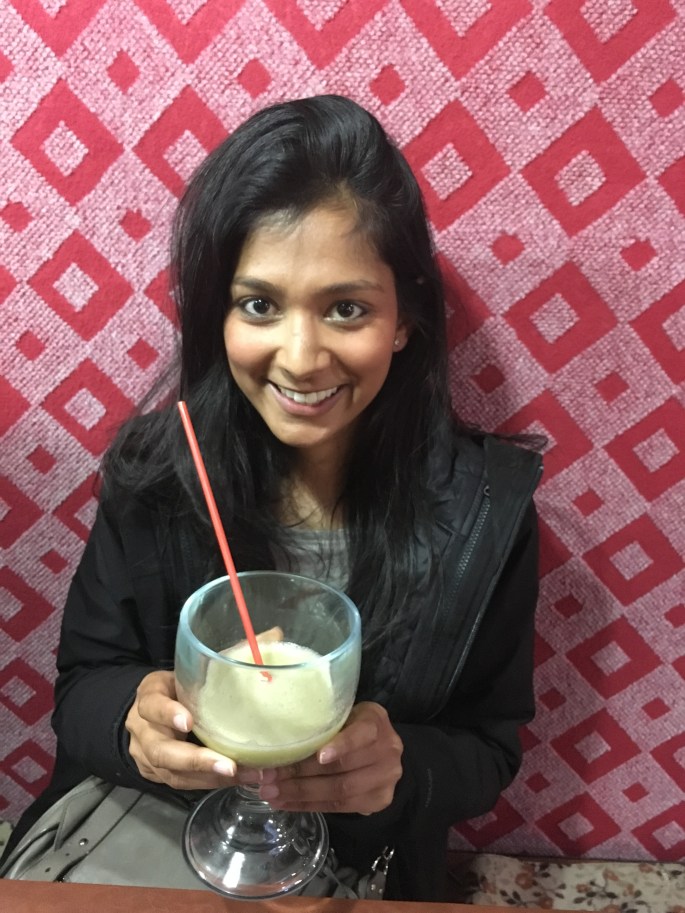
We visited two food markets and learned that a Bolivian local should be loyal to the woman he buys fruit and veg from. In fact, your “Cassera” is often your impromptu therapist. I had a fresh passionfruit and papaya juice for 10 Bolivianos (£1.25) and a fresh avocado sandwich for 6 bolvianos (75p). The sandwich was a huge ripe avocado scooped out onto a large soft bread rolls with finely sliced red onion, lemon, salt, pepper and tomato. Divine! At least some of my South America tour still felt like great value for money post Brexit.

Cholitas are the local Aymara women who wear braids, small bowler hats and frilly skirts. In their fashion, wide hips and strong large calves are seen as attractive and their outfits show off these features. I do not have photos as we were told, they traditionally believe that having your picture taken could take away a part of your soul.

At the witches market, we saw various magical potions and baby llamas that are used in traditional sacrifices. They have something called “follow me” dust to help romantic endeavours but you have to be careful the wind does not deposit the magic dust on the wrong target!

img_5096

We also visited the main political square and learned about the history of protest in La Paz. In the past, these protests involved backlashes and violent shootings and the bullet holes can still be seen on buildings around the square.

The people of La Paz love a good protest. There was large scale protests when a local TV channel stopped showing the Simpsons and when a popular chicken restaurant closed down!

Talking about politics, the current president Evo Morales, is the first indigenous president. He found a loophole around the two term limit. Having changed the name of the Bolivian Republic to “Estado Plurinacional de Bolivia” to recognise its 36 indigenous nationalities, he argued to the courts the term count resets under this new state entity. It is likely he will try to run once more in 2019 but so far he has narrowly lost a referendum to allow him to change the constitution to enable an unlimited number of terms.

Evo Morales is seen as having made some improvements socially (especially as an indigenous person he represents the majority of Bolvians who are indigenous and were discriminated against in the past) and to the education system. However, he is well known for saying stupid things. Three comedy instances to paraphrase our guide:

  1. The president attended a football match in Spain between Real Madrid and Barcelona. He was asked at a press conference who his favourite Spanish team was. “Real Madrid” was his answer and fair enough. Another reporter asked his favourite team overall globally. He answered “Barcelona.”
  2. In a speech warning against the effects of too many hormones being added to meat and the imperialist impact of foreign products like Coca cola dominating the market, the president managed to tell people if you eat too much chicken (which could have female hormones added) you will become gay and if you drink too much coke, you will go bald. He had to apologise to the chicken producers not to mention the gay and bald communities!
  3. After a census showed Bolivia to have a population of 10.5 million, the president decided he should take measures to increase the population. First he annouced that he was banning condoms which sparked outrage from many people including his health minister. Then he apologised and announced a tax on women over the age of 18 without children! Again there was outrage and women took to the streets to protests. The president had to apologise profusely. Finally, he came up with a financial incentive for women having children that was not so unpopular.

Later in the afternoon, I took a food tour of La Paz. This was a smaller and more homogenous group than the walking tour, mainly couples of a similar age to me. One guy even worked at the same office as me in Canary Wharf! I enjoyed tasting things at markets and small restaurants that I would never have ordered myself.

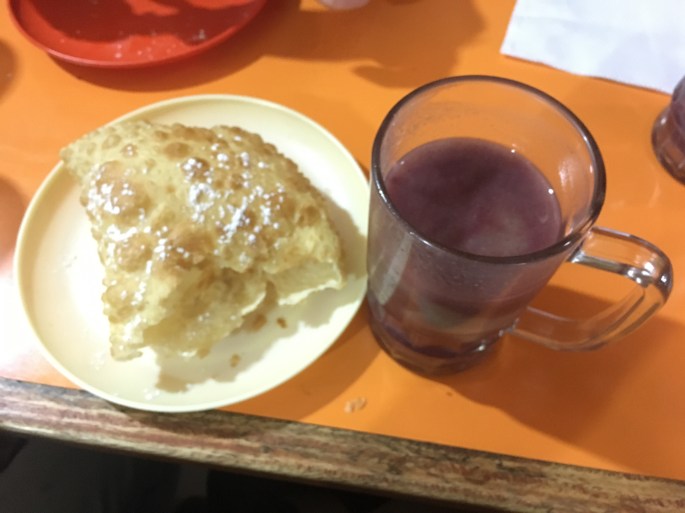
Api Morado: Hot thick drink made of black and white corn and spiced with cinnamon and cloves. It is a traditional breakfast for miners in cold regions such as Aruro and felt like a thick non alcoholic version of mulled wine! It was served with fried bread (like an Indian puri) with cheese inside and icing sugar sprinkled on top. This sounds weird but actually tastes pretty good.

img_5125

Vitamin fruit drink: Get all you need nutrients wise in a heavy juice!

img_5126

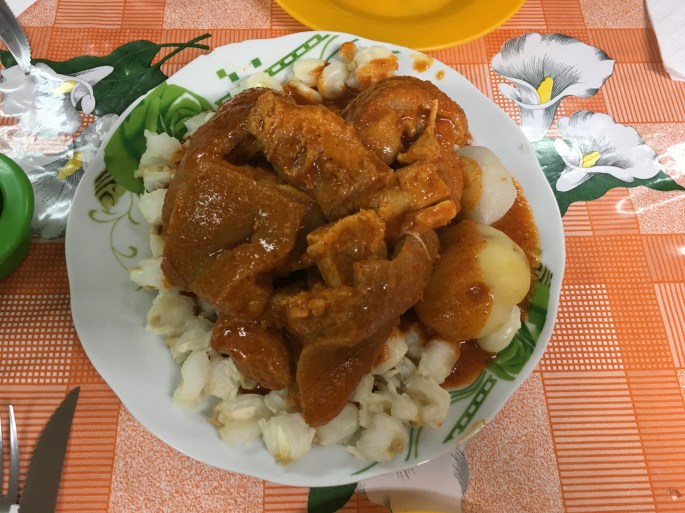
Spicy pork from Sucre: Cooked in peppers and served with giant corn and dehydrated potatoes. Delicious aside from the texture of dehydrated potatoes! Possibly my favourite Bolivian dish.

img_5130

Soup with toasted peanuts: Tastes a bit Thai!

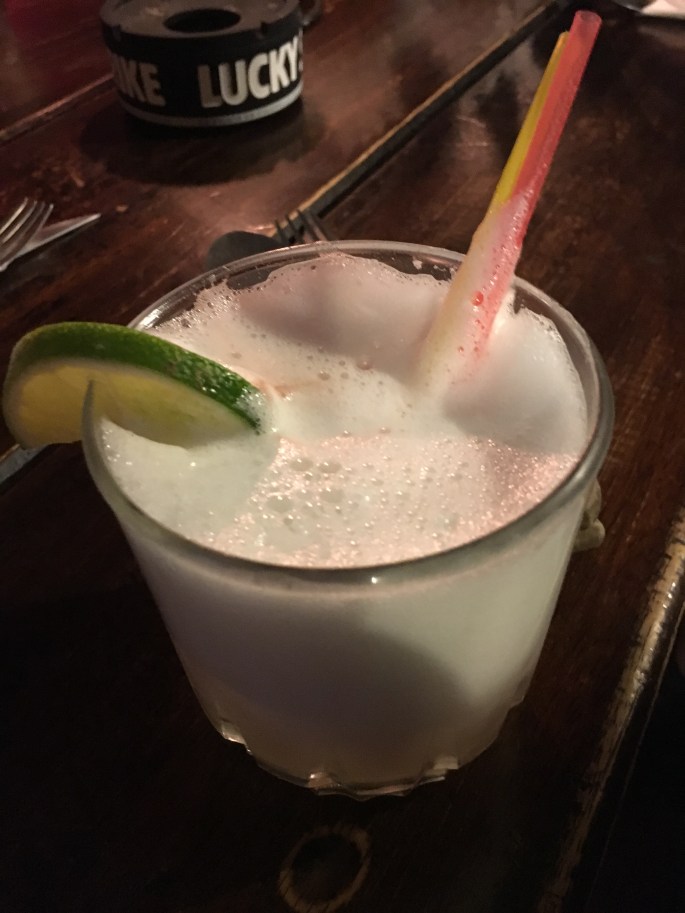
Sangani cocktail: Like a Pisco sour… but don’t say that to a Bolivian.

img_5131

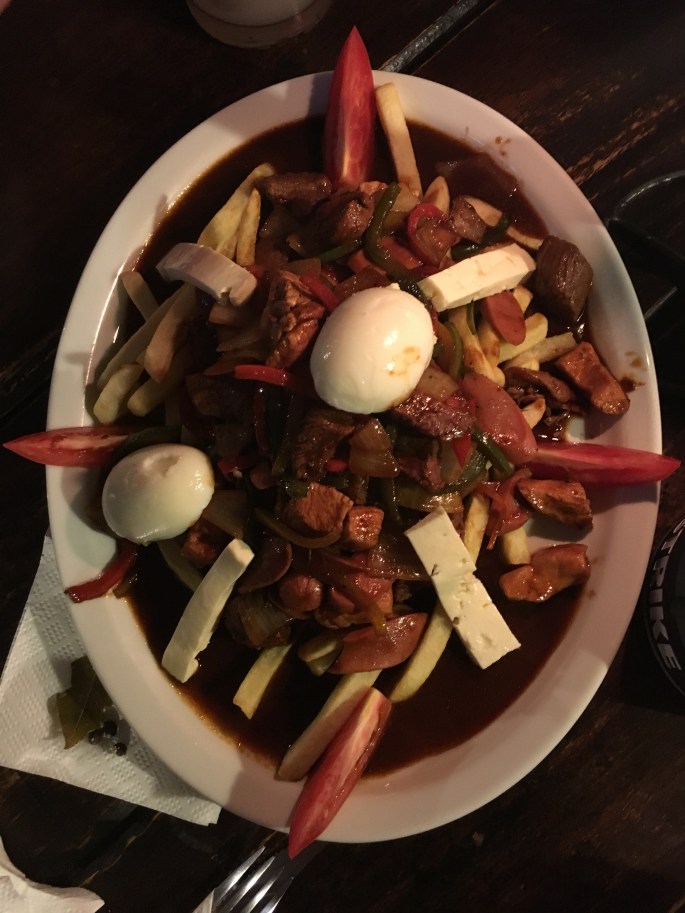
Picque Macho: Meat, sausage and chips mix from Cochamba. I am not a fan as there is too much going on in my view (yes I know, how did I like the fried bread with cheese and sugar in that case?)

img_5132

La Paz was a fun place to explore for a day but even with the food tour, I have to say Peru wins cuisine prize for me hands down!

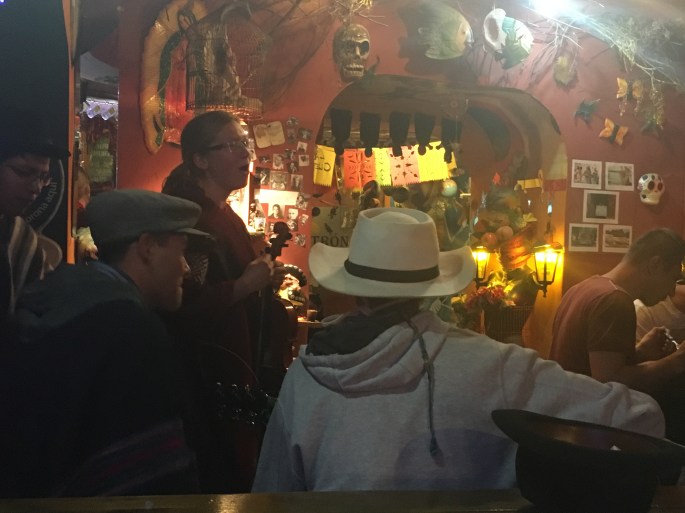
Adam and I also had a fun night out in La Paz a few days later after our Bolivia salt flats trip. We had tasty nachos, guacamole and beers at a small bar with an English singer and traditional band. The music was so good the whole bar kept begging more one more song! We ended up hanging out with some tourists from a G adventures tour and went to a nightclub where you can pick the music by typing your song into YouTube on the DJ’s laptop… Of course I selected “Hips don’t lie” by Shakira.

img_5449


Peru: Lake Titicaca, Puno and floating islands

Puno is a town at an altitude of 3830m on the shores of Lake Titicaca. The main industry is mining followed by tourism. The snappy factoid we kept hearing is that Titicaca is the world’s highest navigable lake! That means that large commercial vessels can sail upon its waters.

The Uros floating islands are just 7km east of Puno so were easy to visit in a couple of hours. After our regular pre-5am starts in Cuzco and the Sacred Valley, I was keen for a more relaxed form of tourism. A 9am start sounded good!

img_5006

Centuries ago the Uros people began their floating life to isolate themselves from the aggressive Collas and Incas. There are now about 2000 inhabitants and roughly 100 individual islands.

Puno is the meeting point of the languages of Quechua, spoken in Cuzco, and Aymara, a pre-Inca language that the Uros people speak. Within the islands, our guide pointed out a small medical centre manned daily by staff from Puno, a football area and told us there were 6 elementary schools.

img_5072

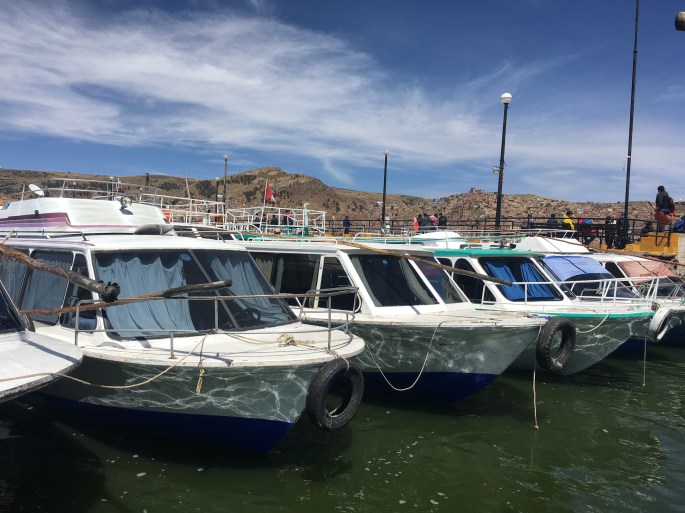
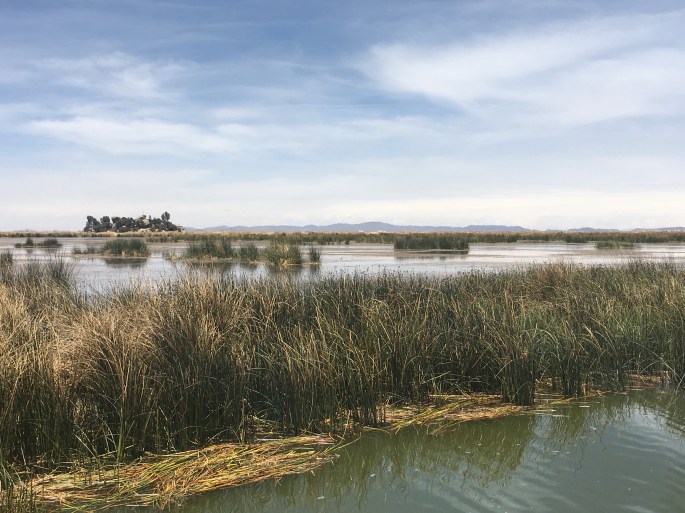
The islands have been created with the buoyant tortora reeds that grown in the shallows of Lake Titicaca. Our cosy group tour of 3 people (myself and an older Portuguese couple) took a boat ride fron the main dock in Puno to the floating islands and were given a demo.

The roots of the reeds are used for the base of the islands and topped up with a scattering of the green part of the reeds which dries out to become yellow. The top layer is regularly replenished. I was amazed by how bouncy and springy the island felt.

We also learned the local people eat the white lower part of the reed that helps to clean their teeth, and parts of the plant are used as plasters and medicine.

The only local fish are the small choca. Kingfish were introduced to Lake Titicaca from Argentina and trout were brought over from Canada.

On the first island we visited, Flamenco, a smiling local women invited me to her small reed house.Before I knew it she started dressing me up in the local clothes. This was quite a bizarre experience as she and her daughter started putting braids in my hair and I had not asked for any of this. But I went with the flow and saw the Portuguese couple were getting the same dressing-up treatment. This made for some touristy but fun pictures.

The ladies did not accept money for the dressing up service, but then showed us the handicrafts that they were selling. As I did not want any, I gave them 30 soles (£7.50). The local lady kindly gave me a bracelet as she would not accept the money for nothing. I realised later on that the bracelet was made of bright red Huayruro seeds that are meant to attract good luck, fortune and love and protect against envy. I now really like the bracelet that suits my travel schedule!

The family were very sweet and the kids were occupied with their colouring books in the small house.

After the locals of the first island gave us a sing-song send off including ‘row row row your boat’,we boarded a beautiful traditional reed rowing boat to the next island. The intricate double puma head design showed incredible craftmanship.

The second island called Utama was a more commercial place to buy crafts and drinks.

I loved being on a boat out on the lake under the bright blue skies. The locals we met were really friendly. The Lonely Planet guidebook warned that some local people do not appreciate tourists interrupting their lives but the islands that I visited were geared up for tourists.

After the tour, I met my friend Adam in Puno’s main square and we had lunch at Mojsa restaurant, Aymara for delicious. The area near the port has a colourful beach town feel to it.

Back at the hotel, we enjoyed the lake views and another hotel dinner with good red wine! The wifi was not strong enough for any blogging hence the backlog!

I would have been happy to spend more time at the lake visiting some of the main (non-floating) islands. However, the floating islands were the most unusual and definitely worth seeing if you only have a short time in Puno. We were also lucky enough to have pretty constant views of the lake from our hotel (Taypikalo Lago) and taxi rides to and from Puno.


Peru: Inka Express from Cuzco to Puno

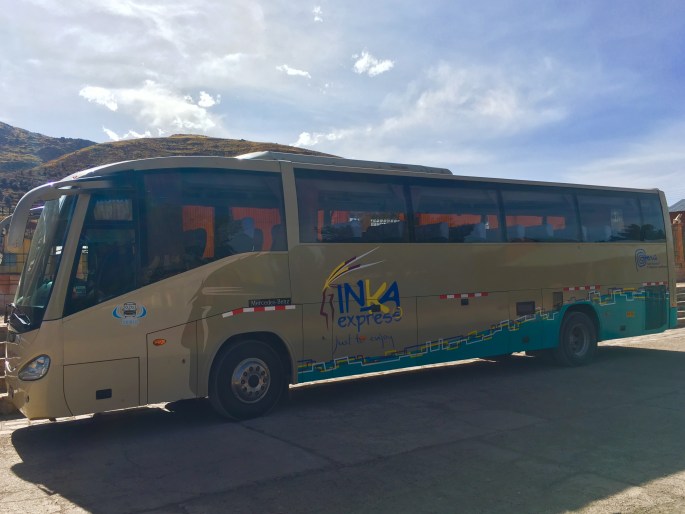
After a few days of hiking, the Inka Express tourist bus was an enjoyable way to travel to our next destination and rest our legs. The coach was spacious and had an animated English speaking guide. Lunch and snacks were included. I liked the sweet spicy loaf of bread and coca tea we were offered early on. We departed on the coach at about 7am in Cuzco and arrived in Puno punctually at 5pm.

img_4997

Along the way, we had several stops to stretch our legs and see small villages.

Andahuaylillas: We visited a pretty church that showcased the fusion of ideas between traditional religion and Catholicism, now the dominant religion in Peru. In the conversion process, various symbols were fused. For example, Mary’s dress symbolised the spiritual mountain and the mirrors symbolised water. This reconciled local peoples’ worship of the natural world with the foreign traditions of the Catholic church. I spent some time stretching my achey legs outside!

Inka bridge: Shaky!

Raqchi: We stopped at some ruins that were roughly 600 years old and survived earthquakes due to the trapeze shape used (this strong trapeze shape is a recurring theme in Inka architecture as we learnt at Machu Picchu!) The scenery reminded me of the Italian countryside.

Marangani: Lunch stop with a buffet… decent broccoli garlic pasta.

La Raya: Mountainous and windy desert scenery with some stalls selling pretty alpaca goods. Unfortunately, I felt I needed to save space in “the beast” of a backpack/roller luggage of mine until I could offload some things.

Pukara: Pre Inca civilisation site with a small museum. Iglesia Santa Isabel was a colonial style church. We also saw lots of examples of clay Pukara bulls that are displayed to protect family, wealth and so on.

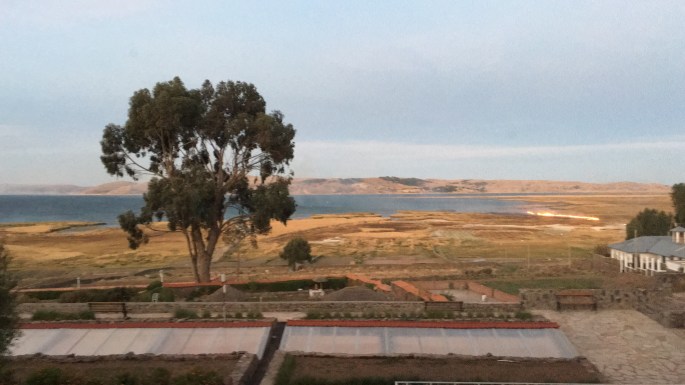
Puno: We arrived in daylight and took a scenic 20 minute taxi ride to our hotel on Lake Titicaca, Taypikalo Lago. We saw locals farming by the lakeside on the way. The hotel itself had great lake views and there was a fire burning in the distance.

img_5004
The view from our hotel window!

Overall, it was a good way to travel and worth USD 50. This was luxury compared to our next bus journey from Puno to La Paz on a bus that cost 40 soles (£10)!

Our guide was quite a politician giving a speech on how Peru has natural resources, tourism, exports such as silver and copper, but large social inequality and a lack of education. Most rural children have work to support their families rather than go to school full time. Given how passionate our guide was about changing the system, I expect he might be running for local office.


Peru: Could Machu Picchu live up to lofty expectations?

Machu Picchu (meaning old peak or mountain in Quechua) was a major sight to tick off my wish list when organising my South America tour. It was always going to be hard to live up to my expectations after seeing so many photos of the place but in the end I loved it. We were very lucky with the weather as the start of the rainy season seems to be starting late this year. We had sunshine and blue skies with just the right amount of wispy cloud up at Machu Picchu early in the morning for the picture postcard look!

img_4921
Worth beating the crowds for this view

Because we spent just over 2 weeks in Peru and Bolivia, we did not want to do the multi day Inca trail. I am happy with our decision as I met so many travellers who said they suffered on it and described the trek along the lines of “it was an achievement but…**long list**” or “I was so exhausted by the time I got to Machu Picchu…” It was probably just our good fortune that we met folk who made us feel good about our own decision.

We opted for a 2 day trip with Bamba Experience that we had booked back in London with STA travel. The tour company was professional with fun and knowledgeable guides.

img_6493
Our route: Chinchero>Tauca>Pass>Huchuy Qosco>Lamay>Ollantaytambo>Aguas Calientes> Machu Picchu

On day 1 we had an early start to drive from Cuzco to Chinchero, a small village. From there, we hiked through hills and past Pluray Lake. Adam and I were with 3 other friendly tourists, our guide Vincent and his fiancée. The first part was all uphill to Pass at 4300m altitude – see map above for our route. There were some piles of wishing stones near the top and another marker of stones for the peak. We made it!

We then had a downhill path (which I usually dislike but altitude makes uphill so much tougher!) to some beautiful Inca ruins that are not accessible by car called Huchuy Qosqo. We ate our packed lunches there and Vincent taught us about the lego system the Incas used rather than cement and the strong trapeze shape used in their alcoves and architecture that has proved earthquake resistant.

The final downhill switchbacks to Lamay were tough on our legs but offered stunning views of Lamay town and the Urubamba River below.

What I loved about the hike is that we did not see any other tourists on the entire trail aside from some Peruvian families at the ruins themselves, in stark contrast to the more commercial Rainbow mountain and Machu Picchu hikes.This was fortunate given the amount of “scenic peeing” that we all needed to do over the many hours on the trail.

On the downhill when I could actually enjoy conversation, as well as chatting to the rest of our small group I shared stories with Vincent our guide. It was interesting to hear about his relatively non traditional family. His father is a chef who also does a lot of the cooking at home (seen by the wider family as a woman’s job) and his sister was supported through a divorce from a violent husband (divorce is still very much taboo in their social circles.) It was also interesting to hear that another of his sisters loves bollywood and knows the dances to the major hits.

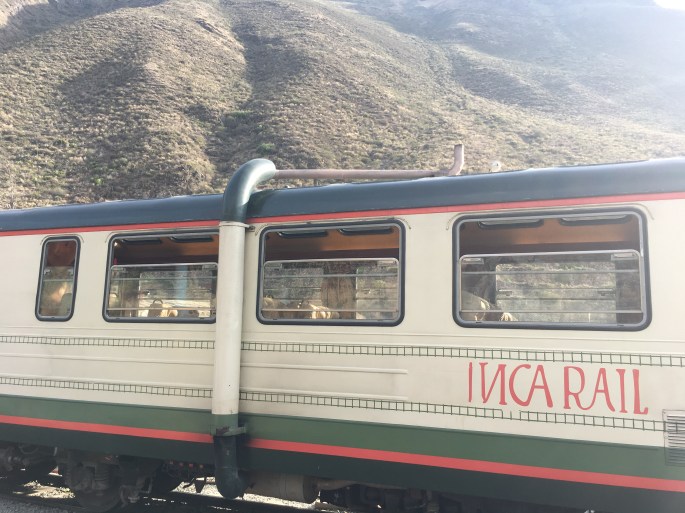
Once we reached Lamay, we had some rest on a minibus journey to Ollantayambo. From there, we boarded the lovely Inca Rail to take us to Aguas Calientes. The train had gorgeous river views (tip – sit on the left hand side of the carriage on the way), classic wooden decor and complimentary drinks and snacks. That was old school travel!

img_4914Once we arrived at Aguas Calientes, also known as ‘Machu Picchu town’ our next guide Pavel met us and we had an inclusive dinner at a small restaurant. The Andean veg soup with quinoa was excellent and I opted for garlic trout which was also tasty. We met Romeres, a 40-something lady from the US fitting in some tourism on her business trip. She looked no older than 30 so in my view supported the argument for avoiding meat (she is pescetarian) and continuing HIIT exercise classes! She was great fun and hiked the next day with us at Machu Picchu.
I have to say, I thought our all inclusive STA Bamba Experience trip would involve more “roughing it” but our hotel, Inca Tower, was close to the station and a had a comfortable private room with hot en suite shower. That said, we did not have long to sleep as we had a pre 4am wake up call on Day 2 of our trip.

Buses depart from Aguas Calientes from 5.30am but tourists start queuing very early to get those first precious moments at the site uninterrupted by other tourists. We sat in the reasonable sized queue at 4.30m but it was not too painful because it was not a moving queue. Rather, we knew the buses only arrive from 5.30am so we could sit on the pavement, chat and eat our breakfast.

img_2350
4.30am queue time! Dazed and confused…

The process was efficient and at 5.30am the big Mercedes Benz coaches rocked up. I suspect we got the third one of the day. Whilst winding up the mountain roads, we saw some trekkers taking the steep steps and having to dodge the speedy coaches on the roads. I felt thankful that I was on the coach at this stage!

img_4966
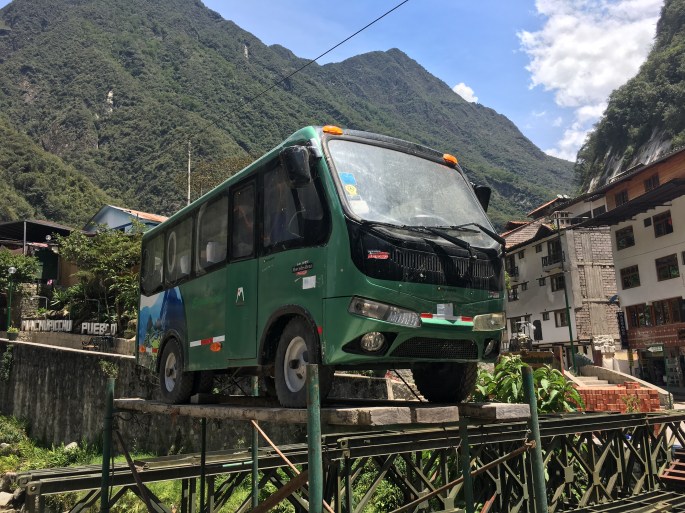
A replica of the Machu Picchu coach

Ultimately, the early start was worth it. We beat the rush to get our first views of Machu Picchu at around 6am before the crowds arrived. Even 45 minutes later, the place was really starting to fill up. Not to be too cheesy but it did feel magical.

Once we all got the postcard-esque “money shot”, Pavel gave us a tour of the ruins ending at about 8am. We learnt a lot of things about the site that is believed to have been built around 1450 at the height of the Inca empire. The location was likely chosen due to the natural spring (near the sun gate), protection from the sounding mountains and plenty of daylight. The round indentations containing water on the stone floor were used as mirrors at night to see the stars. The trapeze shaped alcoves for storage were resistant to seismic activity.

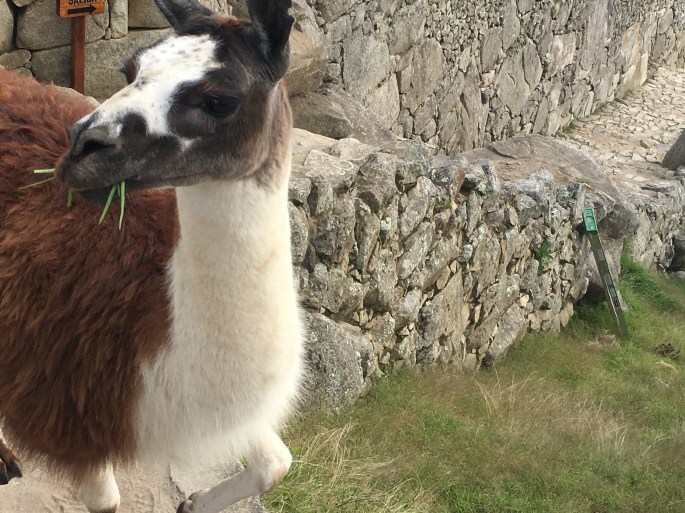
The agricultural terraces are beautiful and add to the natural beauty of the mountains themselves. There are over 600 of them in Machu Picchu and they supported construction as well as agriculture. The grass is well maintained due to llamas feeding.  I want a pet llama or alpaca!

img_4937
#llamaspam
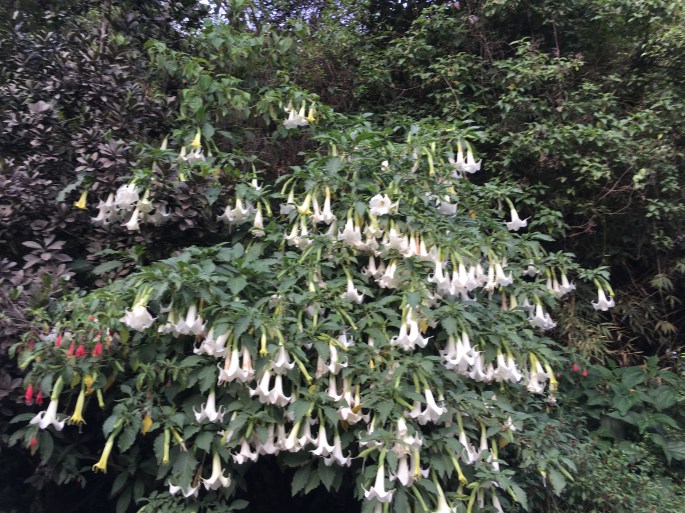
We saw the angel trumpet flowers that were used in mummification rituals by the Inca civilisation.

img_4919

We also saw the inbuilt drainage system and learnt the Incas used a dry toilet system of ash. For them the ri ver was a no-go given it was deemed sacred.

By 8am the sun was much stronger and the crowds had thickened on the main areas. There was no longer any chance of photos without several other tourists in them!

We embarked upon our hike of Machu Picchu mountain (which we had booked in advance – you need to do this.) This was about 1 and a half hours uphill via steep steps. During the last 10 or so flights of stairs, I was Certain each time that it had to be the last one! I was impressed by some of the elderly English couples we met along the route, who managed to get to the top albeit at a slower pace. I was also impressed by the young German girls who raced up in just over an hour… quite a feat given the altitiude. Nevertheless, we made it!

At the top we took cautious selfies as a German tourist died recently on this very hike by climbing over the rope to take a selfie.

The bus, train then minibus journey home gave us ample time to recover. On our final minibus back to Cuzco, we met an Amazonian Peruvian family that did the Machu Picchu mountain hike too. The lady was heavily pregnant, the man was carrying their 2 year old son in a kangaroo pouch and their 70-something year old father came along too! Wow.. these Peruvians are made of strong stuff.

We saw a beautiful sunset on the final leg of our journey… what a wonderful couple of days and an excellent precursor to another tasty meal in Cuzco… sushi and ceviche at Limo and plenty of good red wine!


Peru: Acclimatising (eating and drinking) in Cuzco

Part 3 of my South American tour is Peru and Bolivia with my uni friend Adam…

img_4728

The morning after flying to Lima (me from Santiago and Adam from London), we took a one and a half hour flight to Cusco. It is Cuzco in Spanish or Qosqo in Quechua so I might chop and change! The city is at an altitude of nearly 3400m and although I had been higher up in Chile, in Peru I had some hiking to do. Thankfully we gave ourselves a day and a half to acclimatise and I enjoyed this mountainous city as a destination in its own right, not just the gateway to Machu Picchu.

First things first, we were very lucky with the weather. In November, the rainy season would usually be upon the region but we only saw bright sun and blue skies.

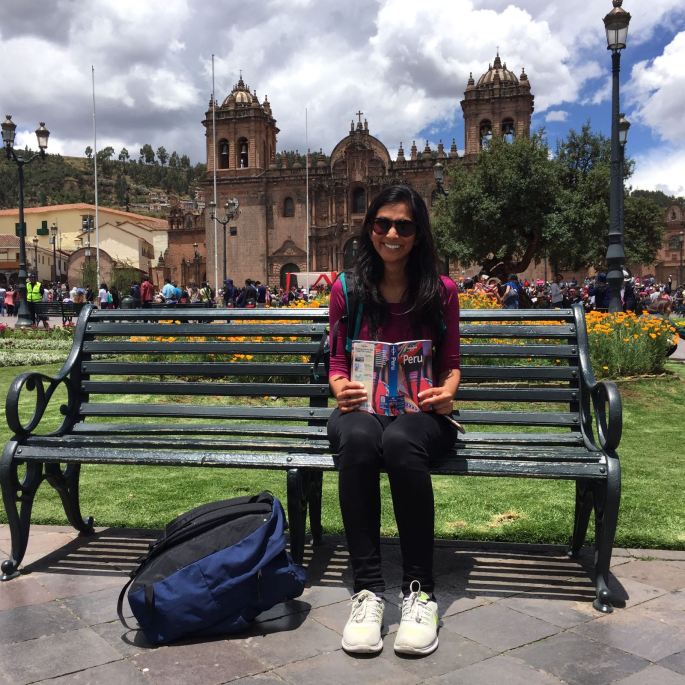
On our arrival day, we wandered from our traditional style hotel (many in Cuzco are set around courtyards) to the Plaza de Armas. We encountered a parade of schoolgirls dancing in traditional brightly coloured outfits. The whole area had a fiesta feel to it!

We went to an excellent cooking course by Marcelo Batata. Our guide Christina was a professional chef who was really bubbly and taught us about Peruvian cuisine. Despite being on the expensive end of the scale for a Peruvian cookery class at USD 90 per person, I wholeheartedly recommend this activity which lasted roughly 5 hours and included enough food for both our lunch and dinner.

We learnt about the historical Andean, Spanish, African, Chinese and Japanese influences on Peru’s distinctive cuisine. We then spent time enjoying canapés such as bechamel and caremilised tomato bruschetta and mahi mahi fish in chilli sauce in a miniature food market complete with cuddly toy guinea pigs.

The species of Peruvian produce are mind boggling given the spectrum of altitudes from sea level to well above 6000m – thanks to Christina we now believe there are 3300 types of potato in Peru (there is a National Insititute of Potatoes in the sacred valley!), 500 types of quinoa and many beautiful types of corn including marbled effects!

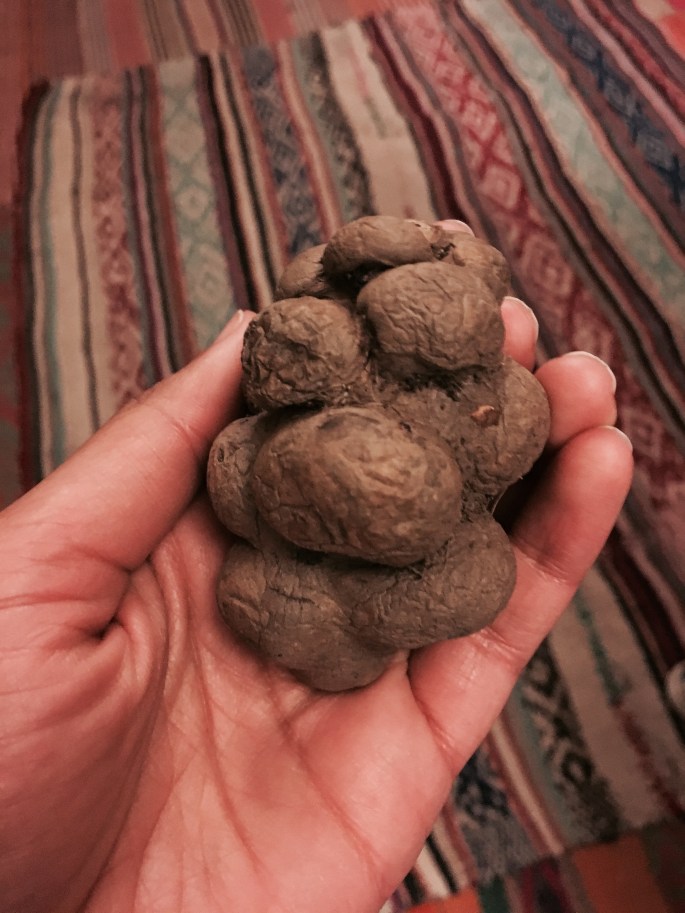
My favourite potato type is one I have not actually tasted. It is nicknamed the “mother-in-law” or “llama poo” potato. Apparently it resembles llama poo and the bumpy surface is not very easy to peel. In traditional Peruvian culture, there is a ritual where a prospective wife proves herself to her potential mother-in-law by peeling as many kilos (yes kilos!) of these potatoes as she is given. If she is lucky and her mother-in-law is merciful it will only be a couple of kilos. Luckily for me, there is no such challenge in British or Indian culture. I would have failed my marriage test with flying colours for any potato type.

img_4693

The price of quinoa has risen to 25 soles per kilo since the international excitement about quinoa as a superfood the past few years. Hence local people are less likely to eat quinoa now. That said, we learnt about some lesser known and cheaper super grains such as Kiwacha, which is currently exported to NASA only. It has 5% more protein, is lighter than quinoa and contains more amino acids that are good for us…. surely Ocado and Holland&Barrett should be all over this?! The toasted version of Kiwacha (like miniscule popcorn) is nutty and delicious and I have had it with yoghurt for breakfast in Lima. Canihuaco has even more protein than Kiwacha!

Then it was on to fruit tasting including 3 types of passion fruit (maracuya is most similar in favour but not appearance to the the type we can buy in UK supermarkets I think), Lucima that looks like avocado but tastes like butterscotch or indian sweets (not fruit like!) and chilimoya, a relation to the custard apple.

img_4705

We then had a more traditional cookery lesson, making such simple but delicious ceviche (lime, chilli, coriander, salt, pepper, condensed milk, fish and no real cooking… easy!) and lomo saltada (meat dish like chinese stir fry using alpaca meat in this case.)

Pisco tasting was also a great experience. Given it is 38-43% alcohol by definition, it was more enjoyable in the Pisco sours and Chilcano cocktails we made than straight.

In additional to the fabulous cooking course, it must be noted that we ate and drank well whenever we had a pit stop in Cuzco…. ceviche and quinotto (quinoa risotto) at Inkazuela, ceviche and sushi at Limo, great craft beers and garlic fries in a quirky wooden bar Taprooms, hot chocolate and crepes and Choco Museum and so on.

As well as eating and drinking, we used some of our acclimatisation time to walk around the town using Lonely Planet’s walking tour… we loved it! The steep cobbled streets of San Blas, a bohemian neighbourhood, were the highlight for me, with guitar music playing in the background. I also experienced my first 1 sole toilet in Peru. That is, you pay 1 sole for the pleasure of using someone’s toilet… usually not a pleasure.

We also loved Mecado San Pedro, with huge sections for every type of food, drink and more. It always comes back to food! My friend Adam was a celebrity in the juice department with several locals asking for selfies with him. Does he look like someone famous or is it just the fair complexion and blue eyes?


Peru: Rainbow mountain… no horse!

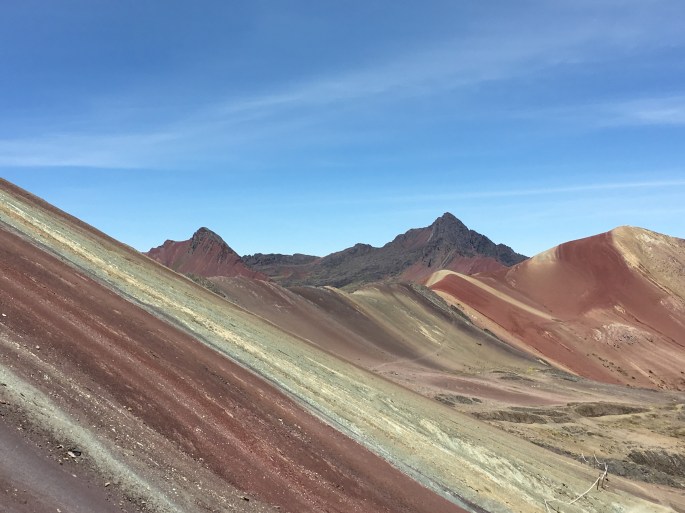
The Vinicunca mountain hike offers stunning views of mineralised stripey rainbow-like hills deep in the Andes.

img_4819

The facts:

– The hike is approximately 3 hours’ drive from Cuzco. Because we did a day trip we had the joy of a 3.15am pick up from our hotel… that was even before our early hotel breakfast started at 4.30am. Cuzco seems to be an early morning type of place!

– Hiking distance is 15km which did not sound hard to me but the elevation starts at 4300m and reaches 5035m.

– The route is through a green valley with views of snow-capped peaks and passing by herds of alpacas and locals. The impressive Ausgangate mountain (pronounced Aus-ang-atty) towers in the distance.

– You can ride horses guided by locals for all or part of the journey. With the altitude kicking in this is a very popular option.

– Our trip cost 110 soles per person and included an cramped but scenic minibus transfer from and back to Cuzco (thankfully I slept soundly on the bus on the way), guides, entrance fees, a breakfast of tea with jam and bread (as in Sound of Music…. tea a drink with jam and bread!) and a hot lunch with soup, salads, veg and meat that tasted sublime after a 5 hour or so hike.

What did I think of the hike?

img_4778
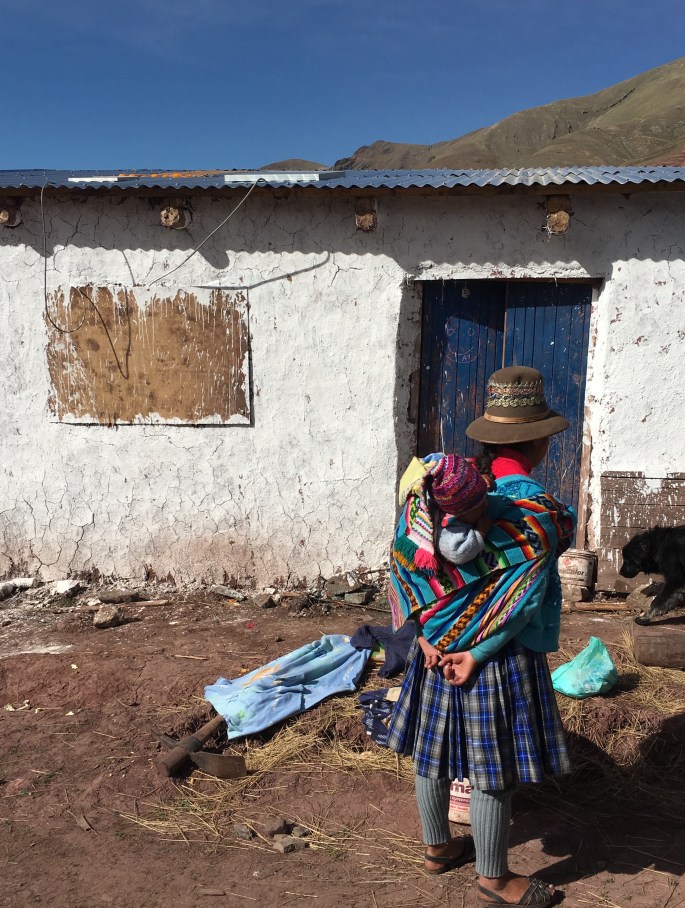
Andean women carry their babies in such bright fabric – cute face peeking out!
The scenery was stunning but the hike was very tough as we got higher up. Having been in Cuzco a day and a half I had acclimatised a bit but was still easily out of breath on the hill climbs. And those of you who know me would know I actually consider uphill walking one of my sporting strengths! Once we reached the top part of the hike, the alitiude really hit me and I felt a little dizzy as well as the usual gasping for breath which I had got used to. Coca sweets helped (locals typically chew coca leaves to help with altitude effects but you can also get it in lozenge form) but I think it was the sugar more than the coca leaves for me. Later on, I found skittles gave me a similar boost!

img_2210
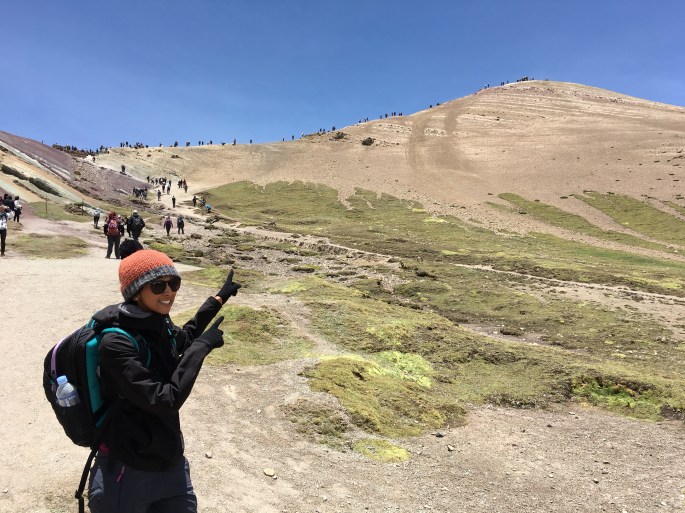
All smiles as we set off… just a mere 4300m here?
I really enjoyed seeing the brightly dressed locals going about their work or leading horses up the trail. The horses were beautiful and looked well cared for. Once we were almost at the top, I was struggling so much I reverted to a 30 steps walking then 15 or 20 seconds rest strategy. At this point I gasped “Horse, I’ll take a horse please” only to find I was so close to the top, I had already reached the part where horses could not go! In the end I did the full hike up and down on foot… medal please. Then again, seeing an elderly Peruvian woman running up the hill does make self congratulation awkward.

There was certainly a bit of discomfort on this long trip – a cramped 7 hours on a  bus, the effects of altitude, strong cold winds near the top and arriving back late in Cuzco. Apparently two guys were left up the mountain and didn’t make it back on to any of the minibuses so our guides spent an hour on the way back stopping to “solve” the problem. However, I am so glad I did it. The views was surreal and scenery was something I doubt I will ever encounter elsewhere. I also felt like I got to see more genuine locals in the mountains in contrast to the ladies posing for pictures with babies and llamas around Cuzco.

img_4809
At this stage in my head I was thinking, maybe just maybe I will use one of the pretty horses for the final climb….
All other hiking around Cuzco altitude-wise is deemed easy if you use Rainbow mountain as a practice hike… so I have heard. Or did I tell myself that?

Chile: Valparaiso, over and out!

On Tuesday 8th November, I missed my Flash Pack crew as the final members left Santiago. However, I did the big tourist bus thing and booked myself a ‘Turistour’ coach day trip to Valparaiso and Vina del Mar for roughly £40.

img_4601

It was a big coach jam-packed with tourists, many of whom were older. Hence, less active than my recent excursions. Plenty of sitting on the bus and pitstops where we got out, took a few snaps and got back on! That said, I think it was worth it because the stops became longer as the day went on and I had the chance to see the sea. Our bilingual coach guide told us Chile has an average width of 177km and is roughly 4200km length (I’m taking his word for it) and so far in my travels I had not spent time on the extremely long Chilean coast.

Vina del Mar

Our main stops in the Garden city were the flower clock and the beach. The former stop required the quick tourist photo whilst on the coast we had a bit more time to walk in the sun. We also had our set menu lunch which included quite a bit of alcohol (pisco sours and wine) hence I was a bit sleepy when getting back on the bus! I made friends with Annette from Washington State, USA (in her 30s… we both wanted more walking stops) and Gerardo from Colombia (a doctor who was in town for a work conference without his family.)

Valparaiso

This port town was the star of the day. It is a Unesco world heritage site where we saw beautiful colourful neighbourhoods filled with street art and steep hills going down to the sea. Our tour group was told not to worry about the stop being over an hour because the walking was all downhill!

We wandered down the historical part of the city to Sotomayor square and the port. For about 6 USD, you could opt to go on a motorboat ride. I enjoyed it as I saw great views of the town from the sea and plenty of industrial containers, cranes and ships. We also were shown a couple of sea lions sitting on a rig. Quite random!

Goodbye Santiago and Chile

After the long coach drive back, I grabbed some dinner at Chipe Libre in Lastarria with Annette who I met on the tour. This was my second visit to the restaurant as we had our final flashpack dinner there the previous night. Excellent wine by the glass, fresh zingy ceviche and a nice long chat. I liked the setting of high ceilings and Republic of Pisco murals.

The next morning after picking up my washing (what satisfaction), I headed to see my old friend, Santiago airport (4th time I think in 2 and a half weeks.) I felt very content in the taxi ride through such a beautiful city in the sunshine. Chile has been wonderful… I was now embarking on part 3 of my South American adventure. Peru and Bolivia with my friend Adam from uni!


Chile: Extreme weather, going off grid and glamping in Patagonia

It has been a very long time since I posted as I have been in low wifi areas in Peru and Bolivia where I cannot upload photos the past 2 weeks! Back to Chile…

We touch down in Puerto Arenas at 4pm then have a long drive that feels like we are going to the end of the earth (not quite but not far from it – see location on google maps below!)


We stop in Puerto Natales for a briefing with our ecocamp guides and a warm cosy dinner. The bread and pumpkin soup for starters and red wine is particularly appetising but perhaps dinner is a little too leisurely given we still have a long drive ahead of us. We are going off the grid for 3 days with no wifi or phone reception! Eventually we arrive at Ecocamp Patagonia well after midnight in the pitch black. Our eco domes are homely with real beds, a log burning fire and hot showers!


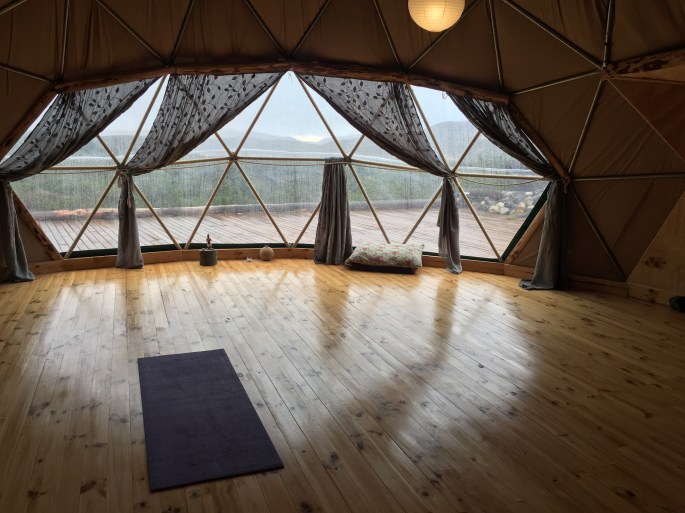
When I wake up in the morning it is absolutely freezing with no fire burning… but in the daylight I can appreciate what a wonderful setting we are in. The camp is nestled amongst snow capped mountains and has lovely communal areas such as a bar dome and yoga dome.

On the first day I opt for the more difficult “Base of the Towers” trek. This is a 22km walk right out of our camp to the base view of the three famous granite monoliths of Torres del Paine. It starts out plain sailing with rolling hills and a few steep climbs (I’m fine with uphill, it is the getting back down I’m worried about!) The weather is not as wet as I have become accustomed to in the lake district. We hike through hills into the forest where we cross several rustic wooden bridges, some of which are for just one or two people at a time.

In the forest, the snow starts falling and we walk through small streams. I notice beautiful red flowers growing in such a harsh environment. We reach a snowy plateau where our group has to decide whether or not to push on. I am of the view we should do it but our guide Josi (who is tiny and like a mountain disney princess!) warns us that the rocks in the snow and wind could be dangerous. As we deliberate, we see a relatively elderly group pass on ahead, two young Brits tell us how beautiful it is up there, and the snow starts to subside. We push on!

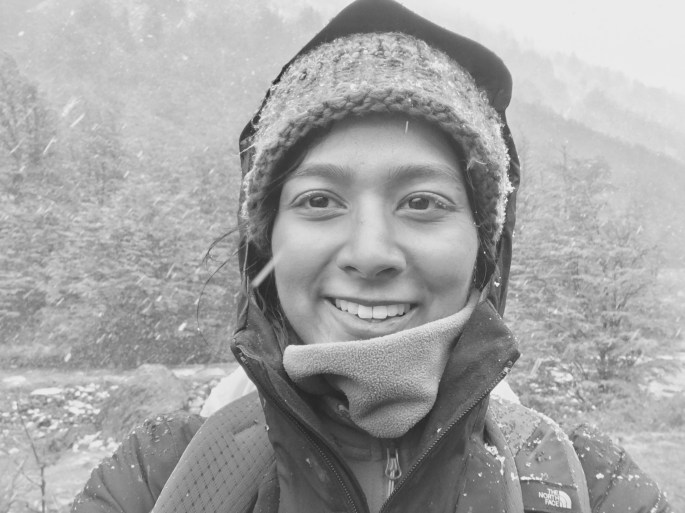
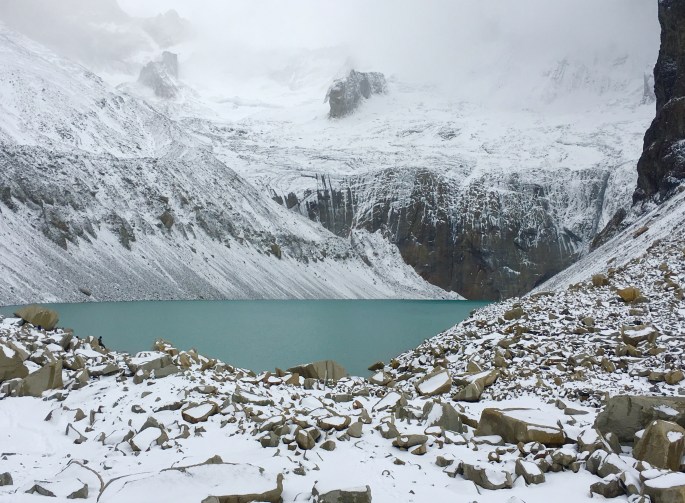
The last couple of hours uphill are through huge boulders and rocks. With the snow falling and underfoot, I feel like we are in a North Face or Patagonia advert!

img_4427

Despite clouds covering much of the towers, the view of the eerily blue lake in the snow and the sense of achievement is worth it! We literally eat the “box lunches” we made in the morning under a big rock for about 20 minutes to shelter from the snow and wind.

img_4420

Then it is time for the long journey back with plenty of steep downhills where I practically sit my way down! My attempt to use our guide’s extra poles is not very fruitful as I don’t know how to use walking poles and feel safer with my hands free! After setting out at 8am, we arrive back at 6.45pm for a well deserved drink and some much needed stretching in the yoga dome!

img_4428

On day 2, I opt for the 12km (at least not another 22km!) Cerro Paine hike rather than the less active day trip hoping my legs will not fail me. We climb the eastern part of Cerro Paine for another lookout of the three towers and Ascencio valley. I am glad we did it as we truly experience every season in a day: glorious sunshine, rain, hail and snow. On the long climb up we often have to get low to prevent the strong winds from blowing us over! I nearly lose my hat. Eric in our group loses his glove.

I am thankful we have two guides with us given the winds and the fact we need to use stepping stones to cross rivers. The pressure is high not to fall in so having a guide reach out to us on the other side is comforting!

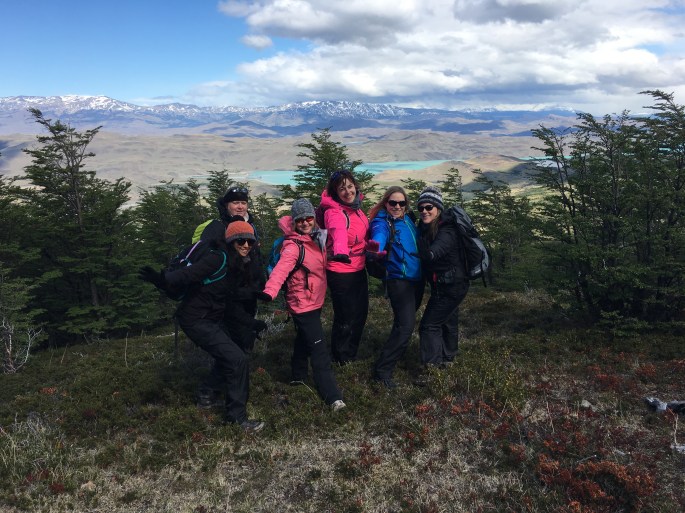
We sit on the snowy rocky mountain face admiring the insane view. The day is a clear one so we see the towers and blue lakes in the distance. On the way down, the ground is softer than yesterday’s hike so even though it is slippery, is not so tough on the old knees. Our group can’t help but sing “the hills are alive with the sound of music” on the way down! Our girly group also stops for a long photo session… naturally. Hat or no hat?

img_4502

We have time for beers and pisco sours back at camp. After dinner (wonderfully hot after my mistaken cold choices and massive fail the previous night) we enjoy some more drinks in the bar dome. Our group share their favourite memories of the trip – so cute! I have so many and nod in agreement with everyone else’s. My personal favourite was the craziness of being in -14C at the geysers in Atacama in the morning followed by an afternoon by the pool in the blazing heat – see my Atacama post for more on this.

img_4976

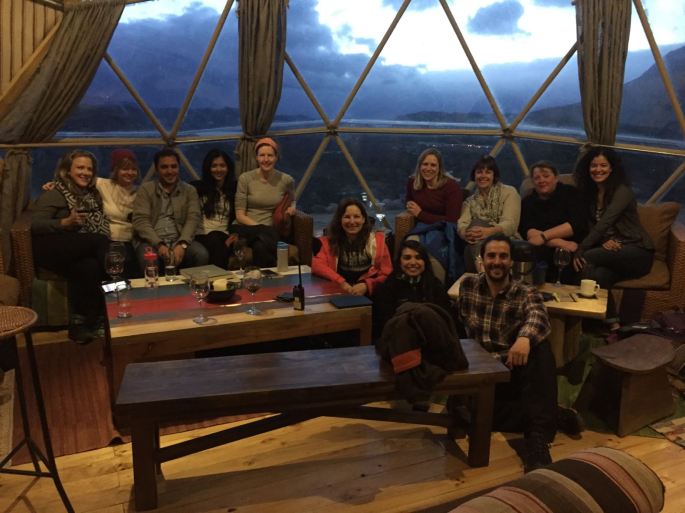
Our group really gelled over the past 12 days. I am touched that one of Elisa’s good times was having such a positive roomie! Patagonia has been extreme and a wonderful way to bring our Flash Pack tour to a close.

Chile: Wet, wet, wet in the lake district

We made the long journey from the dry desert to a lush and fertile volanic region with gargantuan lakes referred to as north Patagonia or the Chilean lake district. Upon landing at Puerto Montt airport after a long drive and two flights, I was decidedly underwhelmed. The grey tarmac of the airport, the overcast sky and drizzle made me feel like I was already back in the UK! This was such a deep contrast to the dramatic scenery I had experienced thus far in South America. The feeling of being in the UK continued as we drove to our hotel through green flat fields and grey roads passing very normal cars (in contrast to the the many fire-engine red pick up trucks found in the desert.)

Over the next three days, the rain was relentless but I had some very enjoyable rainy experiences.

1) White water rafting on the Petrohue River (Wednesday 2nd November)

dsc_0004

This was the highlight for me and to think I almost backed out of it as the thought of getting into a cold river and wetsuit did not appeal! We boarded the minibus in our hotel at Puerto Varas and got off to change into cold damp wetsuits, wet shoes and waterproof jackets. I was absolutely freezing and tried to keep moving to stay warm. We then had a beautiful misty walk through a narrow track in the forest to reach the river. The white water rafting team were superb and our safety briefing was fun rather than just terrifying – an impressive feat given the subject matter was what to do when you are trapped under the raft and so on! Our individual raft guide was an adrenaline junkie but one I trusted with my life.

The river was stunning amidst the mist and rain and surrounded by lush green hills. The water was so clear that we could drink it (we all tried and it tasted like spring water.) Michelle and I started off in the front positions of our raft along with Ale, Elisa, Christel, and our white water rafting guide. He gave us instructions like paddle forward, rigght forward and left back, stop, get inside… at first we were NOT a well oiled machine. But by the end we were and did regular paddle high fives in celebration!

The first time we encountered a rapid with swirling blue water, it felt like a centerparcs water slide… but it was a real river! Being at the front, I quickly got 100% dunked into the cold water. It was so cold and anyone who knows me would think I would not enjoy being so cold. But I felt so exhilarated and alive! I did not want it to end when it did. This was so much better than the white water rafting I did in Canada’s Kicking Horse river years ago. I ran up the hill to reheat myself and after a hot cup of tea and plenty of crisps got the feeling back in my fingers and toes.

2) Hiking in Alerce Andino National Park (Thursday 3rd November)

This was a pretty forest trail (under 10km and very flat) with 3000 year old Alerce trees and a gushing waterfall at the end. What was the weather like? Torrential rain mostly! But I enjoyed the lush green scenery and testing out my gear, most of which fared well. My jacket pockets and gloves were not so waterproof but my jacket and patagonia trousers kept me very dry. My hiking boots were truly magical. I walked through small streams and muddy puddles but my feet were completely dry.

3) Meeting our guide Alejandra

Alejandra was a very impressive guide, a female Bear Grylls who is well travelled. She used to work for Douglas Tomkins, the founder of North Face who last year died aged 72 of hypothermia after a kayaking accident in the Chilean lakes. She was living in remote lands that Tomkins reclaimed from overfarming. She would use the local medicines rather than visit a normal doctor given the remote location. We learnt a lot of remedies from her such as Matiko leaves as antisceptic, garlic tea for colds, onion skins for plasters and so on. She called herself the odd one in her family that didn’t want to get married or have kids. She had a brilliant positive attitude of self improvement and adventure and used our minibus journeys to teach us about Chilean history. Just a couple of the many nuggets:

– The Mapuchas in Chile had no big city to defend from the Spanish (in contrast to the Mayan or Inca civilisations.) They fought because they thought this world is a paradise and it was their job to look after it.

– Criollo were the sons of Spaniards but ranked lower in the Spanish colonial system than Spanish newcomers to Chile. They brought ideas of republic and independence after studying in Europe and had less rights than Spanish e.g. Running for government positions.

4) Downtime in Puerto Varas 

We had plenty of downtime, some of which was spent wandering around Puerto Varas, a small town we were based in with classic German architecture situated on the shore of Lake Llanquihue (pronounced Yankee-way.) We got hot chocolate from the cute food truck area one day and spent a lot of time looking at the many outdoor gear shops. Joy of joy, I found hand warmers (the teabag type that stay hot for hours) which I realised I would certainly need in Patagonia. I use them for skiing but hadn’t thought to bring them… I squealed with delight when the sixth outdoor shop I asked had them. I also realised a waterproof backpack cover would be a good purchase. Many of our group bought waterproof trousers in a shop Ale our guide recommended… the shopkeeper thought it was strange to have sold out in the space of a few hours!

We also had time to eat well. We visited La Marca twice, a cosy ski style restaurant restaurant that did excellent meat, wine and rich sides such as creamy bacon and cheese potatoes. 2014 Carmenere red wine was so good – see I learnt something in the wine tour! We also went to a seafood place Buenos Brassas where we sampled the Garden of the Sea platter. Mostly delicious but a few odds bits of seafood such as barnacles! We also spent plenty of time in the lounge of our old ski chalet style hotel (Cabanas Del Lago.) There we could be lazy and still have a full view of the lake.

Finally, on our last morning before our flight, I really enjoyed going myself to a 90 minutes yoga class, following in Kristen’s footsteps who had done it a couple of days back. The studio was small and beautiful with both hindu statues and Jesus and Mary. The teacher and his wife were so sweet and there were only 5 people in the class. Yoga class is Spanish is a good activity as the language is no problem.. a sun salutation is understandable anywhere. The class details are 65/2712550 and http://www.anjaliyoga.cl.