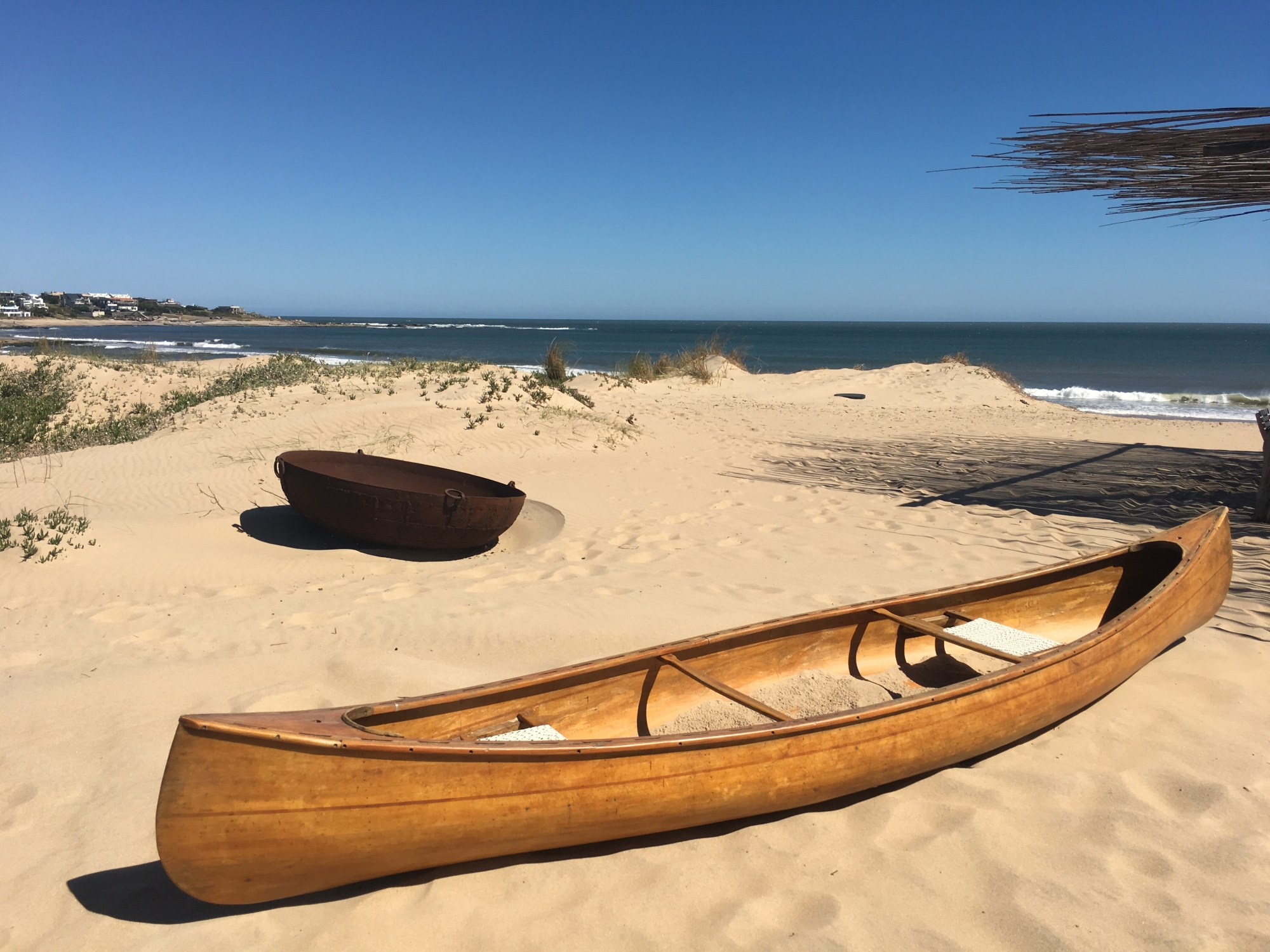
The final leg of my South American adventure was five days in Uruguay. We certainly lived the high life along with some of Buenos Aires’ high society who head to the Uruguayan coast for the summer. Uruguay has a population of 3.3 million, much smaller than its neighbouring countries. Of the 3.3 million, 1.3 live in the capital city of Montevideo.
Montevideo
Our first impressions were excellent from the modern and well designed airport (and I am sad to say that Hiten was happy to see a McDonalds too… yes we ate there on our departure) to our historic hotel in the suburb of Carrasco.


We ate very well during our stay. Garcia steakhouse close to our hotel in Carrasco did fabulous lamb chops with chimichurri sauce and sides of blue cheese baked potato. In Ciudad Vieja (the old town, about a 25 minute drive along the coast from Carrasco), we ate at Mercado del Puerto, an old port market building now packed full of parilla (grill) restaurants. We chose a busy one with an outdoor area called El Palenque and had delicious black hake that tasted a bit like Japanese black cod and melted in the mouth, stir fry veg, potatoes and white wine, followed by ice cream from the market!


On our second night, we had dinner at FOC in the neighbourhood of Punta Carreras, where we were confined to a set menu as Christmas party season had begun and the restaurant was full of big groups. We sat at the bar and had excellent cocktails and G+Ts, all the better because we saw how much care the barman took over making them. Courses included smoked pepper, tomato and lagostine chilled soup, baked white fish with cauliflower purée, rack of lamb with a beetroot glaze and mash, lemon mousse with crumble and orange ice-cream, strawberries with creme brûlée.. yum!


Aside from eating, we did spend a little time seeing the sights on our full day in Montevideo. The major highlight for me was Museo de los Andes, a small museum that opened in 2013 and documents the 1972 Andean plane crash that cost 29 Uruguayans their lives. Using photos, objects and testimonies, it tells the story of the 16 survivors who battled through harrowing conditions (4000 metres above sea level, -30C temperatures) for 72 days. Most of the people aboard the flight were a rugby team and their friends and family flying from Montevideo to Santiago for a friendly match. The 1993 movie “Alive!” starring Ethan Hawke which I have not seen yet is loosely based on this story but edits some of the key elements.
The last words of the video we saw in the museum were “never give up” and what amazed me most was how the survivors managed to keep up some semblance of morale. One of the survivors talked about learning the lesson that things can always get worse as the group experienced one tragedy after another. For them the first “tragedy” was that the flight had to detour to Mendoza for 24 hours due to bad weather so they would be late to their destination. Then next was the plane crash in the mountains, where some of the passengers died on impact – these were the friends and family of the survivors. A few days in, the group learned via radio that the search party for them had given up, a shattering blow. On night 16, an avalanche trapped them whilst they were sleeping in the remains of the aeroplane fuselage and killed 8 of the group. One of the survivors talked about burying his dead mother and sister in the snow, but trying to maintain the will to survive.
The group called themselves ‘the society of the snow’ (they did not know where they were but all they could see was snow) and resolved that they wanted to live. They set goals when group members went on expeditions to survey the area and attempt to find help. The explorers would take one of a pair of a child’s red shoes that they found in some luggage with the aim of reuniting it to the other shoe tied to the aeroplane fuselage. The group prayed each night together and celebrated birthdays with a cake shaped pile of snow with a cigarette for a candle.
The things the group did to survive were fascinating. They had to hug and punch each other during the nights to keep their bodies warm and their circulation going. They made a bin-like structure to melt the snow to drink, basic sunglasses and a blanket out of a piece of plane insulation. Many of the group being amateur rugby players probably helped as they were young and strong, had some sense of being a team, and were comfortable with the physical hugging and hitting. They lost a lot of weight with one of the survivors just 38kg when rescued. There was also a medical student and engineering student amongst them that probably helped in some of the survival techniques.
Eventually the group voted (although not unanimously) for eating the frozen remains of the dead passengers. It was a matter of life and death and something that a father of one of the dead boys commented on in a press conference. He was happy to learn there were survivors even though his son was not amongst them as they gave him a sense of closure about how his son died and enabled some families to have their sons back. He commended the survivors for their bravery rather than judging them for eating their dead teammates.
One of the many expeditions the group made involved two of the young men walking for ten days and spotting a cattle rover where the snow landscape finally ended – they threw him a message explaining their situation and how weak they were. The cattle rover was a real hero as he spent many hours travelling to alert the police and prompted the search… apparently this part never made it to the movie.
Other than spending a couple of hours in this mind-blowing museum and exploring Mercado del Puerto at lunchtime, we walked around Plaza Independencia area and smaller plazas in the old town, strolled along the industrial post area with plenty of cranes and containers and on our final morning went running along the coast in Carracsco.


Jose Ignacio
We drove about 2 hours from Montevideo to the coastal town of Jose Ignacio after learning that transfers are extremely expensive compared to renting a car In Uruguay! We stayed about 15 minutes away from the beach at Estancia Vik, a boutique ranch hotel with horseriding, cycling and kayaking and watching polo matches within the grounds all included! The rolling countryside scenery was beautiful as was the property itself.


The manager of the hotel who took us out for the first morning’s ride told us which horses various celebs rode when they stayed including Katy Perry… I did not get her horse though! Hiten’s male horse Pilsen enjoyed nuzzling and biting the backsides of the female horses of the group causing them to jump (this is scary for the beginner rider!) In the fields, the horses had there own gangs just like a school playground, with the polo ponies hanging out in their own crew with coats on!


The estancia was also the perfect place to enjoy a bottle of Vik wine as the sun went down or play a competitive game of pool surrounded by art and massive gemstone formations that the hotel owner collects.


The half Norwegian, half Uruguay businessman Alex Vik has three hotels (Estancia Vik, Playa Vik and Bahia Vik) in Jose Ignacio all with a small number of rooms and filled with local pieces of art. As a guest at one of the Vik properties, you get to use the other ones whenever you like (they give you a pretty illustrated map with highlights of the area marked out) so we spent a bit of time by the slick beachfront pools at the other properties… although I did prefer the more homely and less modern Estancia look, those beach views were stunning.


Despite a lot of the Buenos Aires glitterati visiting this beach town, the place maintains a low key surf town feel that just happens to have high end places to stay and eat. Even the common signposts to various shops and restaurants were cute! Nearby Punta del Este is the more famous beach resort with bigger high rise hotels.

We had a couple of meals at a beachside wooden restaurant called la Huella, which seemed to be THE place to be, with a crowd of beautiful and wealthy-looking tanned folk milling around and waiting to be seated. Excellent sushi including white fish and mango, tiraditos, goats cheese salad, Chinese-style crab rice and deep fried calamari with a dusting of sand on top when there was a powerful sea breeze! La Susanna was another beachside restaurant with gorgeous views and tasty seafood.


All in all, Jose Ignacio was not a cultural hotspot but an extremely relaxing and luxurious end to an immense and varied trip through Colombia, Chile, Peru, Bolivia, Argentina and Uruguay.
 neontraveller.com