Another place to tick off my must-do list was the Bolivian salt flats in Uyuni. We opted to fly between La Paz and Uyuni which was only 45 minutes rather than a lengthy bus journey. I was impressed with Boliviana de Aviacion, the airline I was most dubious about when booking my trip back in London.
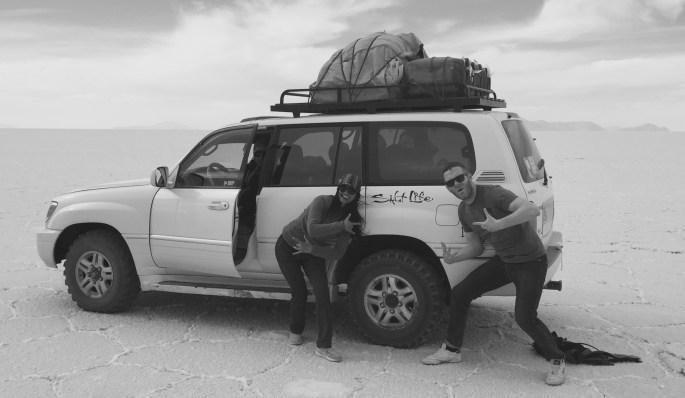
We booked a classic 3 day and 2 night 4×4 jeep from back home via STA travel. The company we booked with, Bamba Experience, designated the tour to Red Planet. This was a slightly pricier and “less basic” tour company than some of the very cheap tours available.
Overall, it was a great experience for many reasons:
- The stops were well organised to showcase varied and beautiful scenery (more on that below!)
- We had an excellent driver who handled the 4×4 well. There have been incidents of Bolivian tour companies using really old cars and bad drivers on the non existent roads. Our patient driver had to regularly stretch out his hands on the wheel whilst driving given how bumpy the terrain was.
- Our guide Carlos was hilarious. A couple of his catchphrases were “Got it!” after taking each and every photo on our cameras and “Can I have a few seconds of your precious time” before attempting to explain various places to us. He also loved dancing to the music selection when our group was DJ-ing in the 4×4 and explaining to our driver what the english lyrics meant.
- We had a fun like-minded and very international group of 10. Red Planet seems to market less to 18 year old gap year kids and more to people in their later 20s and 30s. Our jeep of 5 was awesome… Carlos our guide, Adam (my uni friend, of course awesome), Meria (Finnish living in Sydney taking time out after redundancy), Olga (Russian living in London), Raine (Israeli living in London also on a career break) We had plenty of car photos that were not instigated by me… Was I finally photoed out!?


The trip was very basic in terms of infrastructure (you really need a 4×4 as there are barely any roads) and accommodation. We stopped at several toilets where we paid 2 boliviano (25p) but mostly it was behind various rock structures or bushes! We didn’t shower for three days and on the second evening had no running water but had a late night dip in a hot spring. Despite the desert scenery being very close geographically to Atacama in Chile, this was definitely the rugged off-road version vs Chile’s tarmac roads and tourist service stops!
Some of the places we saw over the next three days were out of this world…
Uyuni: The small dusty desert town from which we departed felt like being in the wild west. It had a tiny airport and when we flew out at night saw almost no light pollution (aside from runway lights)!


Train cemetery: Old rusty trains made for a nice tourist attraction under bright blue skies. Climbing aboard the trains made me feel like a kid in a playground!


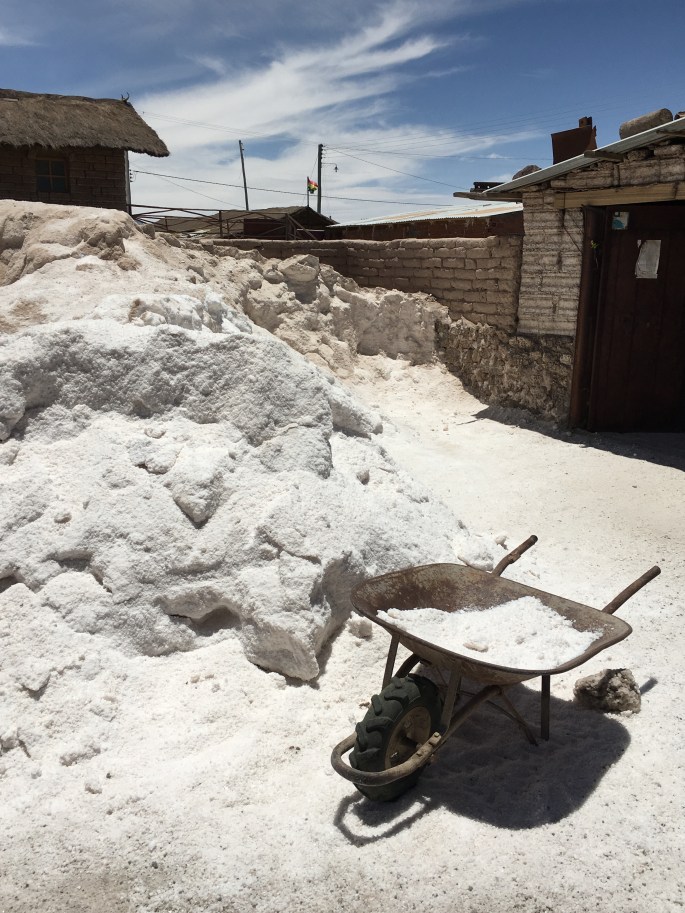
Salt processing plant: Iodine is added before the salt is fit for consumption.
Uyuni de Salar (i.e. THE SALT FLAT that we came for!): This is the largest salt flat in the world at 12,106 square km and has an estimated annual output of 20,000 tonnes. It is believed to have been formed 40,000 to 25,000 years ago (quite a range of possibility) when a lake evaporated and deposited minerals from the mountains.
Our first stop was near the edge of the salt flat that was about 10 metres deep. This section was touristy with quite a few jeeps around, a statue and lots of world flags… the union jack had almost disintegrated in the wind and was in shreds (brexit poster?!) We took a couple of photos around this area but knew we would be going further in. The hexagon pattern looked quite uniform over such a large flat expanse and water was seeping out of the cracks.


We then drove deeper into the white expanse that faded into the horizon in every direction. There were no roads at all so it really felt like being on safari. Mountains that looked quite close were over 100km away.
As we reached a more isolated, central and deeper part of the salt flats the real photography fun (or work) began! We had been discussing amongst our group the popular perspective play photos that we should try out. We need not have worried a jot about it. Carlos, our guide, was a comedy photo machine. We lined up the props including a plastic dinosaur (which for some reason is Bolivian salt flats tradition!) and Carlos told us we were doing 5 group photos and a video.

He then instructed us with the precision of a film director, took about 10 iphones and cameras and kept clicking and shouting “Got it!” You have to love the efficiency. We all had a photo of ourselves stamping on the rest of the group.

I cannot post the video here but it is a surreal one and half minutes of us all climbing out of a pringles tube, dancing, then jumping back in… obviously!


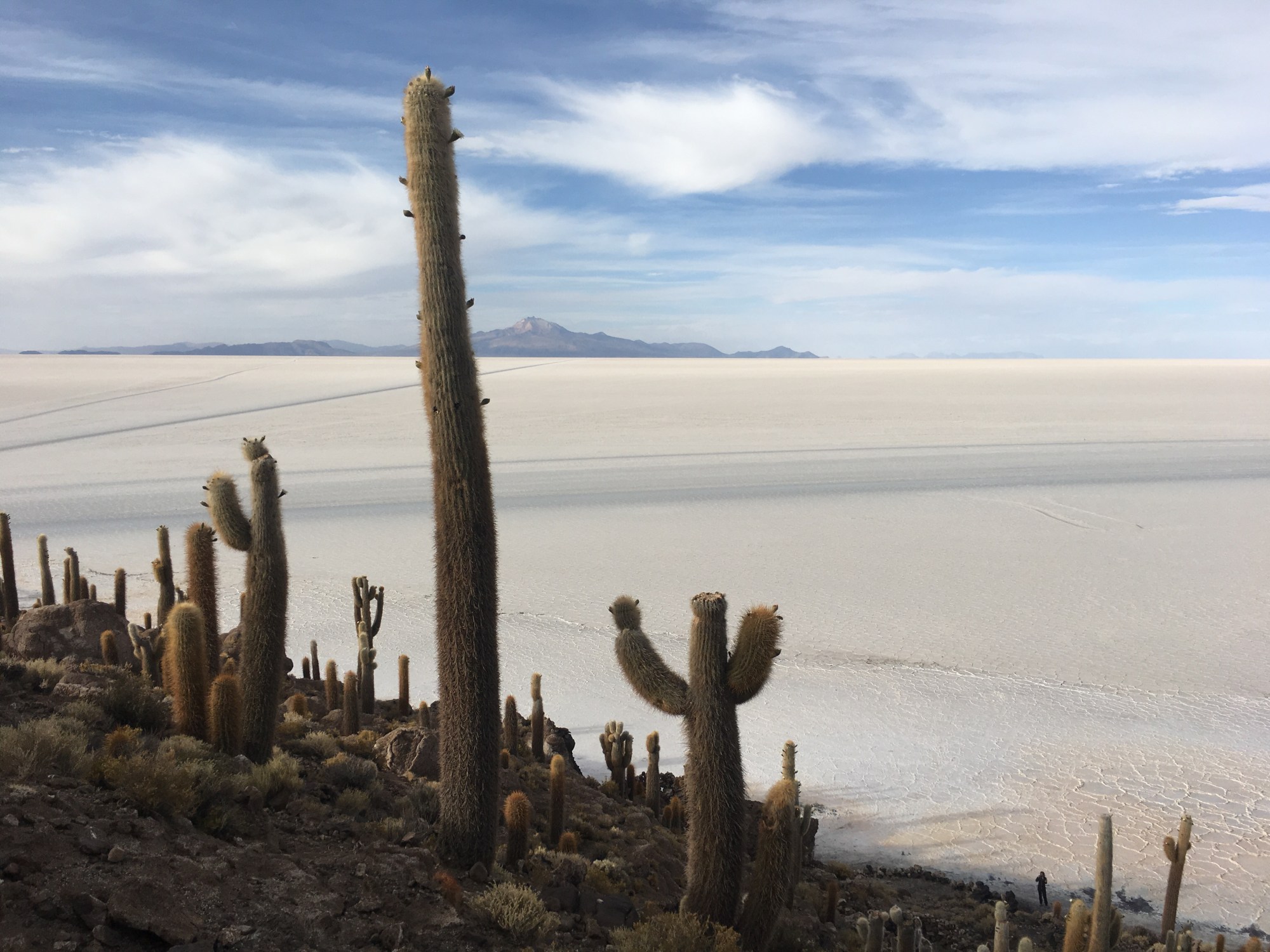
Isla Incahuasi: A hilly outpost in the midst of the white plains with plenty of big Trichocereus Cacti. We had a short hike followed by a beer.


An area with chiselled salt blocks for sunset: Luckily some people had left an “Uyuni” sign.


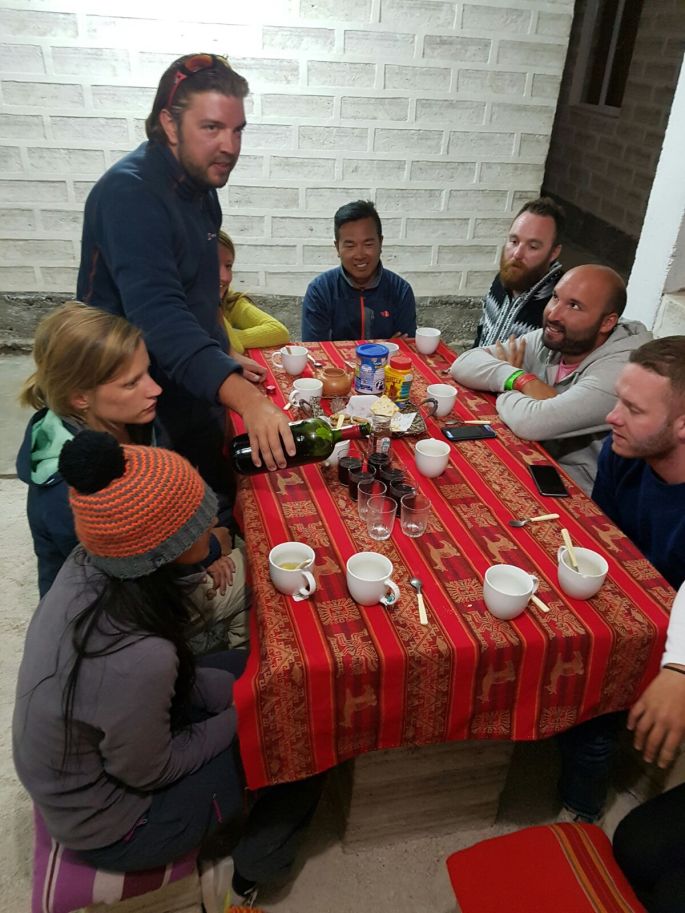
A “salt hotel”: Basic cold accommodation made of salt bricks and with a crunchy salt floor on our first night but we had at least rented warm sleeping bags. We had a fun night drinking red wine and eating a very salty but tasty veg soup! I think the cook used their frying pan and utensils made of salt.
Small villages to pay 2 bolivianos (25p) to use toilets on our way to the desert: One had a lovely bridge and vantage point.


Llama viewing in green lush landscapes and hiking up hills: This was very similar to Chile but this time felt so much more remote (#llamaspam) On our hike, Carlos pulled out some delicious chewy sweets (better than wine gums) as a sugar hit can help with the altitude effects. I became a sugar addict. Later when he pulled out packets of skittles for us, I drank mine in two minutes.


Many lagoons and flamingos: The most impressive was the red lagoon. I had seen flamingo lakes in Chile but the lack of people and organised tourism in Bolivia made it feel very rugged. Carlos also taught us a lot about flamingos… a couple of snippets: They are monogamous and live about 12 years. The male flamingo’s mating march inspired the name Flamenco for the spanish dance. They keep one leg folded up whilst sleeping in order to stay warm and keep their blood pumping closer to their heart and change sides every 3 hours or so. They can also keep one half of their brain asleep! When taking photos, why not strike a flamingo pose?


Shooting stars: On our second night, we stayed in a very cold hostel with no running water. The advantage of being off the beaten track was that we could sit in a hot spring at night under the bright stars. We saw shooting stars, Orion’s belt, Mars and two blurs that are galaxies. However, it was a little painful to come out of the hot water into minus temperatures – I had ice in my hair!
A lot of desert including the “Salvador Dali” desert: The artist never went to Bolivia but apparently his paintings look like these stretches of desert so it makes sense marketing-wise to stick his name on it!
 Many rock structures: The interesting shaped ones were fun for climbing and photos, the less interesting ones good cover for toilet stops.


Geysers: Beautiful steam and freezing cold like in Chile but in Bolivia there were no tourists or safety warnings… go as close as you like!

 neontraveller.com