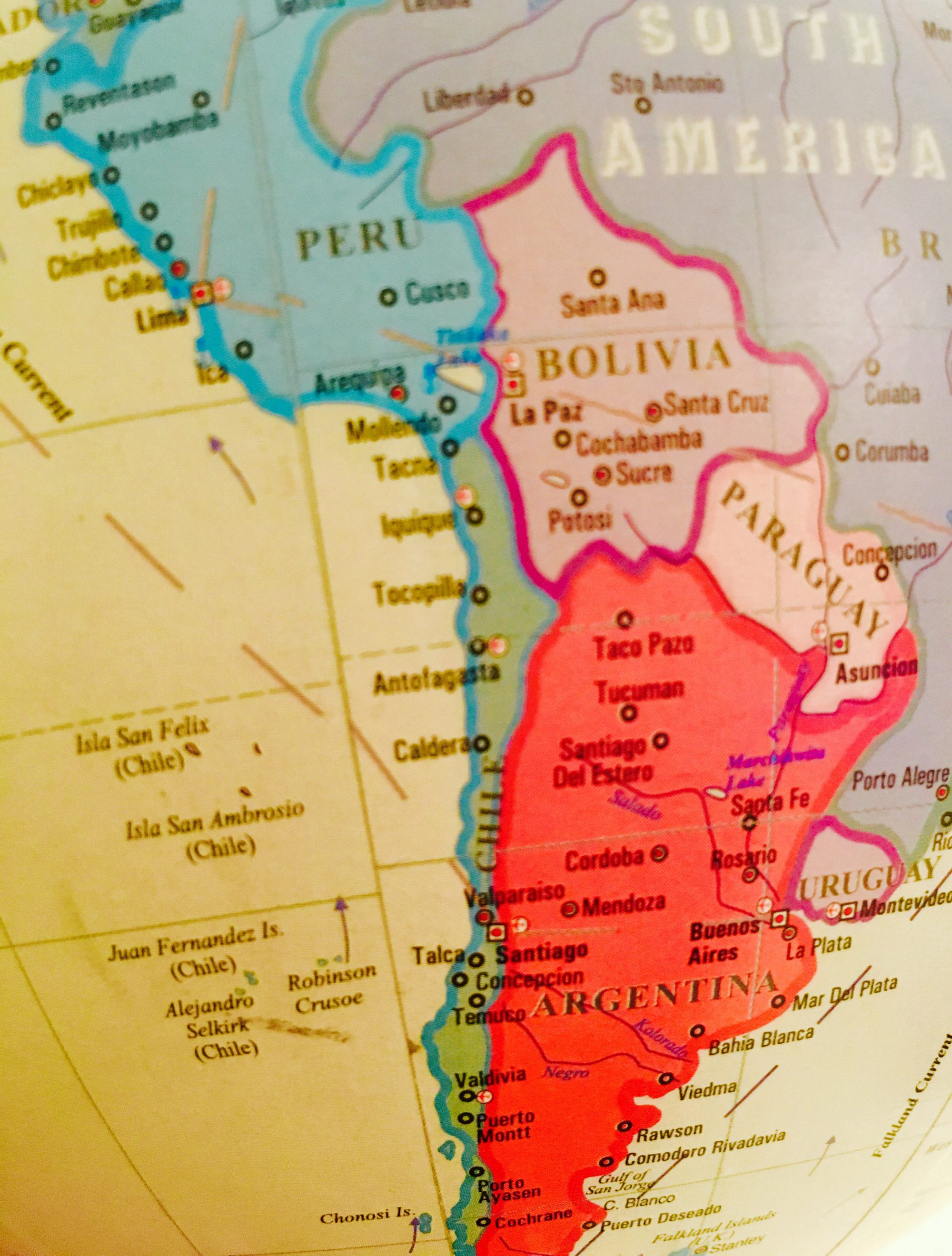
Part 3 of my South American tour is Peru and Bolivia with my uni friend Adam…
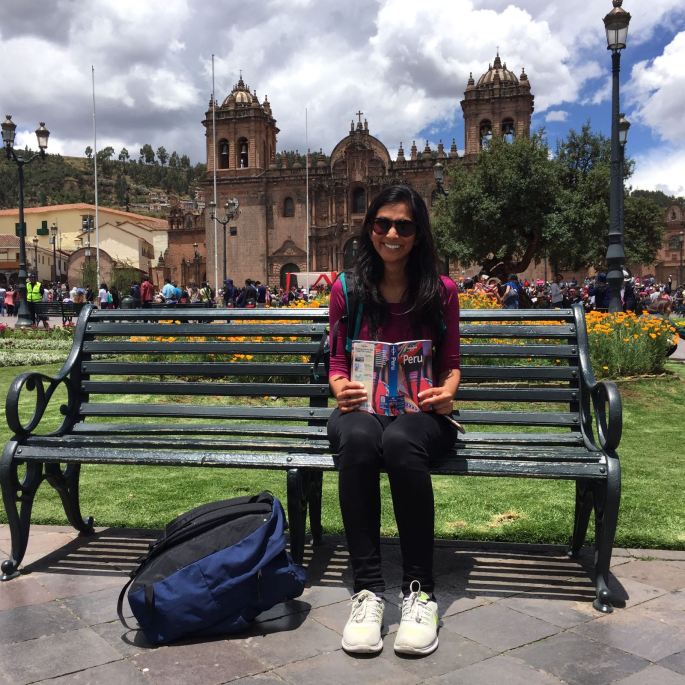
The morning after flying to Lima (me from Santiago and Adam from London), we took a one and a half hour flight to Cusco. It is Cuzco in Spanish or Qosqo in Quechua so I might chop and change! The city is at an altitude of nearly 3400m and although I had been higher up in Chile, in Peru I had some hiking to do. Thankfully we gave ourselves a day and a half to acclimatise and I enjoyed this mountainous city as a destination in its own right, not just the gateway to Machu Picchu.
First things first, we were very lucky with the weather. In November, the rainy season would usually be upon the region but we only saw bright sun and blue skies.
On our arrival day, we wandered from our traditional style hotel (many in Cuzco are set around courtyards) to the Plaza de Armas. We encountered a parade of schoolgirls dancing in traditional brightly coloured outfits. The whole area had a fiesta feel to it!


We went to an excellent cooking course by Marcelo Batata. Our guide Christina was a professional chef who was really bubbly and taught us about Peruvian cuisine. Despite being on the expensive end of the scale for a Peruvian cookery class at USD 90 per person, I wholeheartedly recommend this activity which lasted roughly 5 hours and included enough food for both our lunch and dinner.
We learnt about the historical Andean, Spanish, African, Chinese and Japanese influences on Peru’s distinctive cuisine. We then spent time enjoying canapés such as bechamel and caremilised tomato bruschetta and mahi mahi fish in chilli sauce in a miniature food market complete with cuddly toy guinea pigs.


The species of Peruvian produce are mind boggling given the spectrum of altitudes from sea level to well above 6000m – thanks to Christina we now believe there are 3300 types of potato in Peru (there is a National Insititute of Potatoes in the sacred valley!), 500 types of quinoa and many beautiful types of corn including marbled effects!


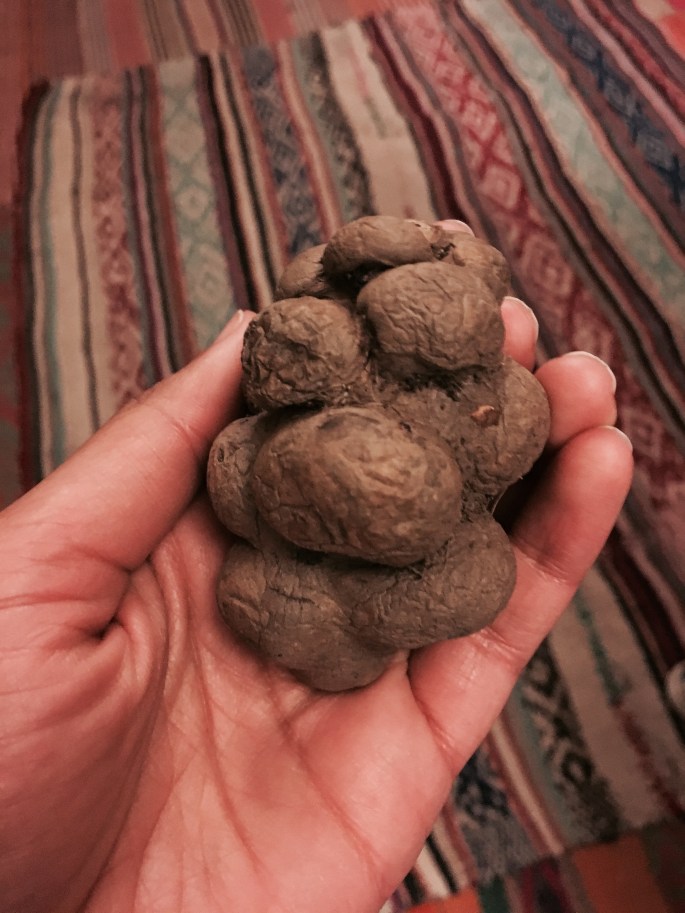
My favourite potato type is one I have not actually tasted. It is nicknamed the “mother-in-law” or “llama poo” potato. Apparently it resembles llama poo and the bumpy surface is not very easy to peel. In traditional Peruvian culture, there is a ritual where a prospective wife proves herself to her potential mother-in-law by peeling as many kilos (yes kilos!) of these potatoes as she is given. If she is lucky and her mother-in-law is merciful it will only be a couple of kilos. Luckily for me, there is no such challenge in British or Indian culture. I would have failed my marriage test with flying colours for any potato type.
The price of quinoa has risen to 25 soles per kilo since the international excitement about quinoa as a superfood the past few years. Hence local people are less likely to eat quinoa now. That said, we learnt about some lesser known and cheaper super grains such as Kiwacha, which is currently exported to NASA only. It has 5% more protein, is lighter than quinoa and contains more amino acids that are good for us…. surely Ocado and Holland&Barrett should be all over this?! The toasted version of Kiwacha (like miniscule popcorn) is nutty and delicious and I have had it with yoghurt for breakfast in Lima. Canihuaco has even more protein than Kiwacha!
Then it was on to fruit tasting including 3 types of passion fruit (maracuya is most similar in favour but not appearance to the the type we can buy in UK supermarkets I think), Lucima that looks like avocado but tastes like butterscotch or indian sweets (not fruit like!) and chilimoya, a relation to the custard apple.

We then had a more traditional cookery lesson, making such simple but delicious ceviche (lime, chilli, coriander, salt, pepper, condensed milk, fish and no real cooking… easy!) and lomo saltada (meat dish like chinese stir fry using alpaca meat in this case.)


Pisco tasting was also a great experience. Given it is 38-43% alcohol by definition, it was more enjoyable in the Pisco sours and Chilcano cocktails we made than straight.


In additional to the fabulous cooking course, it must be noted that we ate and drank well whenever we had a pit stop in Cuzco…. ceviche and quinotto (quinoa risotto) at Inkazuela, ceviche and sushi at Limo, great craft beers and garlic fries in a quirky wooden bar Taprooms, hot chocolate and crepes and Choco Museum and so on.


As well as eating and drinking, we used some of our acclimatisation time to walk around the town using Lonely Planet’s walking tour… we loved it! The steep cobbled streets of San Blas, a bohemian neighbourhood, were the highlight for me, with guitar music playing in the background. I also experienced my first 1 sole toilet in Peru. That is, you pay 1 sole for the pleasure of using someone’s toilet… usually not a pleasure.


We also loved Mecado San Pedro, with huge sections for every type of food, drink and more. It always comes back to food! My friend Adam was a celebrity in the juice department with several locals asking for selfies with him. Does he look like someone famous or is it just the fair complexion and blue eyes?


 neontraveller.com